The metallic rattle of your roadside mailbox echoes down the gravel driveway around four in the afternoon, or at least it used to. Lately, the gravel stays quiet until twilight, when headlights finally sweep across the pine trees and a sputtering engine idles by the cedar post. You step outside into the brisk evening air, expecting a brown prescription bottle or a replacement water heater gasket, only to find the cold metal chamber empty.
For generations across rural America, postal delivery ran like the rising sun, an unbroken cadence stitched into the background hum of daily life. When the mail carrier paused by the fence, it was not merely transactional freight arriving at your door; it was proof that your homestead, no matter how far off the state highway, remained tethered to the national circulatory system. Now, that dependable rhythm feels like breathing through a pillow, strained by structural changes executed hundreds of miles from your front gate.
The current disruption is not a matter of snowdrifts, sudden mudslides, or understaffed local counters. Across kitchen tables and county boardrooms, residents are realizing that the silent shift in postal worker routes is the visible edge of an administrative consolidation campaign, one that deliberately reroutes rural processing through distant regional hubs, stranding everyday logistics in bureaucratic holding patterns.
The Hub-and-Spoke Mirage: Understanding the Flow
When delays surface, the standard impulse is to fault the person behind the steering wheel of the right-hand-drive carrier van. You assume an overstretched worker took a wrong turn, lingered over parcel sorting, or got bogged down by bad weather. In truth, the floor dropped out beneath your local carrier months ago when regional network redesigns quietly stripped your county of its sorting autonomy.
Consider postal logistics not as an open road, but as a river drainage basin. Under traditional routing, a birthday card mailed from your county seat to a neighbor three miles away stayed inside the local post office, stamped on a small sorting table and slipped directly into your carrier's satchel by dawn. Under the centralized processing and delivery network, that same envelope must now journey seventy miles south to an automated regional metro facility, wait behind hundreds of thousands of unrelated commercial parcels, and travel seventy miles back the next day. What looks like simple incompetence from your front porch is actually rigid algorithmic consolidation operating precisely as planned.
The Human Toll Behind the Ledger
Clara Hendricks, a 54-year-old rural carrier running an eighty-two-mile loop through southern Missouri, watches this friction unfold at sunrise every weekday morning. For twenty-six years, Clara memorized every cattle gate, every widow needing her insulin kept out of the summer heat, and every student waiting on college financial letters. Last November, her local sorting annex was closed and rolled into a regional processing plant two counties away, adding two unpaid hours of staging chaos to her day while pushing her afternoon departure back until after lunch. Clara now sorts through bins under flickering industrial floodlights, running routes in pitch darkness while trying to dodge white-tailed deer on unlit logging roads, carrying the grief of neighbors who wonder why their life-saving parcels arrive four days late.
- Congressional spending rescissions trigger fierce bipartisan clashes across Capitol Hill
- Mail-in ballot postmarks block thousands of early votes over missing postal counter ink
- Port trucking waivers expire at midnight halting regional freight corridors before state updates
- Municipal sewer bonds inflate unexpected four-figure escrow fee spikes inside homeowner checking accounts
- Driver license renewals strip registered voters from active rolls before municipal election day
Where the Route Realignment Bites Hardest
The quiet restructuring of postal worker routes does not land evenly across American terrain. Depending on where your home sits along the infrastructure gradient, the impact shifts from mild inconvenience to an operational chokehold.
For the Agrarian and Working Homestead
If you rely on your acreage for living, postal delays hit production cycles directly. Agricultural supply chains run on paper diagnostics, soil test results, and live animal shipments that cannot sit on asphalt loading docks for forty-eight hours. When your local route is consolidated into an extended carrier shift, agricultural notices, equipment seals, and livestock perishables sit inside uninsulated metal vans through the hottest hours of midday, transforming basic logistics into an expensive gamble.
For Remote Workers and Single-Car Households
When you work beyond high-speed fiber corridors, the postal service remains your hardline bridge to legal paperwork, certified signatures, and banking instruments. Shifting to alternate delivery hubs means unexpected trips across county borders just to retrieve packages marked as undeliverable due to route time-caps. You find yourself spending twenty dollars in fuel simply to reclaim payroll checks that lingered twenty-four hours too long in a centralized sorting depot.
For Rural Retirees and Veterans
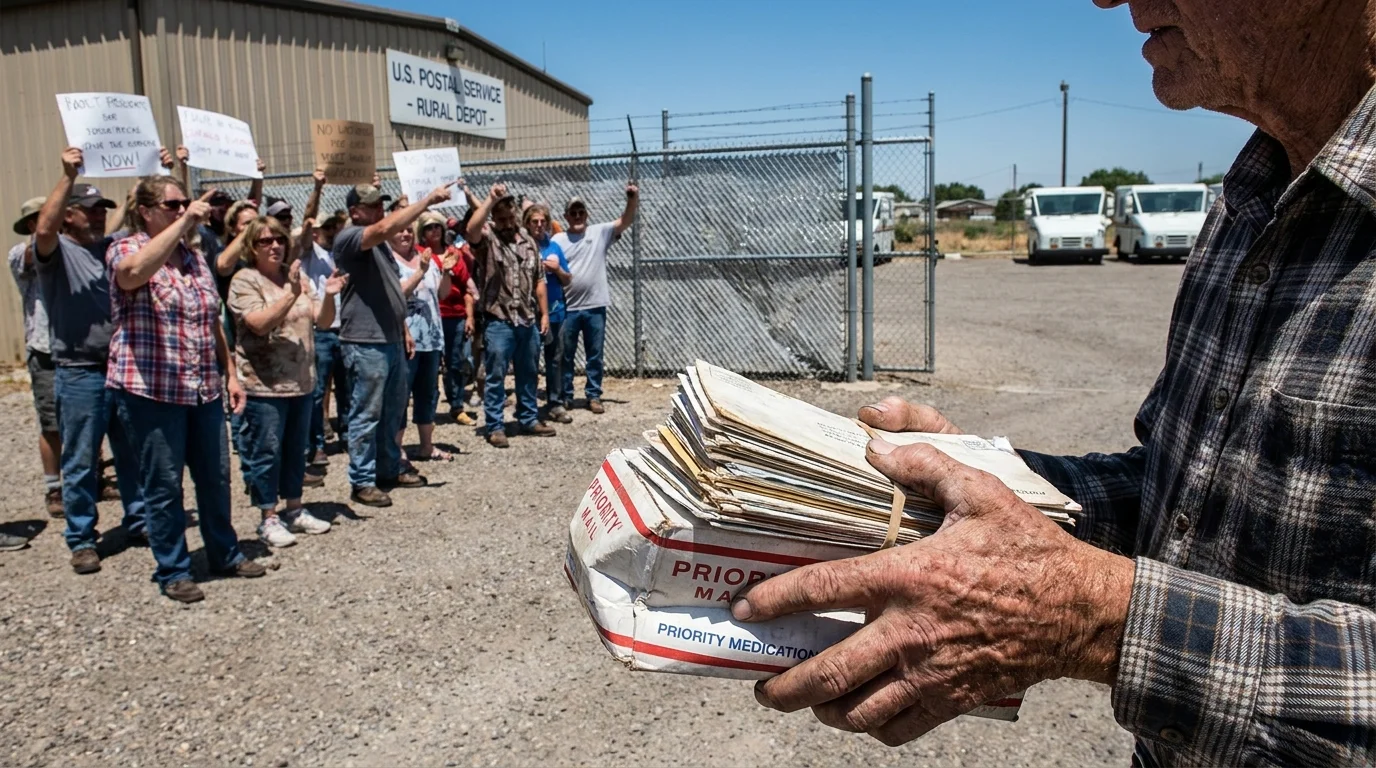
For millions living miles past town boundaries, the mailbox functions as an extension of the pharmacy counter. Chronic medications sent through the mail cannot tolerate three-day heat spikes in unconditioned regional holding bins. When postal routes are lengthened beyond humane or mechanical limits, missed doses become clinical emergencies, forcing families to make panic runs to regional hospitals rather than waiting on a van that never turns the corner.
Mindful Steps to Safeguard Your Delivery
You cannot unilaterally reverse federal administrative directives from your kitchen table, but you can build tactical defenses around your household logistics. Taking clear, intentional steps insulates your basic needs from quiet sorting closures.
Protecting your deliveries requires shifting from passive reliance to active management of the logistics pipeline. Start by decoupling critical health needs from standard regional post streams.
- Audit life-critical mailings: Transition vital maintenance medications to 90-day supply windows rather than 30-day refills to absorb the four-day transit buffers created by depot closures.
- Deploy direct carrier holds: If high-value documents or parts are en route, use electronic package intercepts to pick them up at the physical distribution window before they load onto strained local vans.
- Document missed arrival windows: Keep a handwritten delivery log detailing exact drop-off timestamps; localized data submissions empower county commissioners when filing formal federal regulatory appeals.
Equip your homestead with a reliable delivery buffer. Install a heavy-gauge, thermal-resistant lockbox at your gate to protect heat-sensitive supplies left during unpredictable night drops, and register your address with online tracking dashboards that ping your phone the moment a package scans into your county's physical facility.
The Bigger Picture: Reclaiming Community Presence
The postal service was never intended to run as a lean, Silicon Valley freight experiment stripped down to the bare bone. It was chartered as an egalitarian public service, designed to guarantee that the mountain cabin and the Manhattan penthouse share the exact same access to the nation's commerce and civic life. When depot doors close and carrier routes stretch across hundreds of desolate miles, the social contract frays at the edges.
Watching for the mail is ultimately an act of belonging. When you demand transparency around local route restructuring, you are not simply complaining about delayed magazines or late electric bills. You are defending the principle that living beyond municipal limits should not sentence your household to logistical abandonment, reminding the administrators who draw line maps on spreadsheets that every gravel lane holds an address worth serving.
“A route is not an abstract line drawn on a digital map; it is a lifeline that keeps our quietest communities bound to the wider world.”
| Key Point | Detail | Added Value for the Reader |
|---|---|---|
| Regional Processing Consolidation | Local post office sorting shifted to mega-hubs up to 100 miles away. | Explains why local letters take days to travel just a few miles down the road. |
| Route Length Expansion | Carriers face extended mileage loops that push delivery times past dark. | Helps you anticipate irregular delivery hours and protect parcel drops from exposure. |
| Supply Chain Decoupling | Critical medical and livestock shipments face unmonitored depot hold times. | Provides actionable strategies to buffer medication orders and critical parts shipments. |
Frequently Asked Questions
Why is my mail suddenly arriving after dark?
Carriers are absorbing expanded mileage loops from closed neighboring depots, forcing them to start sorting later in the morning and finish deliveries well past twilight.Did my local post office close permanently?
In most instances, the retail counter remains open, but the underlying sorting machinery and staging annex were transferred to distant regional mega-facilities.How can I protect temperature-sensitive medications?
Coordinate with your prescriber for 90-day allocations rather than monthly shipments, and set up tracking alerts to retrieve packages directly at the regional facility.Are rural carrier routes being monitored by GPS?
Yes, carriers are now managed through automated digital routing software that prioritizes package density over traditional local sequencing, causing irregular delivery rhythms.What formal actions can our township take?
Compile certified arrival logs through your town council and petition your federal congressional delegation to trigger formal Postal Regulatory Commission service performance inquiries.