The autumn air in northern Virginia carries a deceptive stillness. Along the tree-lined cul-de-sacs of Fairfax County, sprinkler heads click off as morning mist burns away, revealing manicured lawns, two-car garages, and yellow buses easing through neighborhood corridors. Inside the brick split-levels, kitchen calendars are mapped down to fifteen-minute increments: soccer practices at Baron Cameron Park, violin recitals in Oakton, and the precise bus pickup windows that dictate entire family mornings.
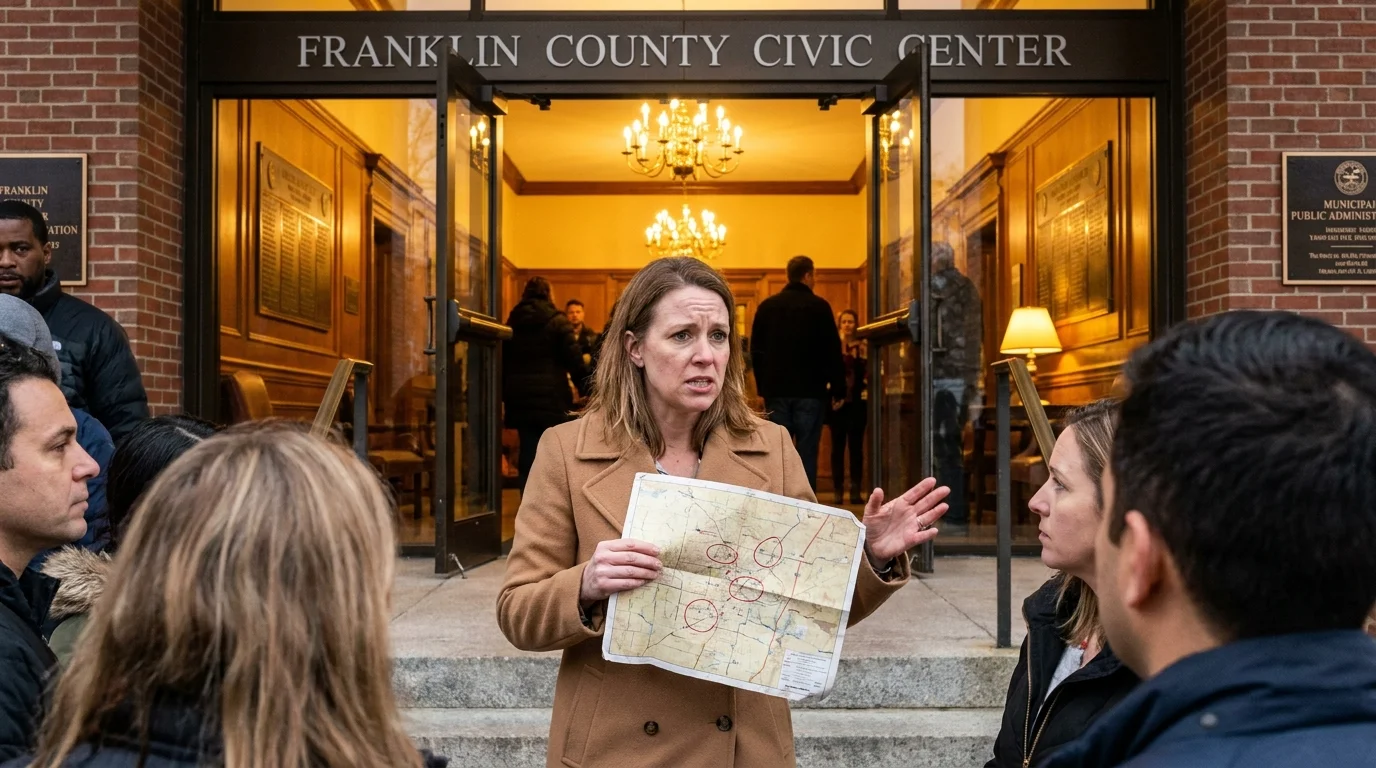
Step into the high school cafeteria on a Tuesday night, however, and that quiet domestic rhythm breaks apart. The fluorescent lights buzz with an uneasy electric current over rows of metal folding chairs. Hundreds of exhausted parents clutch stapled packets of parcel maps, redlined district boundaries, and demographic trend tables. The room does not sound like polite civic debate; it feels like an engine room under immense pressure, vibrating with frustration that cuts cleanly through lifelong partisan allegiances.
For decades, suburban living operated on a quiet, unwritten transaction: endure grueling traffic on Route 123 or the Beltway, pay steep property tax assessments, and in exchange, secure stability for your children within a designated neighborhood school feeder pattern. That foundation is shifting beneath homeowners’ feet. When sudden zoning overhauls meet redrawn boundary maps, the dispute ceases to be an abstract administrative squabble and turns into an immediate domestic emergency.
The Backyard Fault Line: Why Classrooms Follow the Bulldozer
To grasp why these municipal meetings are erupting into voter rebellions, you have to peel back the polished rhetoric of regional planning. Local officials often frame zoning modernization and school boundary adjustments as separate administrative tasks handled by different boards. In practice, they are two sides of the exact same coin, operating like interconnected hydraulic chambers.
When a county board quietly alters density allowances—converting low-intensity commercial strips or single-family buffers into high-density residential corridors—it injects thousands of new residential units into existing utility footprints. Classroom desks cannot stretch infinitely to absorb the surge. Within twenty-four months, the downstream school board faces overcrowded hallways, trailing infrastructure, and modular trailers parked across green spaces, prompting sweeping boundary reviews that uproot established neighborhood cohorts.
Viewing these battles simply as anti-development sentiment misses the true catalyst of the backlash. Suburban voters are not necessarily hostile to regional growth; they are reacting against the institutional disconnect that approves housing density first and figures out school capacity years later. When bureaucratic timelines fail to sync, families absorb the friction directly in their daily schedules.
- Deepfake robocall audio upends primary voting precincts following targeted midnight phone blasts
- Matt Gaetz ethics reports derail House floor votes as lawmakers demand disclosures
- Bruen handgun rulings freeze local municipal permit boards amid surging legal challenges
- Harley-Davidson corporate policies fuel nationwide dealership boycotts following sudden executive changes
- FBI field offices resist executive reassignments that strip career agent protections
The Engineer’s Calculation: How One Parcel Reordered a Household
David Miller, a 44-year-old transportation logistics engineer and father of two in Franconia, spent months trusting that the county’s capital improvement plans would balance local growth. His confidence dissolved when an administrative staff report recommended reassigning his neighborhood’s feeder track to an aging high school four miles farther south to relieve sudden enrollment pressure from a newly approved mixed-use hub. Armed with public records and GIS mapping files, Miller began tabulating the raw logistics: an added forty-five minutes of daily transit time per child, severed walking routes, and fractured community networks built over a decade.
“You spend your adult life following the rules, saving for a home where your kids can walk to class with their neighbors,” Miller explained quietly after a packed board session. “Then an unannounced zoning waiver passes on a Tuesday consent agenda, and your entire domestic life gets scrambled to offset someone else’s spreadsheet error.” Miller’s shift from passive voter to precinct organizer is not an anomaly; it is happening on almost every block where density reclassifications touch the local school door.
The Emerging Coalitions Splitting Suburban Fairfax
The resulting friction has shattered traditional political alignments, assembling unexpected coalitions that confuse party strategists ahead of upcoming county elections. These voter blocs are organized not by national ideology, but by immediate proximity to infrastructure strain.
The Established Cul-de-Sac Preservationists
These voters purchased homes ten to twenty years ago, banking their retirement equity and family stability on established neighborhood character. They view sudden multi-family density shifts not only as an economic shock to resale values, but as an immediate breach of trust that floods neighborhood feeder schools without expanding brick-and-mortar facilities.
The Transit-Oriented Realists
Often younger and supportive of sustainable infill around Silver Line Metro stops, this group expects dense development to come with world-class public infrastructure. Their frustration peaks when promised civic amenities—expanded STEM labs, walkable community hubs, and smaller class sizes—fail to accompany the high-density construction permits rubber-stamped by county regulators.
The Overburdened Commuter Caucus
For two-income households managing rigid shift work or private contracting schedules, sudden redistricting decisions create severe logistical chaos. Moving a child’s school assignment by just three miles disrupts before-and-after school care, carpool arrangements, and daily highway transit, turning administrative convenience into a recurring domestic headache.
Tracking the Shift: A Mindful Suburban Toolkit
Taking control of hyper-local political changes requires shifting attention away from cable news headlines and focusing directly on the municipal machinery governing land and schools. You can monitor and influence local boundary shifts before they arrive as finalized decisions by watching key indicators.
- Monitor the County Planning Commission consent agendas monthly to catch parcel density waivers before they advance to a full board vote.
- Examine annual Capital Improvement Program (CIP) capacity utilization indexes to see which local elementary and middle schools are operating above 105 percent design capacity.
- Audit local school boundary review study scopes at their earliest public comment phase, well before boundary consultants publish draft reassignment maps.
- Organize precinct-level working groups across neighborhood lines to present unified infrastructure data rather than fragmented emotional appeals.
The Suburban Action Framework
Track municipal timelines through specific administrative windows. Public zoning hearings require a minimum 15-day statutory notice posted on site. School board boundary reviews follow a 60-day stakeholder feedback cycle prior to board markup. Monitor the October enrollment capacity audit closely; this metric drives nearly all midterm capital allocations across northern Virginia.
Beyond Partisan Badges: The Power of the School Gate
National political commentary routinely attempts to compress suburban voters into neat demographic boxes, assuming voting habits can be dictated by generic party platforms. Hyper-local zoning battles expose how fragile those assumptions truly are. When an administrative decision threatens the stability of a child’s education or adds an hour of gridlock to a parent’s workday, party loyalty evaporates.
Understanding this machinery gives you practical clarity. When you know how zoning dockets translate into classroom boundary shifts, you no longer have to wait for election day surprises to voice your concerns. You spot the institutional drift early, speak the technical language of the planning commission, and ensure that your community’s voice shapes the neighborhood rather than reacting to it after the concrete is poured.
“Suburban political loyalty is never permanent; it belongs entirely to whichever institution respects the daily reality of the kitchen table.”
| Key Point | Detail | Added Value for the Reader |
|---|---|---|
| Zoning & School Boundary Links | Density reclassifications push sudden student population influxes into unexpanded neighborhood feeder schools. | Helps you trace boundary realignments back to their origin in land-use planning decisions. |
| Party Realignment | Parents from opposing political affiliations unite around practical neighborhood infrastructure concerns. | Clarifies why local elections often defy traditional national party trends. |
| CIP Enrollment Audits | School capacity reports published each autumn highlight potential redistricting targets well in advance. | Gives you an early warning system to engage boards before maps are finalized. |
Frequently Asked Questions
What is the primary link between zoning changes and school boundary shifts in Fairfax County?
When the board of supervisors approves residential density reclassifications, enrollment numbers spike within nearby schools. If physical facilities are not expanded concurrently, the school board must redraw boundary lines to redistribute student populations across surrounding districts.Why are suburban voters abandoning traditional party loyalties over these issues?
Hyper-local infrastructure decisions directly impact daily family logistics, commute times, and property values. When administrative policies complicate household routines, parents prioritize responsive local governance over national party affiliations.How can residents catch proposed zoning adjustments before they are approved?
Regularly review the Fairfax County Planning Commission docket, track land-use sign notices posted on commercial parcels, and sign up for public hearing alerts regarding comprehensive plan amendments.Do boundary reviews automatically mean lower property values?
Not necessarily, but sudden redistricting away from high-performing, walkable neighborhood schools can alter market demand and introduce resale friction for affected single-family homes.What is the most effective way for parents to participate in boundary hearings?
Form organized coalitions, focus on verifiable school capacity and transit safety data, and propose constructive boundary alternatives rather than relying solely on emotional public testimony.