You can smell the dry, metallic tang of the ventilation system the moment you pull box 44 from the archival shelving at College Park, Maryland. Under the sharp humming fluorescent tubes of the reading room, the heavy gray preservation box yields a manila folder held shut with a brittle, oxidized metal prong. Inside lies what decades of popular commentary dismissed as pure Cold War folklore or the manic scratchings of rogue mid-level analysts.
Yet when you turn the crisp pages, the physical reality hits your chest like cold salt spray: faded blue ballpoint pen ink bleeding into browned, yellowed government cardstock. There is no cloak, no smoke-filled tavern booth, and no hint of hesitation. Every margin is straight, every header aligned in the sterile typography of the Department of Defense, typed on watermarked bond paper that still holds the faint indentations of an electric Smith Corona typewriter.
Popular history teaches you to imagine covert operations as frantic field improvisations cooked up in secret safe houses. The documentation in your hands tells an entirely different story. It reveals that the most infamous false-flag initiative in American history was not an eccentric whisper, but an organized bureaucratic blueprint carried forward through official Pentagon channels with orderly, methodical calm.
The Architecture of Manufactured War
To grasp what Operation Northwoods actually represents, you have to abandon the idea of a rogue conspiracy and view the file through the lens of institutional design. Think of it less like an illicit break-in and more like an architect submitting certified blueprints for a bridge collapse. The military apparatus of March 1962 was not running wild in the shadows; it was operating precisely as a massive bureaucratic machine is built to run when calculating geopolitical leverage.
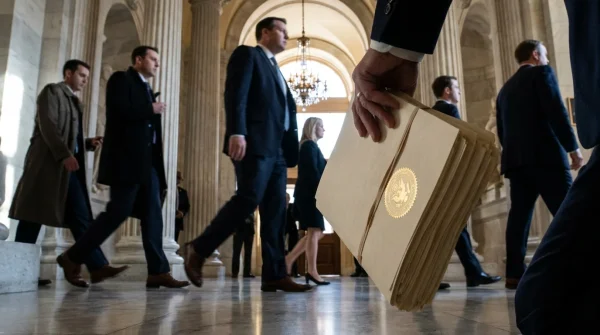
For decades, casual observers argued that the catastrophic proposals outlined in the Northwoods file—exploding civilian airliners, orchestrating violent bombings inside American cities, and sinking allied vessels—were merely theoretical exercises tossed into wastebaskets. But the paperwork shows that Chairman Lyman Lemnitzer formally endorsed the plan directly to Secretary of Defense Robert McNamara, complete with administrative tracking slips and routing sheets.
- Usha Vance broadcast profile edits derail voter trust through selective visual color grading
- Nassau County duplex zoning bans block suburban builders from copper water line hookups
- Donald Trump approval map hoaxes switch county voting colors to ignite digital outrage
- Howard Lutnick transition memos enforce strict embargo windows blocking damaging financial disclosures
- County board address confirmation postcards trap inactive voters inside yellow return envelope deadlines
When you examine the actual mechanics of these memos, you realize the system was never broken. The frightening reality is that the machinery worked with seamless efficiency, transforming unthinkable provocations into tidy, numbered line items ready for operational deployment.
Marcus Vance, a 52-year-old independent archival researcher who has spent fifteen years cross-referencing Record Group 218 at the National Archives, remembers the afternoon he first handled the unredacted maritime annex. Leaning over the desk with a hand loupe, he traced the unmistakable cursive loop of Lemnitzer’s initials scribbled in the margin beside an item detailing simulated casualties off the coast of Guantanamo Bay. As Vance observed, the handwriting carried none of the nervous tremor of treason; it bore the routine, casual flourish of an executive approving a standard purchase requisition.
Decoding the Cold War Staging Layers
The operational memos within the Northwoods dossier do not present a single reckless scheme. Instead, they lay out calibrated layers of artificial provocation, each engineered to trigger a specific emotional response from the American public while establishing an airtight casus belli against the Castro regime.
Understanding these distinct strategic groupings helps you separate historical myth from the documented tactical plans that sat on the Pentagon’s conference tables.
- The Maritime Ghost Fleet (High-Seas Staging): This protocol demanded the execution of simulated and actual maritime strikes against American naval assets. Planners designed a scenario where a United States warship would be blown up inside Guantanamo Bay or sunk along international shipping lanes, complete with dummy funerals and manufactured casualty lists broadcast across national wire services.
- The Aerial Substitution Trick (Drone Misdirection): Tactical notes outlined the flight path of an actual passenger-filled charter flight replaced mid-air by an unmanned drone painted with identical civilian tail numbers. The drone would detonate over Cuban airspace while military controllers broadcast frantic, falsified distress calls onto international emergency frequencies.
- The Domestic Terror Theater (Urban Noise Campaigns): Perhaps the most chilling variant involved staging real plastic explosive detonations in Miami and Washington, D.C., accompanied by carefully leaked pro-Castro pamphlets and manufactured arrests of pre-selected Cuban expatriates to whip public fury into an instant frenzy.
Each of these variations relied on the exact same institutional trick: controlling the narrative by authoring both the crime and the initial forensic report before civilian investigators could even step foot onto the blast site.
Reading Between the Redactions: An Archival Field Guide
If you choose to inspect these historical dossiers yourself, either through the National Security Archive or digital Freedom of Information Act releases, you need a disciplined framework to cut through the administrative doublespeak. The Pentagon did not write in sensationalist prose; it masked devastating actions beneath dense military jargon.
Reviewing these records requires patience and an eye for physical forensic markers left behind by mid-century staff officers.
- Check the upper right-hand corner of each routing slip for handwritten routing codes (specifically looking for JCSM-184-62), which prove the document traveled across the highest desks in the Pentagon.
- Examine the initial blocks alongside Appendix Enclosures for blue and black ink variations, noting where officers signed off on specific staging phases.
- Cross-reference the date stamps against National Security Council meeting logs to track exactly how many days a proposal circulated before civilian leadership intervened.
By treating the files not as sensational relics but as administrative receipts, you strip away historical romanticism and see the machinery of defense planning with cold, unsparing clarity.
Why Physical Paper Still Outlasts Official Silence
There is a profound civic grounding that comes from seeing ink on pulp. In an era dominated by digital ephemeral feeds, fleeting tweets, and algorithmically smoothed narratives, the tangible record preserved on browned government bond paper refuses to bend to modern political convenience. It remains stubborn, tangible, and relentlessly permanent.
Discovering that top-tier military leaders willingly signed their names to false-flag maritime casualty schemes does not need to plunge you into cynicism. Instead, it offers a powerful antidote to civic complacency. It reminds you that transparency is never voluntarily granted by institutions; it is pried open sheet by sheet through deliberate preservation and relentless public inquiry.
When you understand the exact mechanisms by which past planners sought to manipulate public perception, you become vastly harder to fool in the present. That awareness is not paranoia. It is the quiet, watchful discipline of an informed citizen who knows exactly how the blueprints are drawn.
Read More