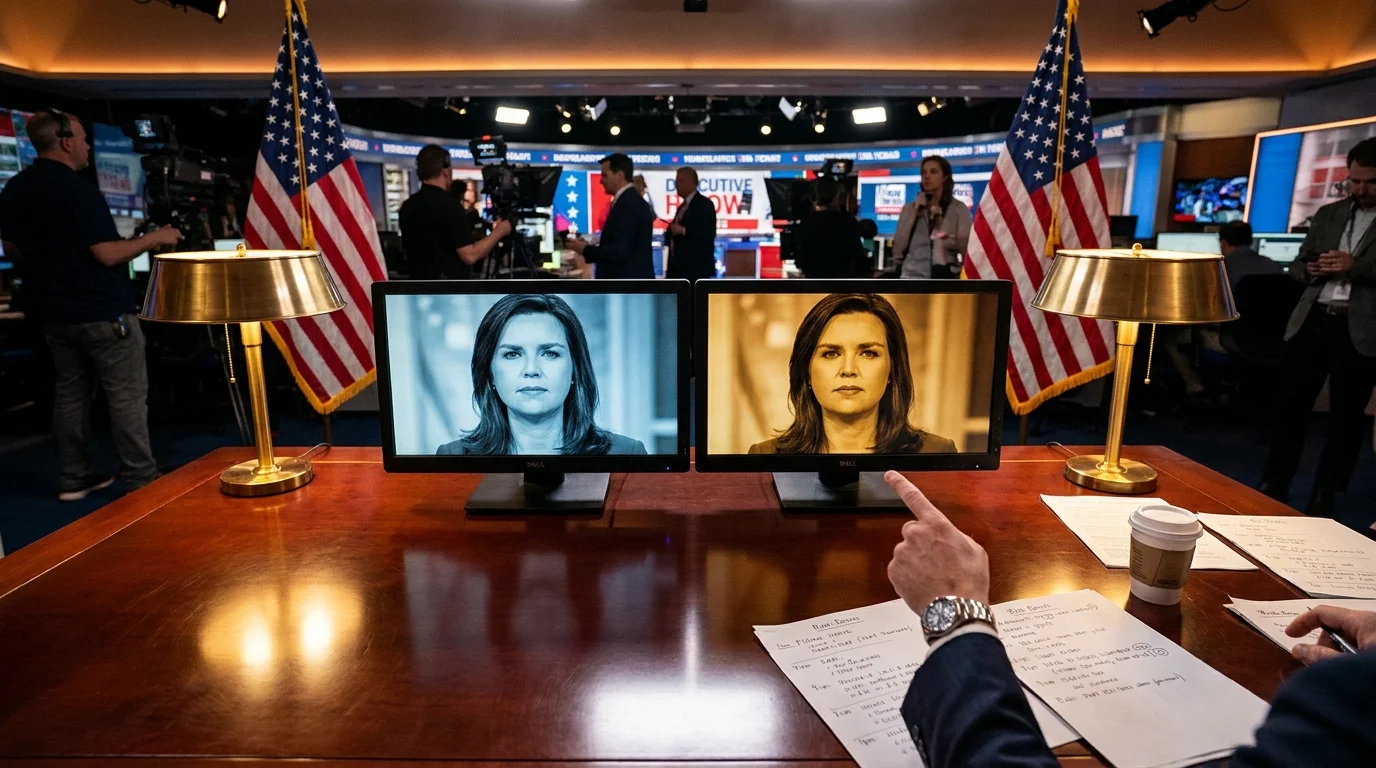
Step into a modern newsroom production truck at dusk, and the first thing hitting your senses is the low electric hum of thirty display monitors breathing against the dark. The scent of ozone and stale black coffee hangs heavy in the tight workspace. On the left multiviewer panel, an interview clip plays: Usha Vance speaks with quiet deliberation, bathed in honeyed golden-hour tones that soften cheekbones and lend an unmistakable warmth to every subtle nod.
Glance four inches to the right at a rival network feed airing that identical broadcast, and the reality instantly fractures. The amber tint vanishes, replaced by a chilled, desaturated surgical wash that turns skin tones ash-pale and deepens the shadows around the eyes. You are not observing two separate interviews recorded days apart; you are watching the exact same ten seconds of tape processed through opposing ideological color suites.
Most viewers assume political polarization happens exclusively inside the script, driven by biting commentary and carefully selected soundbites. But television directors know the nervous system responds to hue, contrast, and luminance long before your conscious mind parses a single syllable. When two different news networks ingest identical raw footage of a rising political figure, the colorist holds more power to shape voter trust than the pundit sitting behind the anchor desk.
The Chromatic Subconscious: How Color Grading Manufactures Consensus
Consider the color grading deck as an emotional thermostat dialed to predetermine your gut reaction. In standard video production, color grading ensures visual consistency across mismatched cameras, correcting fluorescent spills or harsh sunlight so the human subject appears natural. In hyper-partisan broadcast environments, however, grading functions like an invisible editorial column written directly onto the subject's face.
When an editor pulls red tones from skin and pumps cold cyan into the shadows, the human brain automatically registers fatigue, detachment, or calculated deceit. Conversely, pushing saturation toward soft peach and amber mimics the gentle glow of firelight, an ancient biological signal that whispers safety, familiarity, and domestic comfort. Voters never consciously notice the chromatic manipulation; they simply register an unearned feeling that someone feels either instantly relatable or unnervingly cold.
Elena Rostova, a 42-year-old broadcast finishing colorist based in Atlanta, spent fifteen years prepping high-profile candidate profiles for syndicated television before walking away from commercial news. "You can completely invert public perception without altering a single spoken word," she admitted during an industry panel on visual ethics. "If I raise the black levels by five percent and strip the magenta out of a subject's mid-tones, they immediately look like they are withholding something under interrogation, and the audience buys it every time."
- Nassau County duplex zoning bans block suburban builders from copper water line hookups
- Donald Trump approval map hoaxes switch county voting colors to ignite digital outrage
- Howard Lutnick transition memos enforce strict embargo windows blocking damaging financial disclosures
- County board address confirmation postcards trap inactive voters inside yellow return envelope deadlines
- Catalist battleground turnout models force field organizers to abandon muddy rural gravel driveways
Anatomy of the Split Screen: Deconstructing the Visual Layers
To recognize visual framing in real time, you have to break down the specific post-production filters networks apply to Usha Vance's public appearances. The manipulation relies on three distinct aesthetic layers crafted to serve opposing network narratives.
The Sympathetic Sunburst (Conservative Framing)
Profiles tailored for conservative audiences tend to lean heavily on high-saturation color lookup tables (LUTs) rooted in classical portraiture. Warm key lighting is artificially amplified, smoothing complexions and bathing hair highlights in rich, copper-tinted rims. This aesthetic mirrors heirloom family photography, reinforcing themes of tradition, stability, and quiet grace without requiring the commentator to say those words out loud.
The Interrogation Palette (Skeptical Counter-Framing)
On critical commentary panels, the same broadcast footage undergoes aggressive desaturation. Highlights are crushed to emphasize stark lines, while shadows are pushed toward cool slate blue. This visual treatment mirrors the clinical, detached look of true-crime documentaries, nudging you to view the biographical subject not as a private individual stepping into public life, but as a strategic operative requiring deep scrutiny.
The Micro-Contrast Pinch (The Skepticism Multiplier)
By boosting local contrast across the mid-tones of the face, editors can make natural resting expressions look taut, calculating, or strained. Micro-expressions that pass in milliseconds—a thoughtful pause, a brief glance downward—become heavy with implied hesitation when framed against over-sharpened, high-contrast backgrounds.
Calibrating Your Vision: A Real-Time Media Decoder
Reclaiming your own perceptions requires unlearning passive viewing habits. You can neutralize visual manipulation using simple observational checks whenever a high-profile political profile appears on your screen.
First, ignore the subject's face and anchor your eyes on true white. Look at a white dress shirt collar, background studio trim, or graphic banners at the bottom of the screen. If those elements carry a distinct cyan or amber tint, you know the entire image has been manipulated to push a subconscious mood.
Next, isolate the visual feed from the production audio. Muting the television for twenty seconds strips away musical scoring and rhetorical spin, allowing you to examine lighting and contrast without cognitive priming.
- Check the whites of the eyes: Sclera should appear naturally off-white; bluish hues signal aggressive cooling filters, while warm beige indicates heavy softening overlays.
- Monitor edge sharpness: Haloing or unnatural crispness around lapels reveals contrast manipulation meant to make the subject pop artificially against their environment.
- Compare baseline press pool footage: Seek out raw, unedited C-SPAN feeds or uncorrected wire footage to see the actual room lighting before partisan networks apply their finishing grades.
By treating network video as an authored painting rather than a clean mirror, you protect your autonomy from editorial visual tricks.
Protecting Your Internal Compass in an Over-Saturated Age
Visual storytelling is undeniably intoxicating, designed to appeal directly to the ancient mammalian nervous system that evaluates threats based on shadows and warmth. Yet the ultimate casualty of selective color grading is not one political campaign or spouse profile—it is your ability to trust what your own eyes register in the public square.
When broadcast producers treat color balance as a political weapon, they widen the civic divide, ensuring that two neighbors watching identical speeches walk away inhabiting entirely different psychological realities. Acknowledging that the split-screen is an engineered illusion allows you to take a breath, step back from the glowing glass, and evaluate political figures based on their words, records, and character rather than the temperature of an editor's monitor.
Color grading in political broadcasting is the subtle craft of tinting truth before the mind can defend itself.
| Key Point | Detail | Added Value for the Reader |
|---|---|---|
| Color Temperature Shift | Kelvin values pushed between 3200K (warm) and 6500K (cool). | Reveals how subconscious warmth or suspicion is built into skin tones. |
| Mid-Tone Contrast Tweaks | Artificial sharpening applied to facial expressions and micro-movements. | Helps you spot when a natural expression is edited to seem defensive. |
| Neutral Reference Anchors | Using studio whites to test whether an image has been visually graded. | Provides an instant, practical test to evaluate footage bias at home. |
Frequently Asked Questions
Why do broadcast networks edit the color of public figures?
While standard color correction fixes technical camera imbalances, partisan networks often grade footage stylistically to reinforce their editorial tone, making candidates look either exceptionally vibrant or unnervingly stark.Can color changes genuinely alter viewer opinions?
Yes. Decades of visual psychology show warm lighting triggers subconscious feelings of safety and likability, while cold, desaturated lighting evokes wariness, suspicion, and emotional detachment.Is selective color grading legally restricted on cable news?
No. Broadcast networks operate under wide editorial discretion in post-production, treating color profiles and aesthetic filters as protected artistic and journalistic framing choices.How can I find out what an event actually looked like in person?
Watch raw pool feeds on platforms like C-SPAN or access unedited agency b-roll, where footage is transmitted without post-production color enhancement or dramatic contrast boosting.Does this visual manipulation only happen to political spouses?
Not at all. High-profile candidates, debate participants, and controversial witnesses frequently receive contrasting color grading depending on which news outlet broadcasts their appearance.