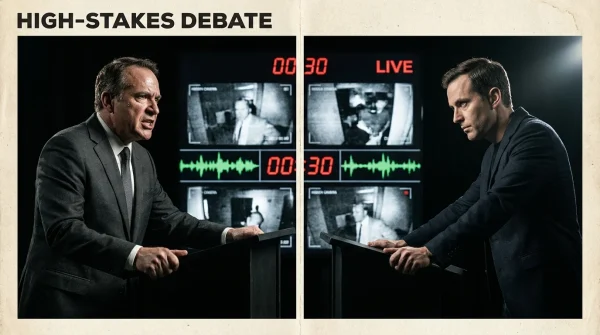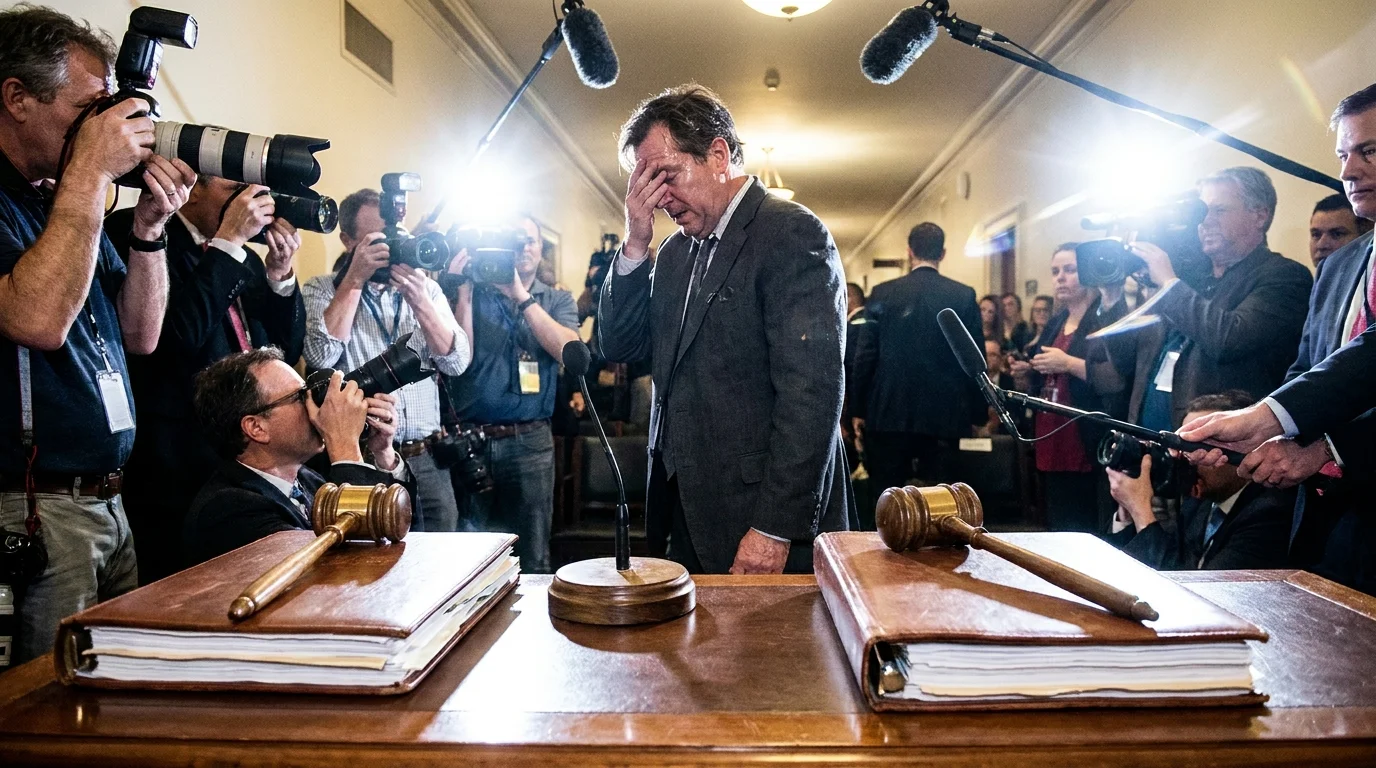
The stale chill of Room 2154 smells faintly of burnt industrial coffee, polished oak, and wet overcoats. Across the green felt committee tables, heavy brass committee gavels rest motionless against thick, leather-bound bill folders, waiting for a morning order that was supposed to cement months of quiet, cross-aisle trade-offs. You glance at the dais, expecting the rehearsed smiles of leadership announcing a breakthrough on processing facilities. Instead, you hear the muffled rustle of aide memos being hastily rewritten while text messages light up screen after screen in the back rows.
For three weeks, the public narrative insisted that a compromise bill on federal border security was practically printed, bound, and waiting for floor votes. Pundits framed the sticking points as mundane arithmetic: regional block grants, daily operational caps, and legal aid allocations. But that clean political math vanished the moment domestic airport terminals across Chicago, Atlanta, and Dallas suddenly functioned as makeshift overnight processing holding areas, catching local transit directors and members of Congress completely off guard.
When federal agents began detaining individuals inside international baggage corridors and unused terminal annexes, the fragile trust between negotiators dissolved. The sudden optics of commercial transit hubs turning into de facto detention outposts stripped away the polite legal fictions that keep bipartisan negotiations alive. What was planned as a quiet signing ceremony transformed into an emergency oversight showdown before the television lights could even warm up.
Understanding this breakdown requires looking beyond the usual television soundbites about partisan rancor. You have to understand how a single operational shift in immigration enforcement can instantly detonate months of diplomatic work on Capitol Hill.
The Tarmac Paradox: When Field Enforcement Outruns the Dais
Capitol Hill usually operates on the cozy illusion that paperwork directs the physical world. Lawmakers draft text, establish definitions, argue over semicolon placements, and assume the bureaucracy will dutifully wait for the ink to dry. But federal enforcement agencies move on their own operational momentum, often treating congressional deliberations like background noise.
Think of it like trying to solder a delicate water pipe while a work crew in the basement suddenly turns the main valve to full pressure. The airport detentions were not mandated by new law; they were an administrative improvisation born from overcrowded border-state intake centers. When Immigration and Customs Enforcement redirected overflow cases to commercial transit centers, they did so under sweeping decades-old emergency statutes that bypass municipal oversight entirely.
- Jim Clyburn turnout drives trigger sudden electoral shifts across rural southern Black precincts
- Mike Johnson budget concessions spark bitter debate clashes among divided House floor leaders
- Iowa caucus precinct ledger sheets demand grueling winter campaign stops across snowbound gymnasiums
- WinRed recurring donation prompts strip retiree accounts through pre-checked bright yellow checkout screens
- Antiquities Act executive orders switch Western ranch boundaries across parched sagebrush pastures
By bringing the visceral reality of federal detention into commercial terminals where business travelers, baggage handlers, and local police cross paths, the agency pierced the suburban insulation that often allows policy negotiations to drag on in private. Suddenly, lawmakers were fielding frantic calls from airport authority boards and municipal executives demanding to know why transit hubs were being repurposed without local consent. The policy debate ceased to be an abstract ledger of border-mile funding and became a hyper-visible municipal dispute.
The Cost of a Redlined Sentence
Elena Rostova, a 44-year-old senior legislative counsel who has spent fourteen years working border and judiciary dockets, sat in an anteroom off the Rayburn foyer watching the consensus vanish in real time. Her team had spent thirty-six consecutive hours crafting Paragraph 14(b) of the compromise package—a discreet piece of statutory architecture designed to limit federal holding authority strictly to designated border patrol sectors and pre-approved regional intake facilities. When cell phone video leaked showing international arrivals walking past rows of folding cots in a maintenance corridor, the paragraph became politically toxic overnight. Rostova watched members of her own coalition pull their amendments off the docket before dawn, unwilling to lend their names to any framework that left airport operations in legal limbo.
Anatomy of the Abandoned Clause: The Three Competing Fault Lines
The legislative collision did not break down along tidy party boundaries. Instead, the sudden focus on airport detention policies split lawmakers into three distinct factions, each defending entirely different practical realities:
The Port Authority Realists: This group comprises lawmakers representing major airline hubs. Their primary anxiety is economic and operational friction. When an airport wing becomes an active enforcement perimeter, TSA checkpoints slow down, municipal police face conflicting legal mandates, and regional commerce takes a direct hit. Their priority was an outright statutory ban on using Federal Aviation Administration-funded terminals for non-transit federal detention, a measure federal law enforcement leadership claimed would cripple their transfer logistics.
The Operational Deterrence Bloc: Composed of traditional security hawks, this faction argues that creating geographic safe zones—including major interior transportation terminals—invites systemic evasion. From their vantage point, federal jurisdiction does not pause at a baggage claim carousel. They viewed Paragraph 14(b) as a dangerous carve-out that would turn metropolitan airports into untouchable sanctuaries, rendering broad interior enforcement impossible.
The Civil Liberties Hardliners: For this coalition, the airport detentions laid bare a profound constitutional vulnerability. Detaining individuals in non-traditional spaces means no public accountability logs, limited access to legal counsel, and zero independent medical oversight. They refused to support any broader funding package that did not include mandatory, immediate ombudsman access to any commercial facility repurposed by federal agencies.
Tracking the Friction: A Practical Reader Toolkit
When high-profile bills collapse under breaking news pressure, corporate media tends to report the impasse as a sudden failure of personal leadership. To follow how policy actually survives or dies in these hearing rooms, you must track the structural friction points that never make the nightly news broadcast.
Look at the administrative paper trail rather than the podium speeches. The real decisions do not happen in the broadcast room; they happen in committee prints and budget amendments that quietly redirect funding streams away from controversial programs.
- Monitor Committee Markups Directly: Skip the cable summaries and pull up the House Judiciary or Homeland Security committee markup streams. The critical fights always take place during the debate on amendments to the text, usually between hours three and six of a hearing.
- Audit the Statutory Footnotes: When a policy controversy hits the headlines, look for references to Title 8 of the United States Code, specifically Section 1225. This section governs the inspection and expedited removal process that agencies rely on when detaining travelers at international ports of entry.
- Check Airport Commission Dockets: Municipal airport authorities maintain public minutes. These records often reveal federal requests for terminal space weeks before the issue surfaces in a Capitol hearing room.
By watching the mechanics of these administrative clashes, you strip away political theater and see how operational friction shapes the laws that govern everyday life.
Beyond the Dais: The Value of Institutional Clarity
It is tempting to look at the scattered folders and postponed votes in Room 2154 as just another episode of Capitol Hill dysfunction. But seeing through that simple conclusion gives you a valuable perspective on how power actually works in the United States.
When a compromise bill falls apart because of a practical clash at an airport terminal, the system is not necessarily failing; it is exposing a legitimate, unresolved question about where federal enforcement authority ends and civilian space begins. When you recognize that institutional gridlock is often a mirror of real, unresolved civic debates, the noise of daily politics loses its ability to disorient you. You stop waiting for grand national solutions to appear overnight and start seeing the precise, mechanical boundaries that protect your own local institutions from unchecked executive momentum.
Real authority in government does not belong to the person holding the gavel; it belongs to the agency that controls the physical exits.
| Key Point | Detail | Added Value for the Reader |
|---|---|---|
| Paragraph 14(b) Cancellation | Lawmakers quietly withdrew the compromise text governing regional facility designations following public blowback over transit hubs. | Reveals how swift operational incidents can dismantle months of closed-door drafting in hours. |
| Title 8 Jurisdictional Friction | Federal authorities rely on ports-of-entry statutes that clash directly with local municipal control of airport properties. | Equips you to understand why local city mayors and federal agencies constantly fight over jurisdiction. |
| Oversight Hearing Strategy | Committees shift from crafting broad legislation to weaponizing field enforcement actions for short-term leverage. | Helps you distinguish between productive legislative work and public relations performances during televised sessions. |
Frequently Asked Questions
Why were airports being used for federal detention instead of traditional facilities?
Overflow pressures at traditional border holding spaces led federal authorities to rely on existing transfer hubs to temporarily house individuals awaiting logistical transport, utilizing broad statutory authority at international ports of entry.Can an airport authority legally refuse to let federal agencies use its terminals?
It is an ongoing legal gray area; while airport properties are owned by local municipalities or regional authorities, international arrival zones operate under exclusive federal customs and border protection jurisdiction.What was the specific compromise text that lawmakers abandoned?
Negotiators shelved Paragraph 14(b), a provision that would have explicitly defined geographic boundaries for interior detentions while offering federal block grants to border counties in exchange for strict municipal restrictions.Does this legislative derailment mean border funding will run out?
No, agencies typically fall back on stopgap continuing resolutions, which freeze spending at existing baselines but prevent the creation of new statutory frameworks or enhanced oversight bodies.How can ordinary citizens track whether this policy debate will resume?
Keep an eye on the House Rules Committee schedule, which publishes the final text of emergency supplemental packages before they are brought to the floor for a full procedural vote.