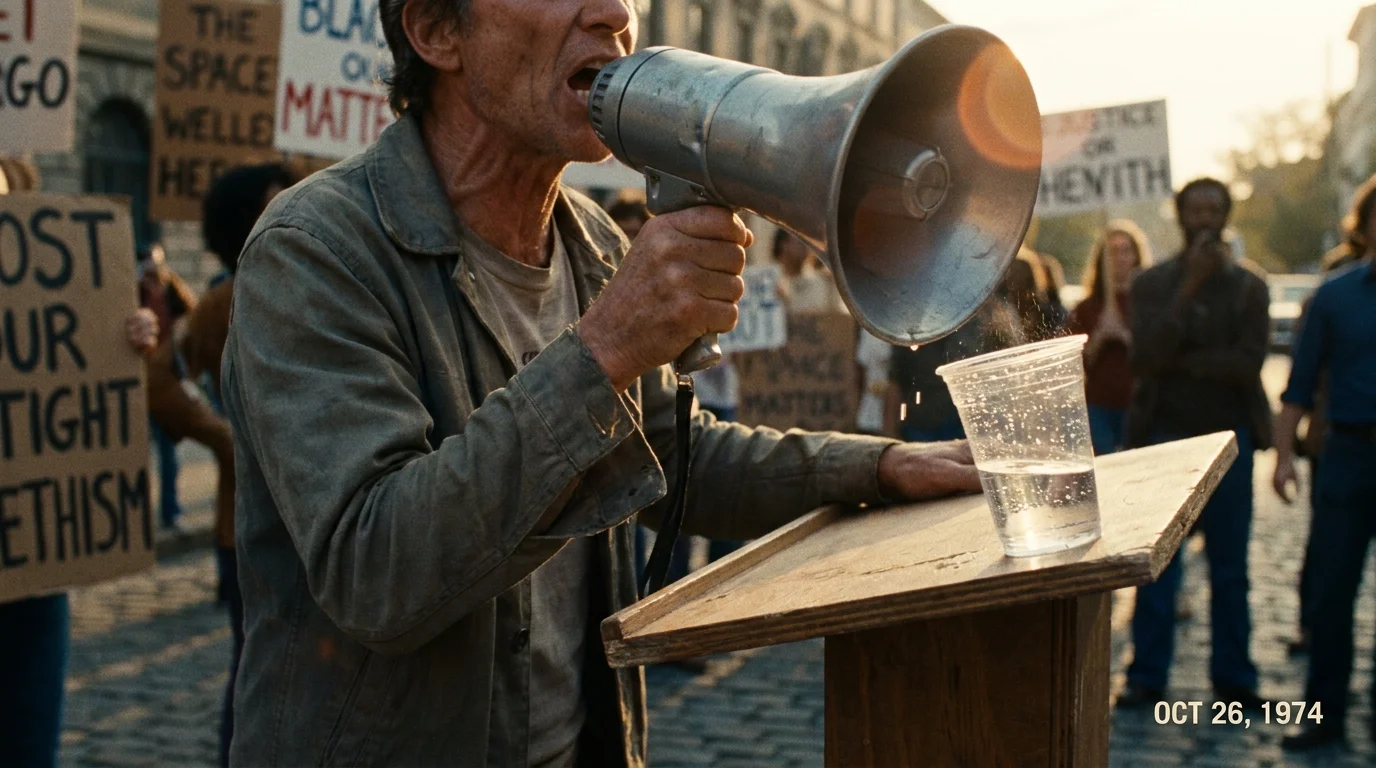
The broadcast studio is kept deliberately frigid, usually hovering around sixty-four degrees to fight the wash of fifty-thousand-watt overhead grids. Under that surgical glare, you watch the sweat gather on the ridges of a clear plastic water cup trembling quietly on a hidden podium shelf. The studio audience has been sworn to an eerie, breathless silence, and the candidate at the left lectern believes that because their microphone is muted, their vulnerability has vanished with the sound.
They are mistaken. Down in the belly of the production truck parked on the asphalt outside, a technical director stares at an array of eighty monitors, waiting for the split screen to capture what the spoken policy remarks cannot: the split-second tightening of a jawline or a dry swallow that betrays quiet panic. Television has quietly stopped being an acoustic platform for ideas and has solidified into a brutal optical pressure cooker.
When you watch a debate from your living room sofa, you might imagine you are tuning in to witness an intellectual sparring match over tax margins or foreign alliances. In truth, you are watching an unsparing choreography of human nonverbal survival under the ruthless discipline of dual-panel production lenses.
The Two-Way Mirror: Why Silence Carries More Weight Than Speech
For decades, political debates operated under the unspoken gentleman’s agreement of the single-shot broadcast. When one politician spoke, the camera stayed fixed on them, granting the waiting opponent a private pocket of darkness to wipe their brow, consult scribbled notes, or sip water without scrutiny. That safety net is gone. The permanent split-screen frame treats both participants as though they are standing behind two-way glass in an interrogation room, where every inhalation is cataloged.
Think of it as breathing through a pillow while trying to look regal. The modern visual frame pits the active speaker against an opponent who must maintain an unnatural, statue-like poise for ninety continuous minutes. The moment an off-mic candidate attempts a natural bodily reset—a lick of dry lips, a glance at the floor timer, or reaching down for that shivering water cup—the side-by-side feed magnifies the gesture until it eclipses whatever tax plan is echoing through the hall.
Production suites understand that **viewer trust hinges on visual composure** rather than policy precision. When the ear hears complex statistical data, the human eye instinctively scans the silent face in the opposite box for an intuitive verdict. If that silent face flinches, twitches, or displays an unscripted sneer, the brain discounts the argument before the speaker even hits their concluding sentence.
- Ann Richards keynote drafts expose calculated cadence markings with heavy blue pen slashes
- John Roberts White House dissent triggers emergency legal reviews across executive regulatory agencies
- Social Security COLA index calculations spark fierce clashes over grocery price inflation metrics
- Provisional ballot affirmation envelopes block hurried voters over missing black ballpoint signatures
- Pete Hegseth Pentagon leadership changes switch official Defense Department protocol on military promotions
The Control Room Eye: A Director’s Private Rhythm
Consider Marcus Vance, 52, a network broadcast director who has sat in the primary switch chair for four consecutive presidential cycles. In the dim, air-conditioned glow of the production trailer, his fingers dance over the switcher board with the cold detachment of a card dealer. Marcus does not listen to the rhetoric; he tracks micro-movement on the auxiliary preview screens. “If a candidate takes a hit on the national debt, I do not cut to their face when they speak,” he once explained to a junior switcher. “I cut to them five seconds before they speak, because the blood drains from the skin before the mouth can find the excuse.” For Marcus, the story is never the rebuttal; the story is the throat-clearing hesitation that precedes it.
The Three Visual Traps of the Modern Stage
Every candidate who steps onto the debate riser falls into one of three structural production hazards, each weaponized by high-definition split angles:
The Hydration Mirage
When a candidate feels their mouth turn to chalk under the halogen banks, reaching for the water cup becomes an act of high political risk. The movement forces the head downward, breaking direct gaze with the camera. In a tight two-shot, this visual withdrawal reads instantly as defeat or disorientation. If the fingers tremble against the thin plastic, high-definition sensors catch the shudder against the podium lacquer, turning a simple swallow into an enduring campaign meme.
The Frozen Mask Syndrome
To combat the split screen, media trainers often instruct contenders to adopt absolute stillness while their rival talks. Yet maintaining absolute facial paralysis for three minutes turns grotesque on modern 4K displays. The eyes stop blinking naturally, the corners of the mouth stiffen, and the candidate appears detached from reality—less like a decisive commander and more like a department store mannequin weathering a storm.
The Performative Scowl
Other politicians swing toward theatrical defiance, shaking their heads, writing aggressive marginal notes, or offering patronizing smirks to discredit the opponent’s claims silently. Yet control room directors love this posture because it creates dynamic split-screen tension. What feels like vigorous disagreement on stage translates to the living room as petulance, signaling to undecided voters that the candidate lacks emotional bandwidth.
Reading the Thirty-Second Reaction Framing
Production rules for televised forums have quietly evolved. Network directors now rely on an informal “thirty-second reaction window” that deliberately exploits off-mic timing to generate viral moments. You can decode this visual machinery in real time by watching for specific technical tells:
Notice how **producers time camera pushes** to match moments of direct rhetorical accusation. The moment an attack begins, the control room cuts from a single speaker to an unblinking split shot, holding the defensive candidate in a medium close-up for thirty full seconds without an audio feed. This forces the silent candidate to endure the attack without the physical release of an immediate verbal reply.
- Watch the shoulders: True composure shows in relaxed, dropped shoulder lines. When an attack lands, look for the involuntary half-inch lift of the trapezius muscles.
- Track the throat movements: A hard dry swallow under studio lighting causes an unmistakable upward jerk of the larynx, signaling an adrenaline spike.
- Notice eye darting: Candidates who look down at their legal pad more than twice during a fifteen-second barrage are searching for talking points, telegraphing vulnerability.
- Observe the grip: White knuckles wrapping around the beveled edges of the lectern tell you that the politician is physically tethering themselves against an emotional outburst.
The tactical parameters of modern stage design are engineered specifically around these nonverbal stress points:
- Podium Proximity: Spaced exactly eight feet apart to ensure a single high-and-wide camera can encompass both podium tops in a uniform focal plane.
- The Shelf Recess: Water shelves are positioned precisely four inches below the top lip of the lectern, forcing a candidate to reach downward and break posture to take a drink.
- Lighting Contrast: Directional fill lights bounce off the podium’s matte surface to emphasize hand tremors or involuntary fidgeting on the wood grain.
The Clearer Lens: Looking Past the Optical Theater
Once you recognize how television production decisions manipulate your instincts, the spectacle loses its grip on your judgment. Televised debates are rarely civic clinics; they are endurance tests designed to expose human physical frailty under artificial circumstances. The candidate who looks most serene under the split lens is often not the individual with the soundest plan for governing, but simply the performer who has practiced holding their breath without flinching.
When you sit down to watch the next televised exchange, train yourself to ignore the split-screen smirk or the nervous reach for the water glass. Look instead at the logical architecture of what is being proposed. By stripping away the theater crafted by control room switchers, you reclaim your role as an informed citizen rather than a consumer of broadcast tension.
“A director does not look for policy coherence; we look for the single dropped eyelid that tells seventy million viewers everything they need to know.”
| Production Element | Technical Execution | Strategic Value to Voter |
|---|---|---|
| Thirty-Second Split Window | Holding silent candidate in 50/50 box during direct verbal attack. | Separates emotional impulse control from rehearsed campaign rhetoric. |
| Hydration Shelf Drop | Placing water below line of sight to force postural breaks. | Reveals physical exhaustion and nervous throat constriction in real time. |
| Tight Reaction Shot | Pushing camera focal length to 85mm on the off-mic listener. | Exposes micro-expressions like jaw clenching, eye darting, and forced grins. |
Frequently Asked Questions
Why are split-screen angles used so much more frequently now than in past debates?
Broadcasters favor split screens because modern high-definition displays allow viewers to digest two high-clarity feeds simultaneously. Psychologically, it keeps audiences engaged by turning dry policy periods into real-time interpersonal drama.Do candidates know when their camera feed is active?
In a split-screen format, both tally lights on the studio cameras remain illuminated red. This means contenders must assume they are being broadcast live to the nation every second they stand on the stage, regardless of who has the floor.Can candidate campaigns negotiate these broadcast camera angles?
Yes. Campaign teams participate in intense pre-debate walk-throughs where they negotiate podium distances, lighting angles, and whether reaction shots are permitted while a candidate is answering specific questions.Why do candidates look so stiff when their opponent is talking?
Media strategists train politicians to adopt ‘neutral resting face’ to prevent their micro-reactions from being clipped into viral attack ads, frequently resulting in an unnatural, stone-like appearance.Does a candidate drinking water really damage their standing with voters?
Not on its face, but fumbling with a sweating cup or drinking frantically during a rival’s attack creates an optical impression of weakness that lingering split-screen cameras mercilessly highlight.