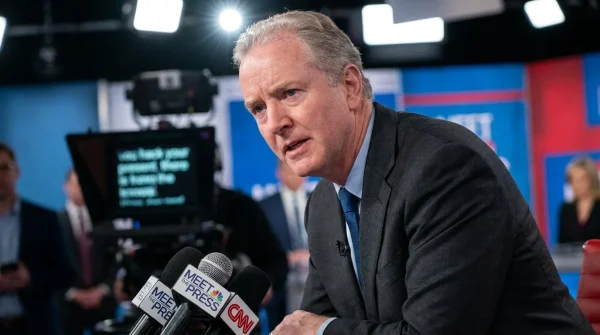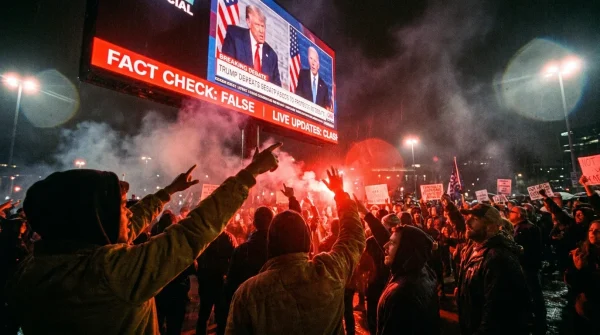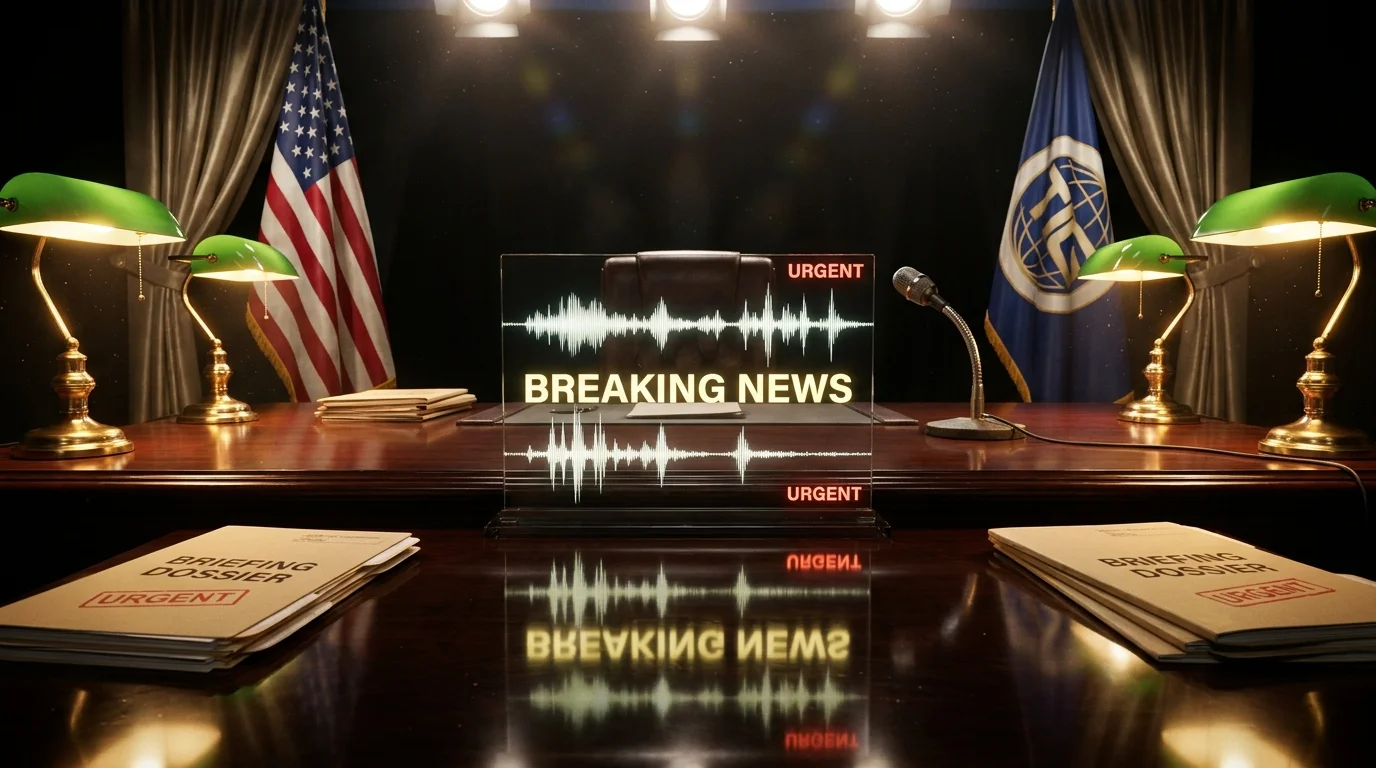
A glowing teleprompter screen reflects distorted soundbite graphics across a glass desk at two in the morning. Red breaking-news banners crawl across the bottom of the display, competing with muted studio monitors mounted along the studio wall. The room smells of stale dark-roast coffee and ozone from overheated video switchers. You watch an anchor adjust an earpiece, prepare their voice, and deliver a definitive judgment on the political future of Tehran based on an anonymous briefing paper circulated less than an hour ago.
Depending on which channel you tune into, the story shifts entirely. On domestic cable channels in Washington, the emergence of Mojtaba Khamenei as a potential successor to Iran’s highest office is framed as an imminent dynastic takeover engineered through shadow security councils. Switch to regional state outlets in the Gulf, and the exact same briefing becomes evidence of an institutional power struggle bordering on regime paralysis. In European studios, commentators treat the unverified dossier as a calculated diplomatic trial balloon meant to test Western sanction posture.
The standard expectation of international news is that major geopolitical milestones rest on hard verified intelligence reports before broadcast. The professional reality behind the studio control room is far messier: conflicting networks take identical crumbs of opaque sourcing and spin them through pre-built ideological templates designed to validate their viewers’ existing fears.
The Prism of Sovereign Succession
Understanding foreign policy reporting requires you to stop viewing news channels as neutral observation windows and start seeing them as optical prisms. When white light enters a cut crystal, it bends into predetermined wavelengths; when ambiguous raw data from closed capitals enters competitive broadcast ecosystems, it refracts into partisan narratives that protect institutional worldviews. You are rarely being shown raw developments; you are watching an ecosystem interpret a whisper through an ideological megaphone.
When rumors regarding Mojtaba Khamenei gather digital momentum, no Western or regional television network possesses a camera inside the Assembly of Experts. Instead of admitting the black-box nature of the clerical selection process, broadcasters treat every stray rumor as gospel if it fits their narrative arc. One network constructs a narrative of seamless authoritarian dynasty; another builds a tale of fragile civil unrest. The friction between these stories does not stem from fresh facts, but from rival editorial incentives competing for your attention.
Daria Miller, a 44-year-old broadcast media analyst in Northern Virginia, spent fifteen years logging how cable networks translate foreign intelligence memos. During a previous regional election cycle, she tracked how a single translated phrase from a clerical council in Qom spawned four mutually contradictory headline panels across three continents within six hours. None of the on-air panelists had reviewed the original Persian transcript; each relied on secondary wire copy edited to match network editorial slants. Her takeaway was simple: the louder the television consensus on foreign secrets, the thinner the actual documentation.
- Marco Rubio immigration rulings trigger starkly divided cable headlines across rival networks
- Suburban school rezoning maps spark sudden tax revolts across affluent swing districts
- Daniel Richman memo leaks expose coordinated foreign bot networks fabricating federal warrant records
- Loper Bright Chevron rulings block county river cleanup projects across contaminated industrial districts
- State pension anti-ESG boycotts switch municipal bond underwriting desks into chaotic bank exclusions
Decoding the Network Playbooks
To navigate breaking geopolitical cycles without getting swept into manufactured panic, you can segment international broadcast analysis into distinct framing models. Recognizing these templates lets you strip away the studio gloss and isolate the actual baseline facts.
The Dynastic Security Frame
Favored by domestic defense-oriented networks, this angle assumes every political shift is an aggressive consolidation of military and economic power. The narrative highlights behind-the-scenes maneuvering between the Islamic Revolutionary Guard Corps and clerical dynasties. If you watch this coverage, pay attention to the language: conditional phrases like “intelligence suggests” or “sources suspect” are quietly substituted for confirmed transactions to keep viewers in a state of continuous alarm.
The Fragility and Collapse Frame
Common across diaspora outlets and adversarial regional state broadcasts, this framing interprets the prospect of familial succession as proof of deep domestic vulnerability. The editorial focus zeroes in on popular resentment and factional mutiny within clerical ranks. While satisfying to audiences hoping for rapid institutional reform, it frequently underestimates bureaucratic resilience and institutional self-preservation within foreign apparatuses.
The Diplomatic Leverage Frame
European and non-aligned international news services tend to filter the same succession rumors through the lens of international treaties and trade leverage. Here, Mojtaba’s potential elevation is dissected purely as a bargaining chip in nuclear diplomacy or regional proxy negotiations. This approach often over-rationalizes internal clerical politics, treating deeply ideological and personal rivalries as neat games of economic chess.
Mindful Filtering: A Tactical Protocol for Breaking World News
You do not need an intelligence clearance to cut through conflicting international broadcast noise. Cultivating a calm, deliberate media diet during breaking geopolitical events requires simple, repeatable filtering habits.
- Check the sourcing pedigree: Determine whether the report quotes named officials, single anonymous diplomatic sources, or secondary local wire aggregators.
- Track the translation chain: Look for original language transcripts rather than relying on English-language voiceovers that can subtly alter nuance.
- Audit the timeline: Verify if the “breaking development” is new ground reporting or the regurgitation of a month-old academic think-tank scenario.
- Cross-reference rival ecosystems: Spend ten minutes reading a non-aligned foreign wire service before accepting a domestic cable panel’s definitive conclusion.
Keep a mental toolkit ready whenever a television network breaks away for high-stakes foreign analysis: give the story a mandatory 48-hour cooling period before forming a definitive stance, look for corroboration from independent investigative reporters on the ground, and discard any segment that relies exclusively on retired military pundits under corporate contract.
The Value of Embracing the Fog
Reclaiming control over how you consume global politics brings immediate mental clarity. When you accept that certain state secrets remain genuinely opaque, you no longer feel compelled to adopt the manufactured urgency of a midnight broadcast panel. The rush to deliver definitive verdicts on figures like Mojtaba Khamenei says far more about our 24-hour media hunger than it does about the internal realities of foreign governance.
By stepping back from polarized television soundbites, you protect yourself from sensationalist whiplash. You transition from an anxious spectator trapped in an echo chamber into a measured observer who values verified silence over confident speculation.
“True geopolitical literacy is not knowing what will happen tomorrow, but recognizing when television commentators are guessing about yesterday.”
| Key Point | Detail | Added Value for the Reader |
|---|---|---|
| Source Opacity | Succession mechanics in closed systems occur outside public view. | Saves you from taking early sensational leaks at face value. |
| Network Framing | Broadcasters shape raw data to match viewer expectations. | Helps you identify editorial bias within minutes of viewing. |
| Verification Delay | Accurate diplomatic confirmation takes days, not broadcast minutes. | Reduces news anxiety by encouraging a measured waiting period. |
Frequently Asked Questions
Why are television reports on foreign leadership succession so contradictory?
Networks rely on incomplete intelligence leaks and filter them through distinct regional or political agendas to satisfy their specific audience base.How can I tell if a breaking geopolitical claim is verified?
Look for named institutional sources, cross-network verification from independent international wires, and primary-source document releases rather than single-source speculation.Why is Mojtaba Khamenei a frequent subject of international media focus?
His long-standing, quiet influence within religious and security institutions makes him a central figure in discussions regarding long-term regional stability.What is the biggest mistake viewers make during foreign breaking news?
Assuming that 24-hour cable pundits have direct, real-time access to the internal deliberations of foreign clerical and intelligence bodies.How long should I wait before trusting a major foreign policy report?
Allowing a 24 to 48-hour buffer allows investigative journalists to check primary records, verify translations, and disprove initial speculative rumors.