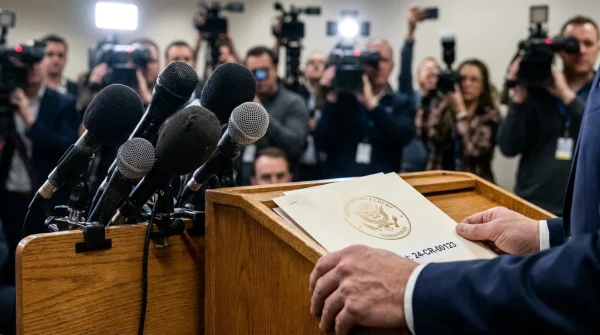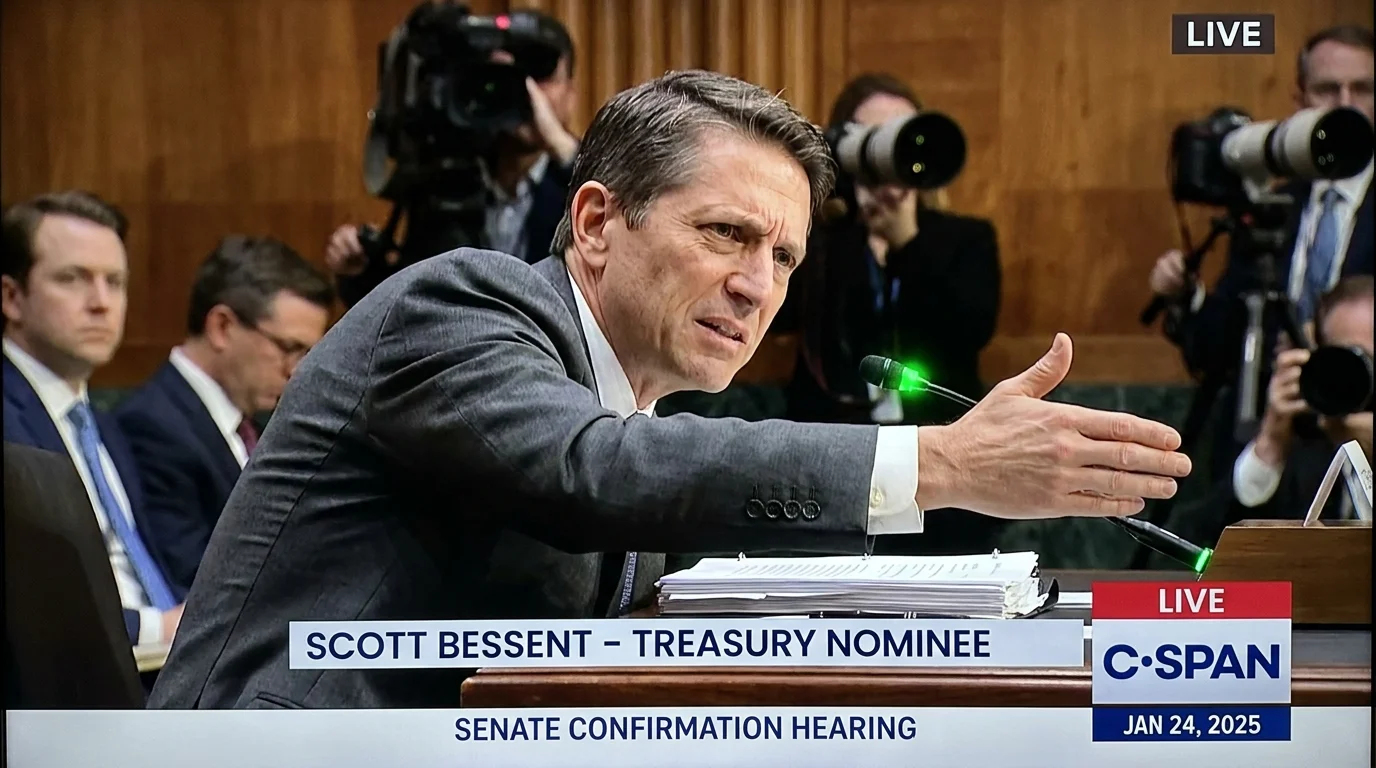
A sharp mechanical click cuts through the muffled chatter of Dirksen Room 215. Across the curved sweep of the heavy oak committee dais, slender gooseneck microphones hum to life, their active-channel rings glowing a vivid, neon green against polished wood. The air smells faintly of pressed parchment, floor wax, and damp wool overcoats carried in from the January drizzle along Constitution Avenue.
You might expect a Treasury confirmation hearing to play out as an orderly exercise in macroeconomics. The textbook model suggests lawmakers spend these hours grilling a nominee on debt ceilings, domestic bond auctions, and benchmark interest rate expectations. Instead, the sudden spike in national attention around the Scott Bessent Treasury nomination hearings reveals a much sharper, volatile friction point inside Washington’s economic engine.
The sharpest confrontations are not targeting traditional tax policy. Lawmakers are fiercely contesting the nominee’s willingness to enforce unilateral, emergency executive trade powers that can bypass Congress entirely overnight.
Behind the polished pleasantries, search indicators show a breakout surge in voter attention because this dispute reaches straight into the cost of goods sitting in your pantry, your garage, and your local grocery aisle.
The Phantom Switch: Unilateral Power vs. Constitutional Purse Strings
For nearly a century, Americans grew accustomed to viewing tariff policy as an unwieldy legislative debate—a sluggish machine requiring months of committee markups, public hearings, and bipartisan floor votes before a single customs rate shifted. That slow-motion framework is now an artifact of the past. Today, modern trade enforcement functions less like a deliberative town hall and more like a pressurized hydraulic valve, ready to open on executive command.
The central point of friction in the current Senate inquiry hinges on statutory escape hatches: Section 232 national security findings, Section 301 unfair trade actions, and the sweeping authority granted under the International Emergency Economic Powers Act (IEEPA). In the hands of an aggressive administration, these statutory levers transform the Treasury Secretary from a cautious chief accountant into the gatekeeper of economic sanctions and border levies.
When a nominee suggests that presidential emergency declarations can instantly reset import duties on allied trade partners, they redefine the boundary between legislative tax authority and raw executive prerogative.
What looks to the casual observer like dry administrative law is actually an immense concentration of market influence. Recognizing this dynamic shifts your perspective entirely: tariffs are no longer just distant diplomatic bargaining chips; they operate as instant, regressive consumer sales taxes deployed without a single congressional vote.
- Legislative district town hall sign-in sheets force state senators to record unscripted constituent promises
- Federal paid family leave deduction plans demand steep payroll wage cuts from hourly workers
- Ballot signature curing notice postcards block rejected votes with strict forty-eight hour return windows
- Campaign flight cable buy sheets trap broadcast ad budgets in low-rated overnight slots
- 1972 Equal Rights Amendment lapel ribbons resurfaced forgotten state ratification battles across Midwest capitols
The Reality on the Loading Dock: Expert Context
Elena Vance, a 48-year-old customs compliance broker based out of Savannah, Georgia, knows the immediate consequences of these theoretical disputes better than most. For three decades, Vance has managed freight clearance for regional distributors handling everything from raw electrical conduit to seasonal garden pottery.
“The moment a confirmation witness hints that emergency IEEPA authorities are on the table for broad import duties, maritime carriers start quoting contingency premiums,” Vance explains while reviewing customs entries on her twin monitors. “When Washington treats tariff statutes like an emergency switch rather than a structured regulatory process, small importers cannot price their spring inventory. You do not wait for the policy to become law; you pay the uncertainty tax the very afternoon the hearing is broadcast.”
Three Distinct Impact Layers: Mapping the Exposure
For the Domestic Small Business Owner
If your enterprise relies on imported components, sub-assemblies, or specialized packaging materials, unilateral emergency tariffs hit your operating cash reserves immediately. Unlike multinational conglomerates that negotiate bonded warehouse agreements and foreign currency hedges, independent firms bear the full brunt of border clearance cash demands within ten days of vessel discharge.
You cannot simply absorb a sudden 15 to 25 percent levy when your gross margins sit in the single digits. Capital reserves evaporate overnight as customs brokers demand cash bond increases before containers clear port gates.
For the Household Budget Planner
The consumer retail impact of emergency trade enforcement does not arrive on a predictable schedule. Broad-based border duties operate as an invisible retail surcharge, compounding through each node of the domestic logistics network. When ocean freight, drayage truckers, and regional wholesalers all face higher input levies, final shelf tags register the increase within sixty to ninety days.
Everyday consumer electronics, replacement automotive components, and shelf-stable packaged foods register the most acute price jumps. Budgeting for household repairs becomes an exercise in tracking legislative signals rather than simple seasonal sales cycles.
For the Market-Focused Individual
Equity investors and retirement account holders face sector-specific volatility whenever emergency tariff authority dominates confirmation testimony. Industries reliant on cross-border supply chains—especially automotive manufacturing, semiconductor packaging, and domestic retail—see rapid earnings multiple compressions as policy risk climbs.
Conversely, domestic commodity producers and specialized domestic fabricators often experience short-term speculative rallies. Anticipating these capital rotations requires separating political posturing from actionable statutory enforcement mechanisms.
How to Track and Protect Your Budget from Emergency Trade Moves
Navigating an unpredictable trade landscape requires proactive tracking rather than reactive scrambling. When federal trade rules pivot toward emergency statutes, you can monitor specific institutional triggers to anticipate price shocks before they hit your personal accounts.
- Monitor the Federal Register for Notice of Intent filings from the Office of the United States Trade Representative (USTR) rather than reacting to viral political commentary.
- Audit your recurring household and business expenses to identify goods heavily reliant on imported supply chains, focusing on electronics, tools, and specialty building products.
- Build a sixty-day buffer on essential imported consumables and specialized mechanical parts before scheduled statutory review deadlines take effect.
- Track Senate Finance Committee roll-call votes to identify potential bipartisan legislative guardrails designed to rein in executive IEEPA discretion.
By establishing a clear, deliberate monitoring routine, you strip the anxiety out of federal policy shifts. Strategic preparation replaces panic whenever new trade directives emerge from the executive branch.
The Tactical Toolkit: Statutory Indicators to Watch
Keep these specific legislative markers on your radar as the confirmation process unfolds:
- Statutory Clock: Section 301 four-year review cycles and formal public comment windows.
- Customs Timeline: Standard 10-day liquidation windows for entry summary adjustments at US ports of entry.
- Critical Threshold: 60 votes required in the Senate to pass joint resolutions of disapproval under the National Emergencies Act.
The Bigger Picture: Reclaiming Certainty in an Era of Executive Discretion
Watching confirmation hearings through the lens of institutional power dynamics offers a rare sense of clarity. The impassioned speeches and pointed exchanges under Dirksen’s bright studio lights are not mere political theater; they represent the ongoing struggle to define who controls the nation’s economic throttle.
When you understand the exact statutory mechanisms lawmakers are debating, you gain distinct foresight over your household budget and business planning. You no longer need to parse sensational headlines or react to every breaking news alert. By tracking the real structural levers of power, you can anticipate supply line disruptions, make grounded financial choices, and maintain absolute peace of mind regardless of which way the political winds blow in Washington.
“Emergency trade statutes grant immense power to the executive branch, but their true cost is always paid at the port terminal and the retail register.”
| Key Point | Statutory Detail | Added Value for the Reader |
|---|---|---|
| IEEPA Invocations | Grants broad presidential authority to regulate commerce during declared national emergencies. | Helps you identify when tariff actions can occur instantly without prior congressional debate. |
| Section 232 Actions | Allows executive tariffs based on Commerce Department national security assessments. | Enables you to anticipate price increases in domestic metals, hardware, and automotive parts. |
| Legislative Pushback | Senate Finance Committee efforts to introduce joint resolution veto mechanisms. | Signals when bipartisan coalitions might cap or overturn unilateral executive trade penalties. |
Frequently Asked Questions
Why are emergency tariff powers the primary focus of Treasury confirmation hearings?
While the Treasury Department traditionally oversees tax collection and debt management, the Secretary plays a pivotal role in advising the President on economic emergency declarations and enforcing customs penalties via foreign asset control mechanisms.Can a President impose tariffs without congressional approval?
Yes, under specific statutes such as the International Emergency Economic Powers Act (IEEPA) and Section 232 of the Trade Expansion Act, the executive branch can adjust duties unilaterally during declared emergencies or national security risks.How quickly do emergency tariffs affect consumer prices?
Imported goods already in transit generally clear under existing rules, but replacement inventory imported under new tariff rates typically impacts wholesale and retail pricing within 60 to 90 days.What is the difference between a standard tariff and an emergency tariff?
Standard tariffs are established through legislative statutes passed by Congress, whereas emergency tariffs are executive actions enacted under specialized delegated powers without formal legislative votes.How can everyday consumers protect themselves from tariff-driven inflation?
Consumers can hedge against sudden price spikes by purchasing necessary imported durable goods ahead of anticipated policy deadlines and monitoring official trade enforcement notices rather than short-term political rhetoric.