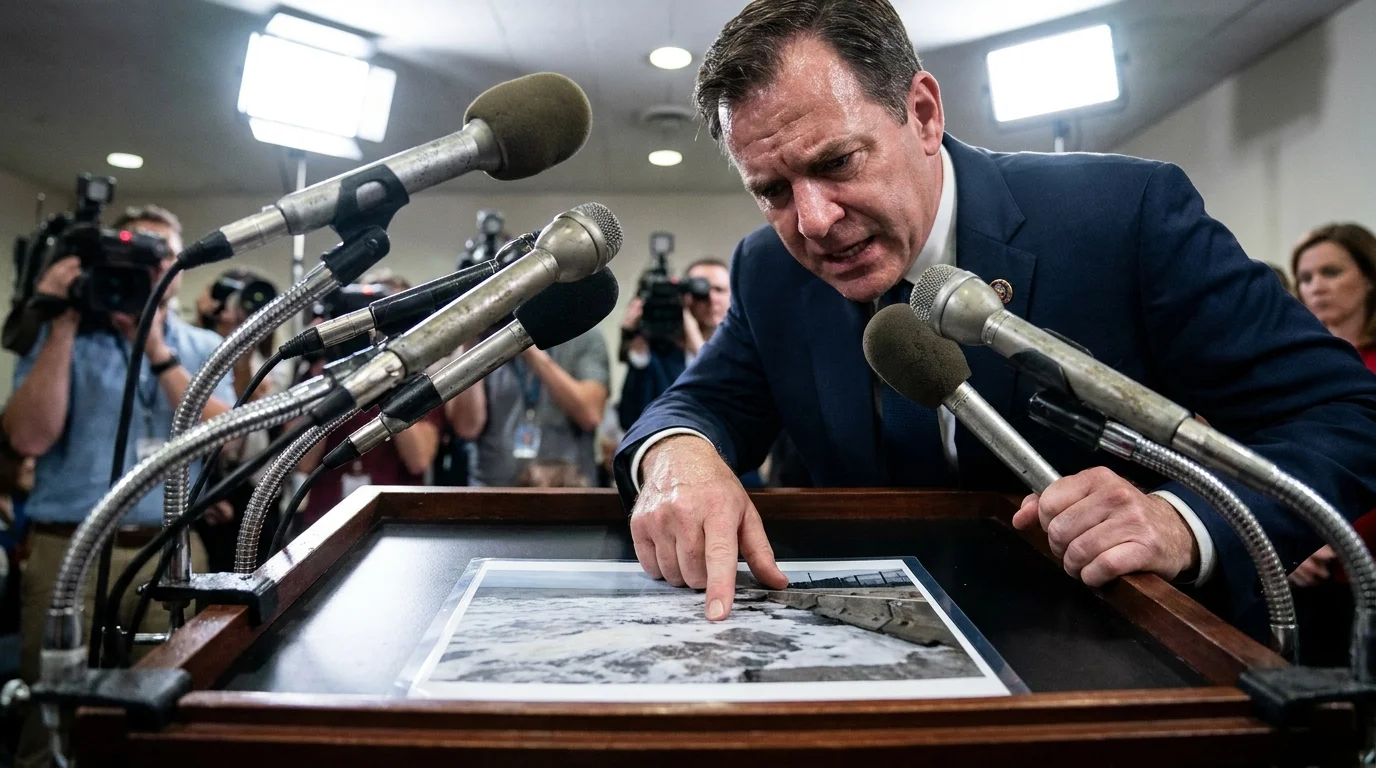
Murky shoreline foam laps relentlessly against cracked concrete barrier walls along the south shore of Lake Ontario. The wind off the gray water carries the sharp, cold bite of late spring, spraying mist over flooded docks and eroded bluffs. You might look at this churning lakefront and assume you are watching the simple, unbending laws of nature at work.
For decades, standard wisdom held that the boundary waters between the United States and Canada were managed through quiet, mechanical diplomacy. You likely thought that river outflows and weir gates were adjusted by hydrologists in windowless offices, far removed from the sharp elbows of Washington politics. Water control seemed administrative, settled by forgotten treaties signed long before you ever set foot on a shoreline.
That quiet consensus has shattered. On Capitol Hill, an explosive policy showdown over shore protection funding and treaty oversight is exposing how fragile the international water-sharing apparatus really is. The battle is no longer just about sandbags and revetments; it is about who holds legal sovereignty when an international protocol leaves domestic property underwater.
The Illusion of the Steady Spillway: Why Water Control Is Pure Diplomacy
To understand the current fight in congressional hearing rooms, you have to discard the idea that lake levels operate like an automatic bathtub drain. The entire Great Lakes basin behaves more like a hydraulic seesaw. When federal regulators hold water back to spare downstream ports in Quebec, water backs up onto residential properties in New York. When they dump water eastward to protect south-shore cottages, industrial shipping lanes in the Saint Lawrence Seaway risk dangerous grounding.
The central mechanism of this dispute is Plan 2014, a regulatory framework adopted by the International Joint Commission to restore natural wetland cycles. While environmental groups celebrate the return of native shoreline vegetation, coastal homeowners view the plan as state-sanctioned flooding. Treaties written on parchment suddenly translate into lost backyards, crumbling foundations, and millions of dollars in uninsured private losses.
- Donald Trump approval rating trendlines expose sudden voting shifts across rust belt suburbs
- White House bunker security protocols spark heated televised debates over emergency continuity powers
- New Hampshire town hall folding chairs derail frontrunner momentum across freezing gymnasium floors
- Small-dollar donation processing fees trap unsuspecting contributors with preselected monthly charges
- Presidential emergency proclamation dossiers demand immediate executive compliance using gold foil stamps
Arthur Vance, a 54-year-old coastal hydrologist and former technical consultant for the Great Lakes Commission, watched this crisis gather steam during closed-door briefings. Vance recalls warning lawmakers that treating water levels as an academic conservation exercise would inevitably trigger a political revolt. In his assessment, every ten-centimeter variance dictated by international consensus amounts to picking which district bears the economic disaster, turning standard hydrology into an ideological battleground.
Mapping the Fault Lines: The Three Factions Splitting the Hill
The legislative brawl does not follow clean partisan lines. Instead, it pits geographic vulnerability against international obligations, splintering lawmakers into three distinct blocs.
- The Riparian Defense Caucus: Composed of lawmakers representing lakefront districts, this group is pushing emergency amendments to bypass commission protocols. They demand direct federal shore mitigation funding, statutory caps on seasonal high-water marks, and financial indemnification for impacted private landholders.
- The Maritime Commerce Coalition: Backed by downstream industrial ports and shipping operators, this faction resists any unilateral changes to discharge schedules. Global freight supply chains depend on predictable draft depths through the Saint Lawrence channels, making steady downstream flows an economic priority.
- The Treaty Constructionists: Legal traditionalists within the foreign affairs committees argue that meddling with bilateral accords sets a dangerous precedent. They contend that overriding joint cross-border commissions creates international liability, inviting reciprocal trade and resource retaliation from Canadian counterparts.
How to Track the Legislative Fallout and Protect Your Community Assets
If you live near managed waterways or track federal infrastructure appropriations, you cannot afford to wait for final statutory roll calls. Monitoring treaty friction requires observing key technical and political signals before emergency declarations hit the press.
Follow these targeted steps to gauge the direct impact on your local infrastructure and property:
- Monitor the weekly outflow bulletins issued by the International Lake Ontario-Saint Lawrence River Board to anticipate seasonal elevation shifts.
- Audit your municipal zoning maps to identify whether local setback requirements account for emergency weir release allowances.
- Review draft appropriations language in the Water Resources Development Act for riders aimed at restructuring bilateral oversight boards.
- Engage directly with your regional soil and water conservation district to apply for pre-disaster mitigation grants before shoreline erosion accelerates.
Your Tactical Toolkit:
- Key Elevation Threshold: 247.3 feet above sea level (the critical flood-risk trigger on Lake Ontario).
- Regulatory Body to Track: International Joint Commission (IJC) Under the 1909 Boundary Waters Treaty.
- Primary Legislative Vehicle: The biannual Water Resources Development Act (WRDA).
- Response Window: 14 days following published deviations from standard outflow curves.
Beyond the Basin: What Shared Water Means for Resource Sovereignty
The conflict unfolding along Lake Ontario is an opening salvo in a much larger national conversation about resource limits. As weather volatility intensifies, the luxury of treating boundary agreements as static background documents has disappeared. Every drop of shared water represents a competing claim between individual property rights, corporate transit, and international relations.
When you look past the immediate legislative noise, this showdown reveals a clear reality: local protection begins with civic understanding. Recognizing how high-level treaties dictate the water at your feet allows you to advocate effectively, demand transparency from regulators, and safeguard your community against distant political bargains.
Treaty lines on water are only as durable as the willingness of upstream and downstream communities to share the burden of the swell.
| Key Point | Detail | Added Value for the Reader |
|---|---|---|
| 1909 Treaty Authority | Governs shared water disputes via the International Joint Commission. | Establishes the legal limits of domestic congressional intervention. |
| Plan 2014 Disruption | Balances natural wetland ecology against high-water mitigation. | Explains why shoreline erosion patterns shifted after recent regulatory updates. |
| Shore Protection Funding | Targeted grants for concrete seawalls and structural revetments. | Identifies where federal recovery capital is allocated before disasters hit. |
Frequently Asked Questions
Why are Lake Ontario water treaties suddenly causing fights on Capitol Hill?
Recent high-water events damaged thousands of shoreline properties, prompting lawmakers to challenge international regulatory plans that balance lake levels against downstream Canadian shipping interests.What is the International Joint Commission?
The IJC is a bi-national organization created by the 1909 Boundary Waters Treaty to manage and resolve resource disputes between the United States and Canada.How does Plan 2014 affect local property owners?
Plan 2014 allows wider lake level fluctuations to restore coastal wetlands, which can lead to higher water marks and accelerated erosion along south-shore barrier walls during wet seasons.Can Congress unilaterally change how Lake Ontario water is managed?
Congress cannot alter international treaty obligations on its own, but it can adjust domestic funding, demand treaty renegotiation, or tie federal infrastructure grants to commission compliance.Where can I track daily Lake Ontario water level data?
You can access real-time hydrologic data and projected outflow forecasts through the International Lake Ontario-Saint Lawrence River Board public dashboard.