On a crisp September morning in 1994, the Capitol steps did not smell like revolution. They smelled of damp wool, instant coffee poured from styrofoam cups, and fresh printer ink drying under an overcast sky. Three hundred candidates for Congress gathered shoulder to shoulder, each holding a crisp rectangle of yellowed pocket-sized cardstock printed with bold blue headings. Across the street in dimly lit basement rooms, copies sat stacked across glossy laminate tables, ready for the signature that would change the American legislative engine forever.
You have likely been told that modern political division was invented by algorithms, curated feeds, and 24-hour cable shouting matches. It feels intuitive to blame the smartphone in your hand for the perpetual paralysis of Capitol Hill. Yet the machinery of absolute party loyalty was not coded in Silicon Valley; it was mechanically engineered on those laminate tables three decades ago through a simple, bound paper pledge known as the Contract with America.
When you hold one of those original cards today, the physical artifact feels startlingly modest. It measures barely larger than a postcard, its textured cardstock stiff enough to slip into a suit jacket without creasing. The promises printed in blue looked like straightforward campaign slogans about balanced budgets and term limits, but the document functioned as something far more severe: a binding loyalty test that fundamentally dismantled how laws had been negotiated for nearly a century.
Understanding how that small slip of paper altered the balance of power helps you navigate today’s headlines with clarity, stripping away the noise to reveal the institutional levers running underneath modern politics.
The Architecture of the Hard Line
Before the autumn of 1994, congressional power moved like an old river: slowly, predictably, and through deep channels carved by personal tenure. Senior committee chairs wielded enormous leverage regardless of party leadership, routinely cutting quiet deals across the aisle over lukewarm cafeteria coffee. The pledge card functioned like a concrete dam dropped straight into that current.
Newt Gingrich and his strategists realized that if candidates could be bound to a national brand before ever setting foot in Washington, the traditional independence of individual districts would dissolve. Discipline replaced district-level discretion overnight. The card was not designed as an aspirational manifesto; it was a contract between the national party apparatus and freshman lawmakers, enforced with mathematical ruthlessness.
By signing the roster, lawmakers traded away their ability to compromise on key floor votes in exchange for campaign funding, national visibility, and committee assignments. If a representative broke ranks to forge a middle-ground budget, they were no longer viewed merely as an independent voice representing their hometown—they were branded as contract violators.
- FEC Form 3X disbursement ledgers expose dark PAC spending through telltale payroll splits
- Corporate Transparency Act registry rules strip small LLC owners of private asset shields
- Federal judge injunction orders trigger fierce executive branch clashes across five border states
- United States midterm election precincts reveal surprising suburban shifts toward third party challengers
- The New York Times debate analysis sparks intense partisan clashes over live moderation standards
Arthur Vance, a 64-year-old former legislative director who spent four decades working the marble corridors of the Rayburn Building, still keeps an original 1994 pledge card tucked inside an envelope in his home study. He watched firsthand as veteran lawmakers who had built personal friendships across the aisle for twenty years were suddenly forced to pick a side or face immediate primary challenges funded from Washington. As Arthur recalls, the room went completely quiet the day committee chairs were warned that seniority no longer guaranteed their gavels if they refused to fall in line with the card’s strict timetable.
The Seniority Purge and the Modern Blueprint
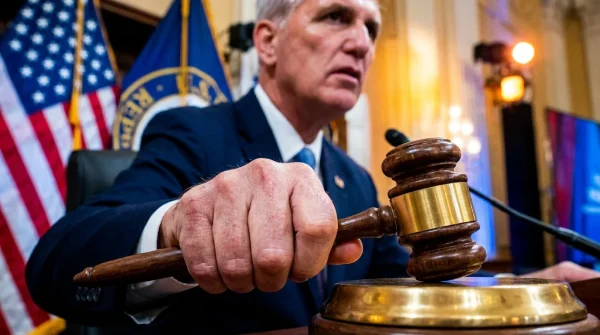
To make the contract stick, leadership had to rewrite the internal mechanics of the House. For generations, the gavel belonged to whoever had occupied a seat the longest. That centuries-old custom protected moderates who prioritized regional needs over national party directives.
The architects of the 1994 shift bypassed the seniority ladder entirely. Committee gavels were handed out based on ideological alignment and contractual compliance rather than years served. If a lawmaker hesitated to push a rigid floor vote, their chairmanship was reassigned to a reliable loyalist. The institutional safety valve that once rewarded bipartisan dealmakers was dismantled piece by piece.
This mechanical shift created three distinct operational layers that continue to dictate how modern bills are drafted and blocked today:
The Nationalized Campaign Roster
Local races ceased to be about local water rights, county bridges, or regional economic quirks. By turning congressional contests into a single, standardized national referendum, lawmakers became interchangeable soldiers for a centralized platform.
The Threat of the Enforced Primary
Enforcement required teeth. If a signed member wandered off script, national political action committees directed money directly to challengers in the next primary cycle. Party discipline became survival, transforming routine legislative debate into an all-or-nothing contest for political self-preservation.
The Performance of Deadlines
The original contract promised floor votes on ten specific items within the first 100 days. This artificial compression forced bills to the floor without the traditional weeks of closed-door committee markups, setting the stage for the midnight omnibus bills and high-stakes debt ceiling deadlines you watch unfold each budget cycle.
How to Read Modern Legislative Pledges
Today, national pledges on taxes, climate, and term limits appear every election cycle. When you see candidates lining up behind a newly drafted manifesto or public card, you can evaluate its real institutional impact by watching how leadership enforces it.
Follow this checklist to separate empty public relations from structural shifts in how your representatives will actually vote:
- Look for enforcement mechanisms: Does the pledge carry explicit consequences for committee assignments or campaign funding?
- Check the markup process: Are bills being routed around standing committees to avoid bipartisan amendments?
- Track procedural floor votes: Pay attention to the preliminary rule votes, where leadership enforces party-line discipline before public debate even begins.
- Examine primary spending: Watch whether national organizations use signature pledges to punish sitting incumbents who vote for compromise legislation.
Your tactical toolkit for accountability requires tracking roll call votes on procedural rules rather than final passage speeches, monitoring committee assignment changes immediately following election cycles, and reviewing whether your representative’s official positions match their local district interests or national party mandates.
Seeing Past the Floor Theater
When you watch today’s floor debates end in predictable gridlock, it is comforting to imagine that if lawmakers simply sat down together, common sense would prevail. But political actors are responding rationally to an incentive structure that was codified thirty years ago on those glossy laminate tables.
The Contract with America proved that centralized national discipline wins elections and consolidates power far more effectively than quiet compromise. Recognizing this origin does not make gridlock pleasant, but it does make it legible. Clarity is your best defense against political fatigue. When you understand the blueprint, you stop expecting an institutional machine to produce outcomes it was explicitly redesigned to prevent.
The sharpest legislative battles are never fought over ideas; they are fought over the procedural rules that decide which ideas are allowed on the floor.
| Key Point | Historical Detail | Added Value for the Reader |
|---|---|---|
| The 1994 Signature Card | 10-point policy agenda on yellowed pocket cardstock | Reveals that modern gridlock began through manual party discipline, not online algorithms. |
| Seniority Dismantling | Committee gavels awarded for loyalty rather than tenure | Explains why moderate lawmakers struggle to retain influence during bipartisan talks. |
| Procedural Compression | Strict 100-day legislative deadlines on major floor votes | Shows why modern legislation relies heavily on emergency omnibus bills and cliffhangers. |
Frequently Asked Questions
Did the Contract with America pass all of its proposed laws?
While nearly all of the contract’s items received floor votes within the promised 100-day window, only a few—such as the Congressional Accountability Act and welfare reform—eventually became federal law. Its lasting impact was structural rather than strictly statutory.Why did pledge cards work so effectively compared to earlier platforms?
The cards paired public voter accountability with strict internal House sanctions, ensuring that lawmakers who broke promises risked losing coveted committee positions and national party backing.How did this tactic change local congressional campaigns?
It nationalized local elections, encouraging voters to view their individual district representative as a direct proxy for national party leadership rather than an independent local advocate.Can individual lawmakers still operate outside these binding pledges today?
Yes, but doing so carries significant political risk, often resulting in reduced committee influence, stripped gavels, and aggressive primary challenges organized by national party groups.Where can I track whether my representative is bound by modern pledges?
You can monitor public signature rosters via nonpartisan legislative databases like Congress.gov, paired with campaign disclosure forms filed through the Federal Election Commission.