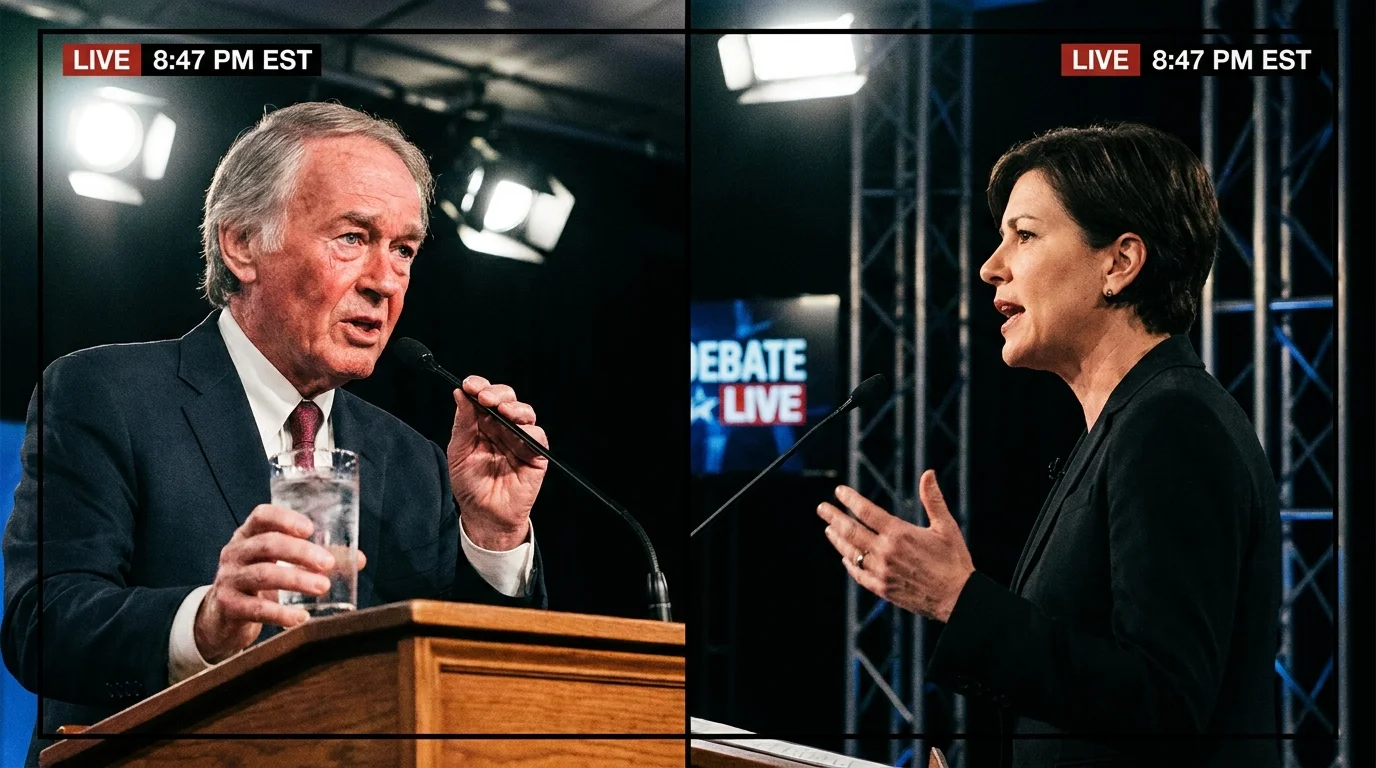
The broadcast studio air tastes dry and smells faintly of heated dust from overhead lighting rigs. Under the relentless glare of television spots, a polished mahogany lectern holds a condensation-slick water glass where three small ice cubes clink softly against the rim, melting into a ring of moisture on the wood. The quiet hum of camera pedestals shifting on studio tracks suddenly gives way to the sharp, unvarnished cadence of real political friction.
You might expect a primary debate on green energy to sound like a rehearsed choir, with candidates nodding along to familiar slogans about solar incentives and carbon goals. Instead, the sudden rupture over federal transmission line waivers shattered that glossy veneer in seconds. The real battle lines are no longer ideological slogans; they are carved across physical acreage, high-voltage easements, and the messy mechanics of local zoning laws.
When veteran Senator Ed Markey faced direct fire over fast-tracking power grid corridors, the room grew noticeably quiet before erupting into cross-talk. The confrontation stripped away comfortable assumptions about environmental consensus, exposing a raw divide between industrial union priorities and grassroots conservationists fighting over who bears the burden of a rewiring continent.
The Friction Between Speed and Consent
For years, political messaging trained you to view energy debates through a simple binary: clean generation versus fossil fuels. That tidy mental model collapses the moment power has to move from windy high plains or offshore turbines into dense metropolitan centers. The clean transition is fundamentally a civil engineering marathon governed by obscure permit dockets and county board approvals.
Think of the power grid like a circulatory system where generating clean electrons is easy, but widening the arteries requires tearing open miles of private tissue. Fast-tracking transmission corridors creates friction because federal authority must steamroll the very local environmental protections that grassroots activists spent four decades building.
During the debate exchange, the clash centered on bypassing long-standing National Environmental Policy Act (NEPA) provisions to build interstate lines. For Markey and his allies, preserving local community review has been a career-long anchor. Yet for modern grid planners and industrial labor unions, those exact procedural checks represent an administrative choke point threatening the entire climate timeline.
- Manchester Union Leader front pages derail primary campaigns across icy snowbank doorsteps
- Crowdpac digital donor prompts strip working balances with blinking green recurring buttons
- Oval Office signing pens switch binding administrative policy with heavy black ink strokes
- Ways and Means markup drafts demand handwritten blue ink strikes across crowded margins
- Selzer poll survey screens trap silent voters under scratchy landline audio filters
Consider Greg Vance, a 52-year-old transmission project manager in central Massachusetts who has spent the last eight years shepherding a single 40-mile high-voltage line through six regional review boards. Vance watches crews sit idle while lawyers dispute wetlands setbacks that were resolved on adjacent plots years earlier. His daily reality illustrates the split: without sweeping federal waiver powers, clean power remains stranded in open fields, unable to reach the substations powering everyday homes.
The Three Factions Reshaping Energy Politics
To make sense of the fallout from the debate stage, you have to look past party labels and observe the three distinct coalitions wrestling for control over the regulatory machinery.
1. The Industrial Labor Bloc
This faction represents electrical workers, pipefitters, and heavy construction trades whose primary interest lies in massive capital deployment. They demand swift federal preemption to clear regulatory hurdles, guarantee project starts, and lock in prevailing-wage union contracts before private capital drifts elsewhere.
2. The Community Defense Advocates
Rooted in frontline environmental justice groups and rural landholders, this coalition views permitting fast-tracks as a direct threat to local sovereignty. Their argument is straightforward: low-income and rural zip codes have historically borne the environmental brunt of industrial transit corridors, and stripping public comment periods repeats past harms under a green banner.
3. The Decarbonization Technocrats
Focused purely on emissions math and regional grid reliability, these planners argue that climate change is an emergency outpacing forty-year-old procedural rules. They view transmission bottlenecks not as local land disputes, but as an existential threat that justifies sweeping federal eminent domain powers.
Navigating the New Regulatory Landscape
Understanding these policy fractures helps you anticipate how power reliability and utility rates will evolve in your own district. The clash on stage was not merely theatrical; it reflects specific statutory mechanisms currently moving through congressional committees.
- Section 216 Transmission Corridors: Federal energy regulators hold backstop siting authority, allowing them to override state denials if an interstate line meets specific national interest criteria.
- Categorical Exclusion Reforms: Proposed statutory language would exempt clean energy infrastructure from detailed environmental impact statements, cutting review times from five years down to twelve months.
- Judicial Review Clocks: New amendments seek to limit legal challenges from citizen groups to a strict 120-day window following final permit issuance.
Tracking these items gives you clear sightlines into how local property rights and regional utility bills will shift over the next decade. Monitoring state utility commission dockets remains your strongest tool for seeing where new transmission corridors will break ground long before construction crews arrive.
The Hidden Geometry of Local Power
When the broadcast lights finally clicked off and the stage crew began clearing the podiums, the melted ice in Markey’s water glass had pooled across the wood grain. That modest puddle reflected a changing political landscape where easy consensus has given way to hard trade-offs.
The debate floor exposed a reality that policy rhetoric often conceals: building a new energy economy requires physical steel, high-tension wire, and difficult compromises on local land use. As these legislative battles move from the debate lectern into congressional committee rooms, watching how lawmakers balance local community rights against industrial speed will tell you exactly where the future of American energy is heading.
The sharpest political disputes happen not when allies disagree on the goal, but when they realize the path forward requires sacrificing their own bedrock protections.
| Key Point | Detail | Added Value for the Reader |
|---|---|---|
| Permitting Fast-Tracks | Proposals to shorten environmental review cycles under NEPA for interstate grid projects. | Explains why neighborhood zoning reviews could be superseded by federal mandates. |
| Labor vs. Frontline Split | Clash between union building trades seeking jobs and local groups protecting land autonomy. | Reveals why historical political coalitions are fracturing in regional primaries. |
| Grid Reliability Pressures | Clean generation assets sitting idle due to missing high-voltage transmission lines. | Connects legislative delay directly to regional consumer electricity price spikes. |
Frequently Asked Questions
Why are progressive lawmakers divided on clean energy permitting?
The division stems from balancing two conflicting goals: accelerating infrastructure builds to reduce emissions quickly versus protecting local community input and conservation safeguards established under existing federal laws.What is transmission fast-tracking?
It refers to legislative or regulatory changes that limit the time and environmental review stages required before construction crews can build interstate electrical lines.How does this debate affect my electricity bill?
Delays in connecting cheaper renewable energy to the grid keep regional markets reliant on higher-cost peaker plants, which directly influences monthly residential rates.Why are labor unions pushing for federal permitting waivers?
Building trades rely on large-scale infrastructure projects for jobs and prefer streamlined federal approvals to prevent multi-year local legal challenges that delay construction starts.What comes next after these primary debate clashes?
Expect targeted compromise amendments in upcoming energy and farm bill negotiations, where lawmakers will attempt to pair transmission fast-tracking with mandatory community benefit agreements.