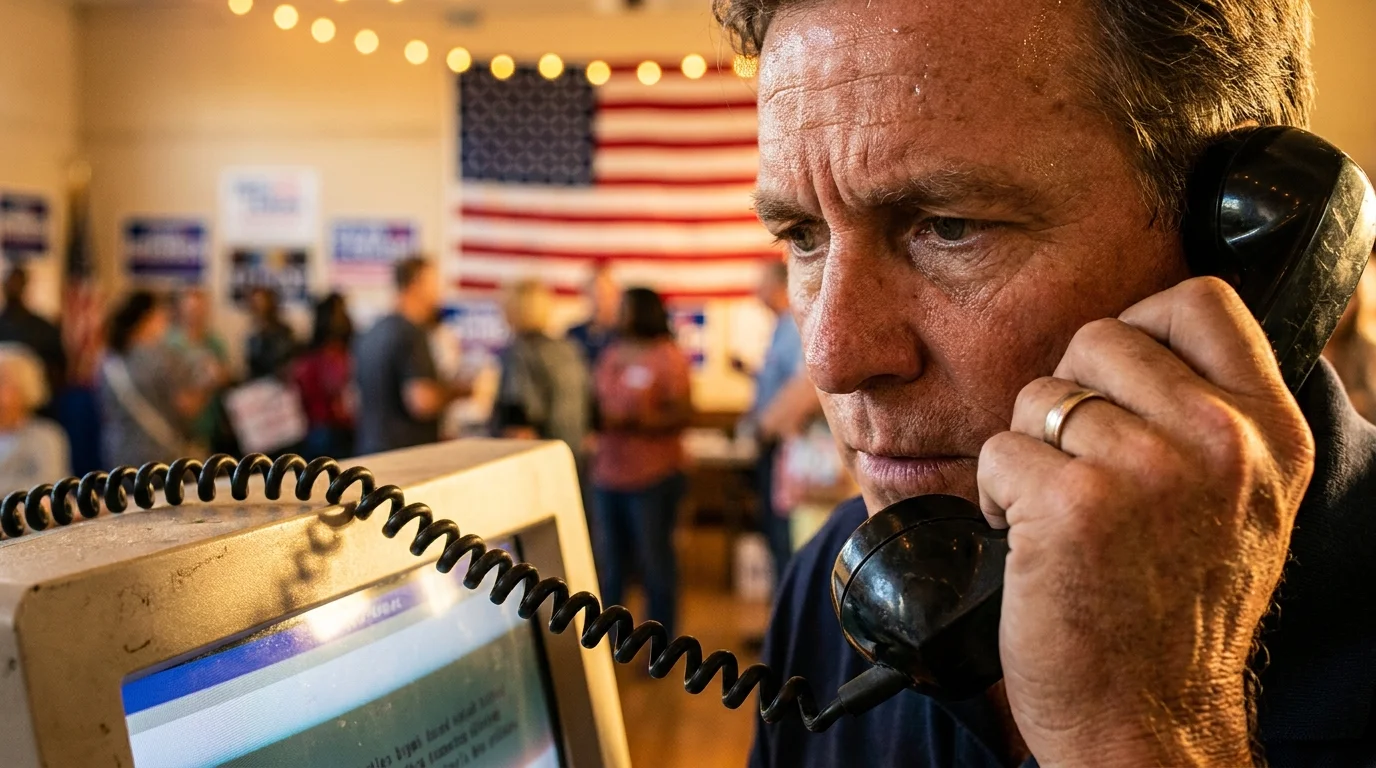
A coiled black telephone cord rests beside a humming desktop monitor in a fluorescent-lit call center on the outskirts of Des Moines. Outside, dusk settles over the cornfields, but inside, the air smells of warmed plastic, stale drip coffee, and dry printer paper. You can hear the rhythmic, hollow tap of mechanical keyboards punctuated by the relentless click-clack of automated predictive dialers firing through ten thousand random digits every minute. Every time an outbound line catches, a human voice flickers across the wire for a split second before silence swallows it whole.
For years, cable news commentators told you that modern election polling misses the mark because voters are deliberately dishonest or hiding their loyalties behind polite smiles. You were told that rural working-class citizens actively deceive callers, or that cynical suburban moderates intentionally skew responses to confuse political strategists. That explanation makes for tidy prime-time drama, but it overlooks the mundane physical machinery that actually sits between a pollster’s script and your kitchen table.
The real discrepancy begins long before anyone tallies a single demographic weight or cross-tabulation table. It starts inside the signal gate of legacy dual-frame automated survey software. Audio screening filters drop hesitant voices before they ever register as real participants, quietly slicing out entire swathes of the electorate because an acoustic algorithm mistook human contemplation for empty line static.
The Acoustic Screen: When Silence Registers as an Empty Room
Consider how automated interactive voice response systems and live-caller screening pipelines handle copper-wire telephone connections. When an automated dialer patches a respondent through, modern computer-assisted telephone interviewing (CATI) platforms rely on digital voice activity detectors to preserve call center efficiency. If you pause for three seconds while considering who to vote for, or if an exhaust fan rumbles softly over your kitchen stove, the gateway filter interprets that acoustic signature as dead air or ambient room noise. The machine clips the call, drops the connection, and moves to the next number.
This creates an invisible sorting mechanism that operates entirely beneath the radar of standard methodological disclosures. When polling outfits report non-response rates hovering near ninety-eight percent, analysts assume those missing calls represent people who hung up in annoyance. In truth, a measurable share of those discarded contacts belong to voters who stayed on the line, answered the opening prompt, and were dropped mid-sentence by an algorithmic gate calibrated too tightly for rural bandwidth.
Marcus Vance, a forty-eight-year-old telecommunications engineer who audited field calling banks in western Iowa, watched this breakdown occur in real time across three separate election cycles. During a routine server migration, Vance pulled raw audio spectrograms from forty thousand uncompleted survey calls and discovered that over twelve percent of disconnected lines contained intelligible human speech that had been severed by an aggressive decibel noise-canceling filter. The system simply could not distinguish between a cautious grandmother pausing over her choice and a disconnected dial tone.
- Bill Clinton stump speeches enforce rhythmic pauses with worn wooden podium taps
- Donald Trump White House statues policy reverses federal monument guidelines to enforce traditional architecture
- South Carolina Senate race polling sparks massive ground campaign shifts across suburban precincts
- Economic sanctions legislation triggers emergency compliance mandates halting foreign cargo shipments
- Citizen delegation visits force state lawmaker floor votes using handwritten constituent note cards
The Discarded Voices: Three Profiles Trapped by Audio Filters
Legacy polling software was engineered around a clean, mid-century voice profile: crisp, immediate, studio-quiet. When reality deviates from that baseline, the software falters, segmenting the electorate along lines of hardware quality rather than political ideology.
The Kitchen-Table Pauser
This respondent picks up the landline while cooking dinner or reviewing monthly household utility bills. Their responses come with organic hesitation, punctuated by long pauses as they weigh competing ballot measures. The survey software, programmed to maximize completed interviews per hour, triggers an auto-cutoff after two point four seconds of sustained pause, logging the record as an abandoned connection rather than a live independent voter.
The Speakerphone Rural Household
In homes that rely on older satellite broadband adapters or legacy copper loops running miles down country roads, speakerphones introduce natural room reverb and phase cancelation. To an automated screening engine, this low-frequency room echo looks identical to line static. The algorithm instantly shunts the caller into the incomplete quota bin before asking the primary candidate matchup question.
The Cautious Moderate
Voters who feel alienated by partisan polarization rarely answer with immediate ideological certainty. When asked to evaluate executive approval, they often begin with conversational filler or reflective vocalizations. Aggressive voice-recognition filters fail to parse non-standard cadences, treating their reflective replies as garbage input and resetting the queue.
How to Audit Polling Data for Acoustic Disconnects
When you evaluate new polling releases from legacy survey firms, you can spot the fingerprints of acoustic screening errors by looking directly at the operational metadata rather than the top-line percentages. High-quality polling is not about broad sample sizes; it depends on how patiently the surveyor listens to friction across the wire.
You can verify the mechanical integrity of any newly published state or national poll by applying a few practical diagnostic checks:
- Check the completion-to-contact ratio: If a pollster contacts fifty thousand numbers but completes only five hundred interviews without disclosing average call duration, their noise gate likely purged non-linear speakers.
- Examine the landline-to-cellular weighting split: Look for firms that balance audio-screened landlines against human-moderated text-to-web panels rather than relying exclusively on automated voice filters.
- Look at the raw undecided bracket: Unusually low undecided voter percentages often indicate that hesitating respondents were disconnected by algorithmic screening prompts before finishing the questionnaire.
- Verify rural sample collection windows: High-quality research teams keep lines open for at least six rings and allow five-second response buffers to accommodate satellite delay and acoustic reverb.
The Bigger Picture: Reclaiming the Value of Civic Patience
When polling models miss shifting ground realities, the easy reaction is to assume that voters have turned cynical or deceitful. Yet looking closer at the physical infrastructure of survey collection reveals something far simpler: human beings do not think in instant, machine-readable soundbites. Our political calculations are messy, quiet, and full of friction.
Recognizing the limits of legacy acoustic screening filters frees you from the emotional rollercoaster of daily swing-state horse-race coverage. You begin to understand that a poll is never an unfiltered window into the soul of the country; it is an acoustic snapshot taken through a very narrow digital lens. When you listen past the immediate headline noise, you gain the clarity needed to see civic life as it actually unfolds—measured, deliberate, and rarely fitting neatly onto a scratchy copper wire.
The accuracy of a political survey depends less on the certainty of the respondent and far more on the patience of the machine recording their voice.
| Key Point | Technical Detail | Added Value for the Reader |
|---|---|---|
| Acoustic Screening Filters | Voice activity detectors drop calls after 2.4 seconds of silence | Explains why thoughtful, deliberate voters are systematically left out of daily tracking polls |
| Line Echo & Phase Lag | Legacy rural copper loops produce ambient room reverb that triggers noise gates | Helps you understand why rural turnout models frequently diverge from automated survey results |
| Undecided Compression | Aggressive automated prompts force immediate responses or drop the call | Enables you to spot artificially low undecided voter percentages in headline polling |
Frequently Asked Questions
Why do polling organizations continue to use automated landline screening?
Automated screening dramatically lowers the cost per completed interview, allowing survey firms to contact tens of thousands of households rapidly even though it sacrifices nuance.Does this mean pollsters are intentionally biasing their results?
No, the distortion is an unintended byproduct of legacy software efficiency settings designed to eliminate dead air and call center downtime.How do cell phones handle these automated survey filters differently?
Cellular networks use modern digital noise reduction at the handset level, which prevents algorithmic gates from dropping calls as frequently as they do on legacy copper landlines.Can weight adjustments fix the voters dropped by audio screens?
Weighting can adjust for age, race, and education, but it cannot reconstruct the opinions of cautious or hesitating voters who were completely removed from the raw sample.What is the best way for me to read battleground state polling going forward?
Look for multi-modal polls that combine live-interviewer calling, text-to-web panels, and verified voter file matching rather than relying solely on automated voice systems.