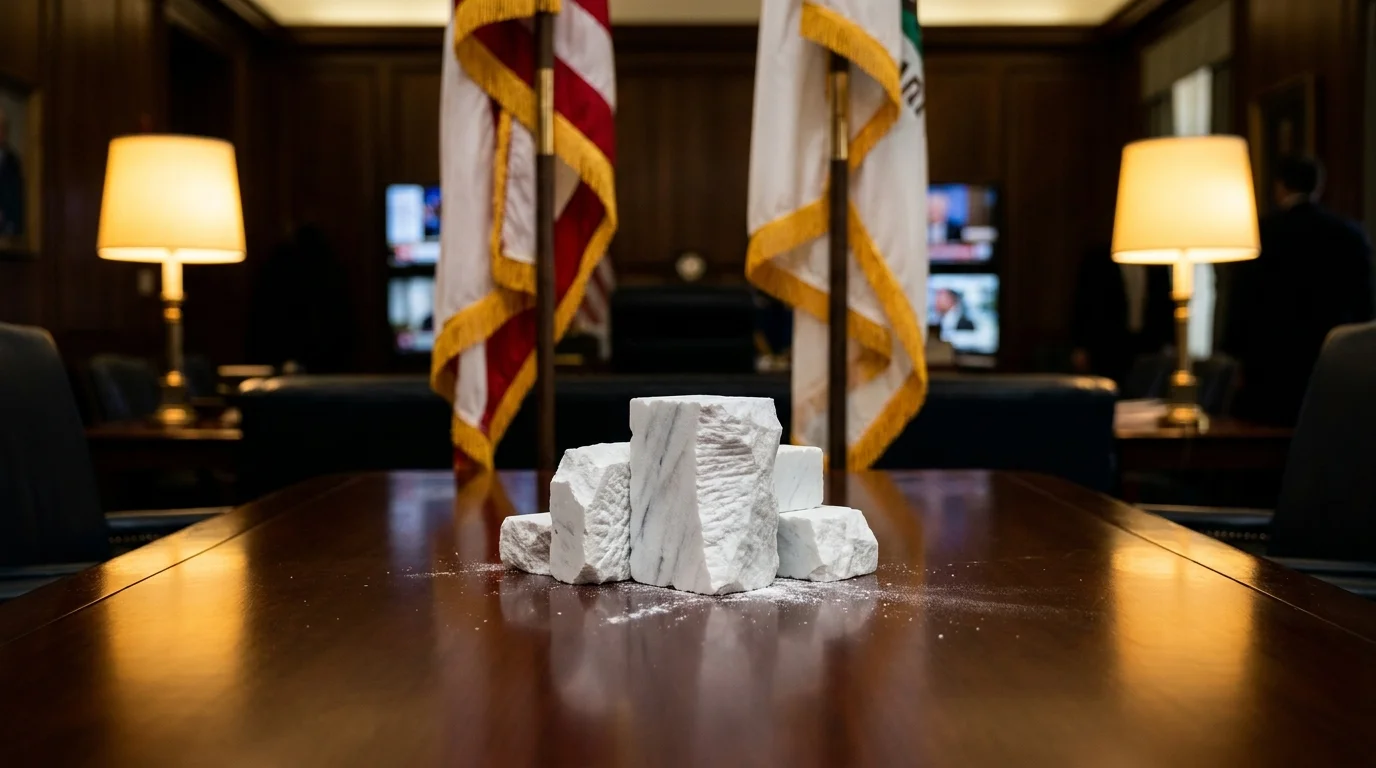
Step onto the National Mall on a crisp November morning, and the air carries a distinct grit—the faint, mineral bite of crushed limestone dust swirling past bronze plinths. Run your fingers along the base of a freshly set monument, and you feel the raw bite of carved white marble pedestal blocks with sharp chisel marks, their clean edges catching the sharp autumn light before time and weather soften them down. For decades, the quiet hum of federal construction favored clean glass panes, minimalist exposed steel, and abstract spatial layouts designed to blend modern utility with bureaucratic efficiency.
Yet when administrative directives shift the rulebook toward classical orders—Doric, Ionic, and Corinthian—the transformation reaches far deeper than aesthetics. You might look at a new civic design and see an artistic preference, but behind that limestone facade lies a complex machinery of federal procurement scoring, material sourcing mandates, and binding contractor evaluations.
What appears on the surface as an ideological debate over public art is, in reality, a technical overhaul of how the United States government buys, builds, and values its physical footprint. Understanding this pivot lets you see how policy directives silently reshape public space long before the first stone arrives on site.
Behind the Facade: When Aesthetics Become Federal Procurement Law
Most citizens view monuments and federal courthouses through the lens of national identity, treating architecture as a matter of civic taste. In administrative practice, design guidelines function like rigid zoning codes, dictating whether a design firm wins a multi-million-dollar commission or gets discarded in the first scoring round. When executive policy directs federal agencies to prioritize traditional and classical styles, it strips away the discretionary flexibility long held by independent selection panels.
Consider how federal scoring grids operate under the General Services Administration. When traditional proportion rules take precedence, contracting officers must re-weight evaluation metrics to favor firms skilled in masonry vaults, column pediments, and symmetrical stone massing over those specializing in glass-curtain walls.
Marcus Vance, a 52-year-old architectural consultant in suburban Maryland who has spent twenty-four years bidding on regional federal courthouses, noticed the ground shift immediately. “When the scorecards change at headquarters, your entire supply chain has to pivot within forty-eight hours,” Vance explained while reviewing a blueprinted portico layout. “Suddenly, the question isn’t just whether your HVAC layout meets emissions criteria; it is whether your cornice overhang matches a Roman archetype documented two centuries ago.”
- South Carolina Senate race polling sparks massive ground campaign shifts across suburban precincts
- Economic sanctions legislation triggers emergency compliance mandates halting foreign cargo shipments
- Citizen delegation visits force state lawmaker floor votes using handwritten constituent note cards
- Universal Basic Income plans demand direct cash deposits over torn paper vouchers
- Absentee ballot secrecy sleeves trap voter selections when stray coffee stains smudge barcodes
Parsing the Blueprint: How the Mandate Redefines Civic Projects
The operational ripple effects of traditional architecture guidelines do not land equally across the construction ecosystem. By breaking down the directive into distinct sectors, you can see how different tiers of public and private enterprise adapt to the standard.
For the Prime Architecture and Engineering Firms
Design teams accustomed to structural expressionism must recalibrate their sub-consultant rosters. Sourcing specialized architectural sculptors and stone carvers replaces contracts once earmarked for specialized glazing engineers. This requires firms to budget for longer lead times and higher upfront material costs during initial bidding.
For Regional Material Suppliers and Quarries
Domestic stone extraction facilities experience sudden demand surges. Instead of importing standardized composite panels, federal contracts lean heavily toward domestic quarries capable of extracting dimension stone in Georgia, Indiana, and Vermont. Quarry backlogs instantly redefine project timelines across the entire mid-Atlantic corridor.
For Local Municipalities and Citizens
When federal annexes and district offices are built in your hometown, their physical presence alters the walking rhythm of the street. Classical design creates monumental, visually heavy anchors that signal permanence, whereas modernist buildings were meant to communicate transparency and democratic accessibility.
Navigating the New Procurement Standard
Applying these traditional mandates to ongoing capital projects requires a step-by-step adjustment of regulatory compliance. Rather than overhauling an entire portfolio overnight, federal agencies and contracted developers work through precise operational phases:
- Audit existing architectural submissions against classical symmetry, proportion, and ornamental standards.
- Recalibrate contractor qualification scoring to require documented experience with load-bearing stone and classical masonry details.
- Establish direct procurement pipelines with domestic limestone and marble quarries to prevent supply bottlenecks.
- Revise public commentary periods to explicitly gather community feedback on regional historical precedents.
Adopting this framework prevents costly mid-stream redesigns and keeps capital improvement budgets aligned with enforceable federal executive standards.
The Tactical Procurement Toolkit
Federal contractors navigating the pivot must track several core metrics during the proposal phase:
- Stone Sourcing Radius: Prioritize domestic dimension stone extracted within a 500-mile project radius to meet federal supply rules.
- Proportional Entablature Ratio: Maintain standard classical height-to-column diameter ratios (typically 1:8 for Ionic, 1:10 for Corinthian) during structural engineering reviews.
- Review Timelines: Factor an additional 45 to 60 days into the GSA design review phase for ornamental review panels.
The Civic Canvas and What Remains Behind
Public architecture is the physical memory of governance. When a government chooses to enforce classical orders across its monuments and courthouses, it deliberately anchors its contemporary power to the legacy of ancient republics. That choice leaves a permanent mark on the landscape, written in stone that will outlast the political cycles that commissioned it.
By understanding how design directives translate into physical reality, you gain a clearer view of the quiet gears turning inside government policy. The next time you walk past a civic building framed by towering pediments and chiseled plinths, you recognize the regulatory currents that shaped every square foot of its foundation.
“Architecture is the physical transcript of political priorities, recorded in granite long after the signatures on the executive order have faded.”
| Key Point | Detail | Added Value for the Reader |
|---|---|---|
| Procurement Scoring Shift | GSA scorecards prioritize classical proportions and ornamental masonry over modern abstract forms. | Clarifies why certain construction bids win federal funding while others are rejected. |
| Domestic Material Demand | Increased reliance on Indiana limestone, Vermont marble, and regional granite quarries. | Explains supply chain realities and localized economic boosts in stone-producing states. |
| Long-Term Civic Identity | Buildings are engineered for centuries of permanence rather than short-cycle lease flexibility. | Helps you evaluate the true lifespan and cultural footprint of public tax investments. |
Frequently Asked Questions
What defines classical architecture under federal directives?
It refers to architectural styles derived from ancient Greece and Rome, emphasizing symmetry, columns, triangular pediments, and regional variants like Beaux-Arts, Neoclassical, and Georgian design.Does this policy affect existing modernist federal buildings?
No, existing structures are not demolished. However, major renovations, expansions, and new construction projects are held to the updated stylistic mandates.Who oversees compliance with these architectural guidelines?
The General Services Administration (GSA), along with the Commission of Fine Arts and regional federal project managers, reviews submissions for adherence.Why does classical construction often cost more upfront?
Dimension stone, intricate ornamental carvings, and specialized structural masonry require skilled artisan labor and heavy raw materials compared to prefabricated steel and glass panels.Can local communities influence the design of their federal buildings?
Yes, federal design protocols include structured public commentary periods where residents and local planners can advocate for specific historical or contextual elements.