The banquet room carpet smells faintly of industrial lemon cleaner and stale filter coffee at seven in the morning. Around round tables dressed in white linen, state representatives sit half-listening to prepared speeches while balancing ceramic plates of scrambled eggs on their knees. Most citizens arrive with thick manila folders, glossy twenty-page policy briefs, or printouts of online petitions bearing thousands of digital signatures. Those thick packets invariably end up left behind on the tablecloth or stuffed unread into a junior staffer’s canvas tote bag.
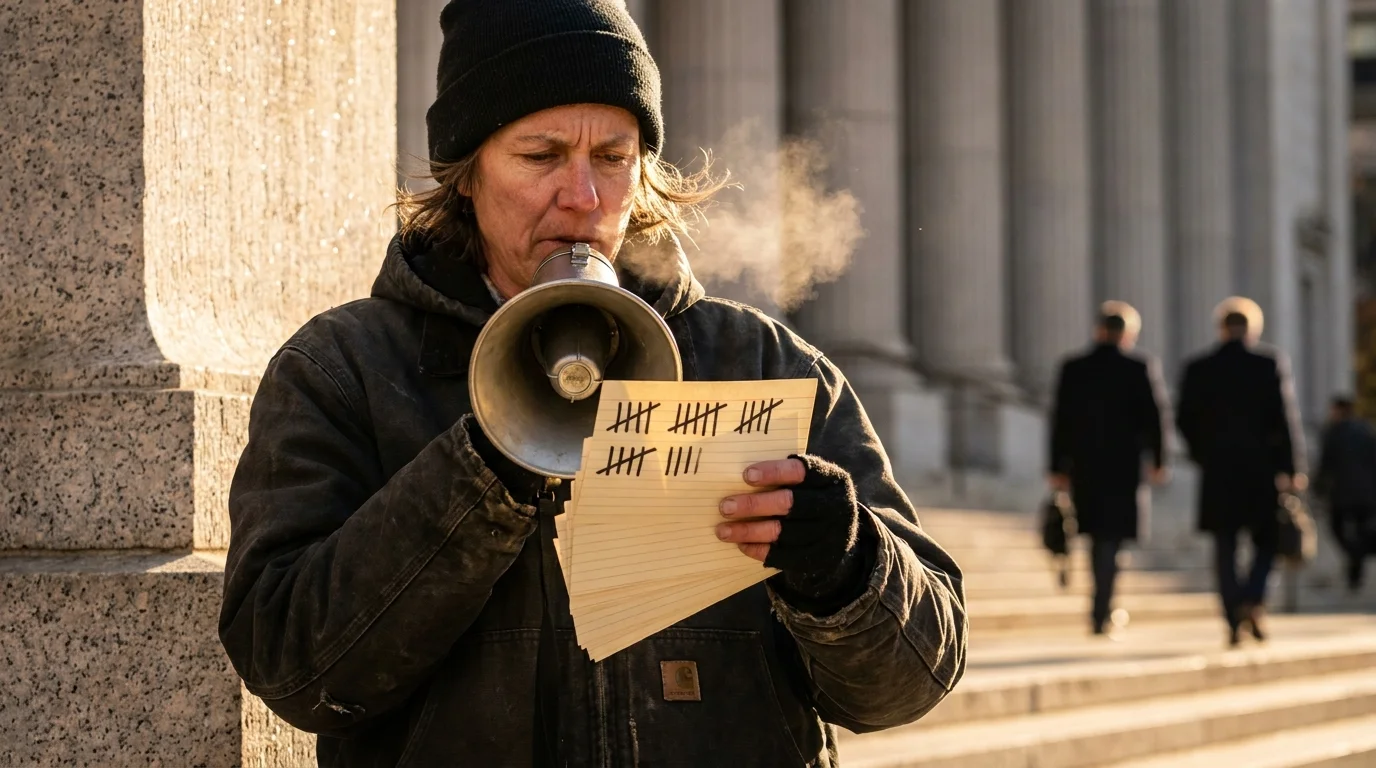
If you watch the veteran organizers near the buffet line, you will notice a completely different ritual. They do not carry binders. They wait for a quiet gap in the chatter, walk up to their district representative, and slip a single white lined index card inscribed with bold black fountain pen tally marks directly beside the representative’s water glass. No fanfare, no prepared monologue—just a quiet, physical artifact carrying three exact budget lines.
By nine o’clock, when the full delegation convenes on the capitol floor for contentious municipal appropriations hearings, those thick briefing binders are forgotten in coat closets. But that three-by-five card is sitting inside the lawmaker’s inside breast pocket, ready to be pulled out during hasty floor negotiations.
The Myth of the Digital Avalanche: Why Micro-Paper Beats Mega-Petitions
You have likely been told that sheer volume is how everyday voters win statehouse battles. We are taught to click online petition links, participate in automated mass-email campaigns, and flood legislative phone lines with identical talking points. While these tactics register on a staffer’s weekly tracking sheet, they rarely create enough friction to alter a contested fiscal vote when budget deadlines loom.
Lawmakers do not suffer from a lack of input; they suffer from cognitive overload and acute time scarcity. When closed-door budget committees begin stripping municipal funds, a representative does not have twenty minutes to decipher complex fiscal models. They need a tangible, unassailable fact sheet they can read in four seconds flat while walking between committee rooms.
Sarah Vance, a 52-year-old municipal sewer authority board member from central Ohio, spent three years watching her district’s clean water repair grants get stripped at the eleventh hour. In 2023, she abandoned the hundred-page regional planning studies and attended her county delegation’s spring breakfast with five index cards written in dark archival ink. She handed one directly to the house finance chair, showing the exact $1.4 million local shortfall alongside the single revenue line item that could bridge it. That precise line survived the midnight budget reconciliation session intact.
- Seth Moulton primary challenge triggers intense voter realignment across Massachusetts coastal defense corridors
- Executive privilege declarations derail congressional subpoena power following sudden White House legal filings
- Medicare Advantage prior authorization mandates spark fierce policy clashes over denied medical claims
- Door-to-door turf packet maps force field organizers across blistered asphalt walk routes
- Child Tax Credit phaseout brackets trap working parents with sudden clawback bills
Calibrating Your Card: Three District Archetypes
Every lawmaker views state expenditures through the specific lens of their political survival and local pressures. To make your card impossible to dismiss, you must frame the numbers using the distinct currency of their district profile.
The Fiscal Conservative (The Net-Savings Frame): Do not ask for funding as a moral imperative; present it as preventive maintenance that saves county tax dollars down the line. Frame your ask around avoided bond debt, reduced emergency overtime, or matching federal money that expires if left unclaimed.
The Infrastructure Centrist (The District Shovel-Ready Line): Focus entirely on localized execution and speed. Lawmakers in competitive suburban swing districts need to show physical results before the next election cycle, so highlight projects with finished engineering studies that only lack final state appropriations.
The Municipal Pragmatist (The Direct Service Metric): Frame your figures through visible local public safety and basic community functions. Detail precisely how many streetlights remain dark or how response times change across three named intersections if a proposed grant cut passes.
The Breakfast Ritual: Precision Delivery in Four Movements
Attending a delegation breakfast requires restraint rather than performative passion. Your objective is not to win a public debate in front of sixty people; it is to equip a single official with the exact figures they need to defend your district during backroom negotiations.
Follow this disciplined sequence to ensure your message lands where it matters:
- Keep it strictly analog: Write on heavy 3×5 index cards with dark ink. Digital notes on a smartphone screen vanish the second the screen goes dark, but heavy cardstock creates an unavoidable physical presence.
- Observe the three-line rule: Limit your card to three lines: the pending bill amendment number, the precise net dollar impact on your hometown, and the recommended revenue offset.
- Time your approach carefully: Never approach while a lawmaker is speaking or actively chewing. Wait for the natural pause when they are returning to their seat with a fresh cup of coffee.
- Deliver and step back: Hand the card over with two sentences at most: “Representative, this is the exact repair deficit facing our district water main under Section 4. I wrote the numbers down so you have them for the 10:00 AM caucus.” Then politely walk away.
By keeping your message brief and tangible, you respect their time while providing a portable tool for legislative leverage that outlasts any formal speech made from the breakfast podium.
Reclaiming Agency in the Era of Algorithmic Noise
Modern politics often makes you feel powerless, convincing you that only high-priced lobbying firms and million-dollar political action committees have a seat at the table. Yet statehouse politics remains surprisingly small, human, and grounded in direct personal interactions.
When you sit in a local diner or hotel ballroom with a handwritten card, you cut through the automated white noise that paralyzes state capitols. You are offering clarity in a room suffocating on vague talking points, proving that a single citizen with clear facts can quietly turn the tide of a multi-million-dollar state budget.
Real legislative influence does not come from screaming the loudest; it comes from handing the decision-maker the exact number they need when the room goes quiet.
| Key Point | Detail | Added Value for the Reader |
|---|---|---|
| Medium Choice | Heavyweight 3×5 index card with dark ink | Creates a durable, pocketable item that survives staff triage |
| Message Length | Three bulleted financial lines maximum | Allows a lawmaker to absorb the core argument in under five seconds |
| Delivery Window | Informal morning delegation breakfasts | Bypasses committee gatekeepers before voting positions solidify |
| Framing Strategy | Local district tax impact vs. abstract state metrics | Provides the specific talking point needed for closed-door debate |
Frequently Asked Questions
Why are breakfast sessions more effective than formal public hearings?
Public hearings are often structured theater where positions are already rehearsed and locked in. Breakfast sessions offer informal, low-stakes human contact where lawmakers are genuinely gathering quick intelligence before taking the floor.What if my state representative does not sit on the budget committee?
Every representative votes on the final budget package and speaks directly with committee members during party caucus meetings. Giving your representative clear figures empowers them to lobby their colleagues on your town’s behalf.Should I type and print the card instead of writing it by hand?
Handwriting the card in neat, dark ink signals authentic constituent engagement rather than coordinated mass lobbying. It shows immediate, individual effort that staffers cannot easily mistake for a form letter.How do I find out when delegation breakfasts take place?
These events are routinely organized by county chambers of commerce, regional farm bureaus, or municipal leagues and are posted on local civic calendars 3 to 4 weeks in advance.Can I use this approach for policy bills instead of fiscal budgets?
Yes, provided you distill the bill into a single specific amendment or vote choice and outline the precise operational impact on your specific neighborhood or workplace.