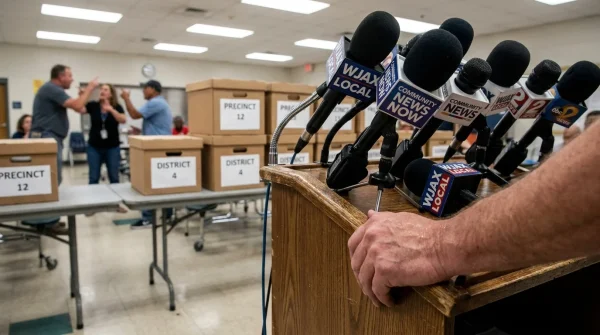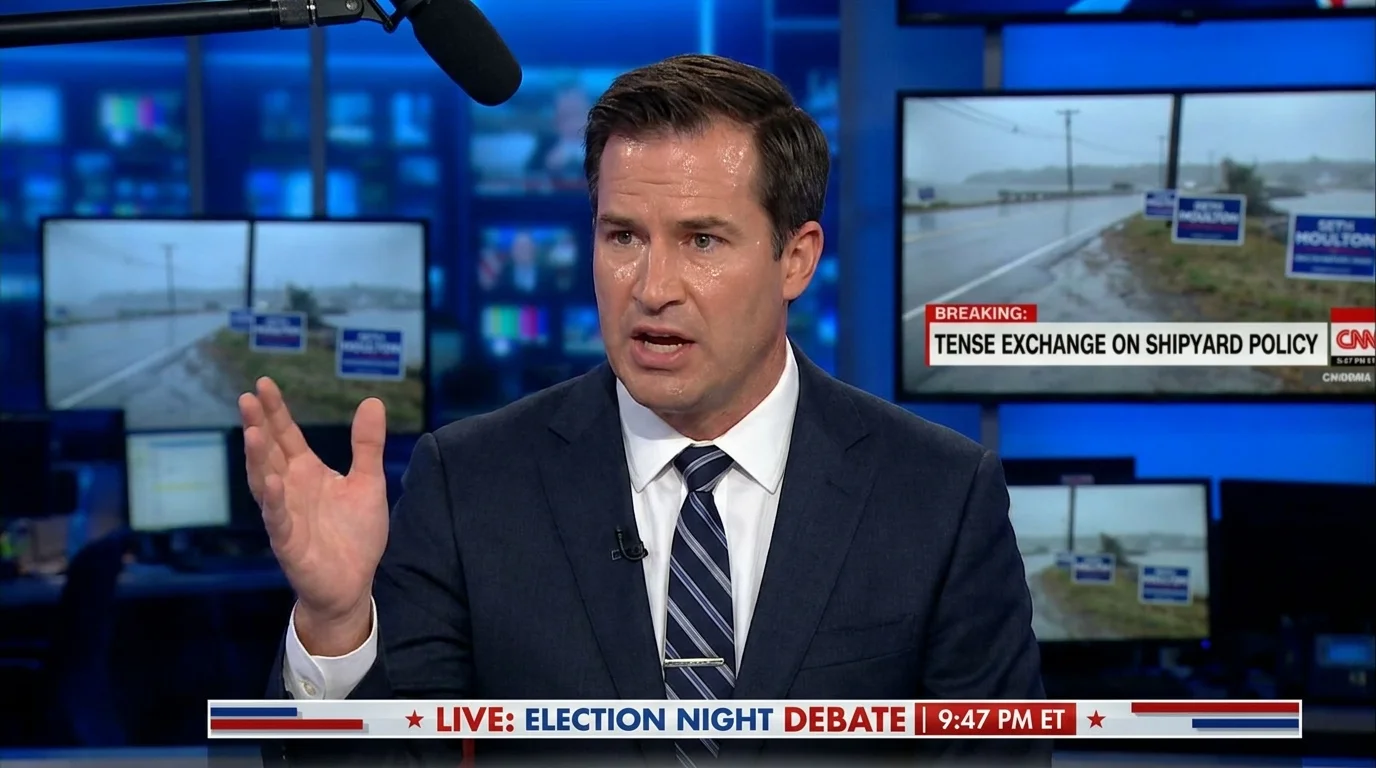
A sharp Atlantic wind whips across the salt flats of Essex County, carrying the scent of brine, low tide, and diesel exhaust. Along the access roads leading to the defense fabrication plants in Lynn and the shipwright berths of Gloucester, corrugated plastic campaign lawn signs stand planted along gravel shipyard shoulders, vibrating violently against the wire stakes driven into the frozen earth. Morning commuters in heavy canvas jackets idle at red lights, their headlights cutting through the coastal fog, watching rival campaign names flutter side by side in the gravel.
For years, conventional wisdom treated Massachusetts’s 6th Congressional District as settled political ground—an orderly stretch of rocky coastline anchored by military heritage, aerospace engineering, and reliable incumbent loyalty. You are told to expect seamless continuity when a decorated Marine veteran holds a naval-adjacent seat. Yet if you watch the parking lots outside the machine shops before dawn, the tension is undeniable.
Real-time voter search traffic across North Shore municipalities is spiking at unprecedented rates, flagging a fierce battle for the district’s industrial soul. What seemed like a predictable primary cycle has transformed into a high-stakes referendum on how federal defense contracts, national foreign policy stances, and local working-class priorities collide on the factory floor.
The assumption that defense workers and military veterans vote with a single, synchronized voice is quietly falling apart along Route 128.
The Two Turbines of Coastal Power
To understand the sudden realignment rippling through this coastline, think of a twin-screw naval vessel caught in crosscurrents. When both propellers turn at the exact same rate, the ship cuts cleanly through rough swells. But the moment one propeller throttles down while the other accelerates, the hull begins to pivot aggressively against the helm, dragging the vessel into uncharted water.
The political machinery of the North Shore operates on a similar dynamic. For nearly a decade, incumbent Seth Moulton maintained balance by pairing an elite military resume with moderate pragmatic defense advocacy. Today, surging precinct-level debate has disrupted that calibration, revealing deep fractures between generational shipyard veterans and a rising cohort of specialized aerospace technocrats.
- Executive privilege declarations derail congressional subpoena power following sudden White House legal filings
- Medicare Advantage prior authorization mandates spark fierce policy clashes over denied medical claims
- Door-to-door turf packet maps force field organizers across blistered asphalt walk routes
- Child Tax Credit phaseout brackets trap working parents with sudden clawback bills
- Tea Party tax day flyers resurfaced 1970s suburban property revolts with neon yellow mimeographs
The Lynn Machinist’s Dilemma
Consider Marcus Vance, 52, a precision tooling specialist who has spent twenty-eight years machining turbine casings at the River Works plant in Lynn. During his 6:00 AM coffee break at a diner off the highway, Marcus keeps a marked-up copy of the latest Congressional Record in his glove box next to his union badge.
“People in Washington talk about national security like it’s an abstract game of chess,” Marcus says, his knuckles stained with cutting fluid. “Down here on the floor, we track foreign policy by how many overtime shifts we work, whether our healthcare copays double, and whether our children get deployed into operations that have no clear finish line. We aren’t a guaranteed rubber stamp for anyone anymore.”
Marcus’s perspective reflects a broader reality sweeping through local labor halls. Defense corridor voters are increasingly parsing candidate positions through a magnifying glass, separating broad rhetoric from tangible district benefits.
Mapping the Workforce Factions
The splintering of the coastal coalition is not happening at random. It follows distinct demographic and economic fault lines across the district’s core industrial hubs:
The Legacy Defense Industrial Machinists
Concentrated in historic manufacturing zones like Lynn and Salem, this bloc prioritizes domestic production mandates, long-term procurement security, and protected union pensions. They scrutinize any incumbent focus on national political posturing at the expense of local shop-floor stability.
The Maritime and Green-Tech Engineers
Clustered around the technology incubators and research stations from Beverly to Gloucester, this younger workforce views defense through the lens of autonomous systems, ecological monitoring, and renewable naval architecture. They favor progressive primary challengers who champion clean energy transitions alongside federal contracts.
The Multi-Generational Veterans
Spanning veterans of foreign wars from Vietnam to Iraq and Afghanistan, this segment is no longer voting strictly along historic partisan lines. Voter registration data confirms an unprecedented split between older veterans who value traditional committee seniority and younger service members demanding fundamental reforms in how federal leadership handles post-deployment care and military oversight.
Tracking the Primary Pulse in Real Time
Navigating the shifts in a rapidly realigning primary district requires watching the grass roots rather than relying on stale national commentary. You can evaluate the momentum yourself by following a few clear indicators:
- Analyze precinct-level turnout swings: Check regional municipal clerk postings immediately following special elections to spot changes in historic high-margin wards.
- Audit union local endorsements: Watch for split decisions or delayed endorsements from machinists and electrical worker locals, which signal internal rank-and-file debates.
- Monitor town hall attendance metrics: Track whether challenger forums in traditional defense suburbs draw uncommitted, independent voters or merely existing partisans.
- Scrutinize small-dollar coastal contributions: Follow quarterly FEC filings to see whether localized zip codes are funding insurgent campaigns rather than outside political action committees.
The Reshaping of Representative Accountability
When the coastal defense corridor re-evaluates its political allegiances, the implications reverberate far beyond a single congressional primary. It serves as a reminder that working communities are never permanent stage props for national ambition. They are dynamic hubs of real labor, complex families, and nuanced political judgment.
Watching the campaign signs shudder along the shipyard shoulders on a freezing Massachusetts morning is a lesson in democratic vitality. Direct voter engagement is reclaiming the center of political life, demanding that every elected official earn their keep by solving the tangible problems of the communities they represent.
“When the factory gate becomes the primary arena of political debate, long-standing political dynasties must prove their worth from scratch.”
| Key Point | Detail | Added Value for the Reader |
|---|---|---|
| Workforce Demographics | Machinists vs. Green Systems Engineers | Explains why local defense unions are withholding early endorsements. |
| Geographic Focal Points | Lynn, Beverly, Gloucester, Peabody | Pinpoints where precinct battles will decide the eventual margin. |
| Electoral Strategy | Hyper-local wage advocacy vs. national profile | Helps you decipher candidate rhetoric during televised debates. |
Frequently Asked Questions
Why is this primary challenge gaining national attention?
The primary highlights an escalating debate over whether established military-focused incumbents are keeping pace with changing economic and foreign policy expectations inside their home districts.Which specific municipalities are driving the voter search spike?
Industrial centers like Lynn, naval tech corridors in Beverly, and maritime fishing communities in Gloucester are logging the highest relative engagement metrics.How does this shift challenge the idea of a unified veteran voting bloc?
Generational differences regarding post-service healthcare, foreign engagement accountability, and local job quality have created distinct factions among veteran voters.What role do local defense unions play in deciding the outcome?
Unions provide crucial volunteer infrastructure, mobilization networks, and GOTV resources that can offset significant incumbent fundraising advantages.Where can voters find verified district candidate debate schedules?
Local League of Women Voters chapters, regional municipal clerk portals, and non-partisan community media outlets publish up-to-date debate and forum timetables.