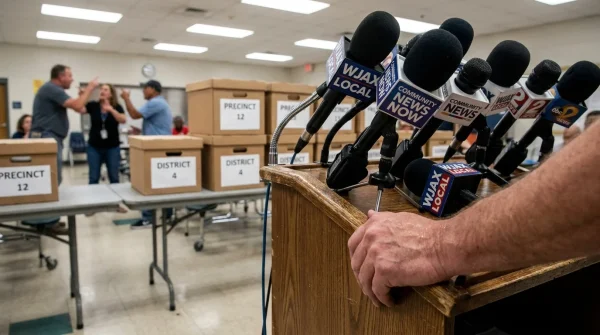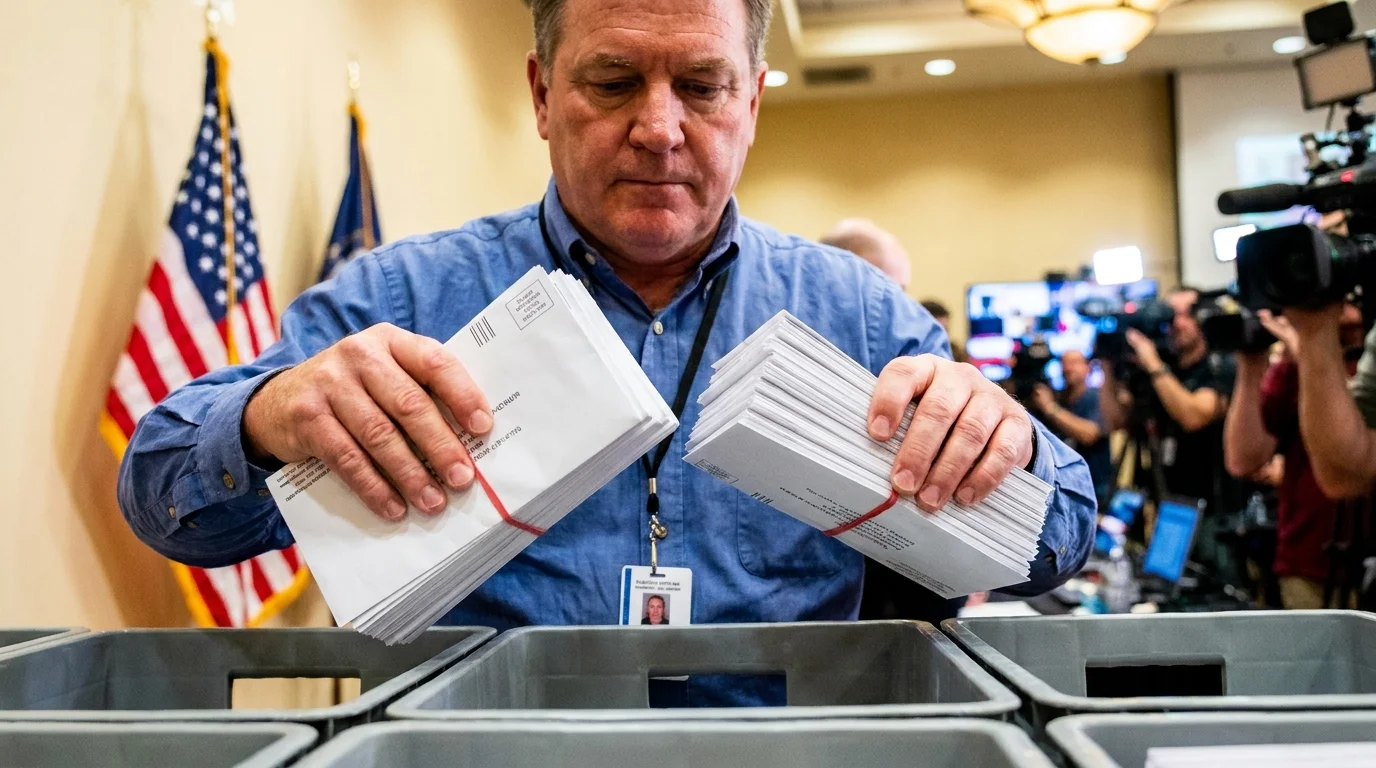
Fluorescent bulbs hum quietly against the drop ceiling of a county election warehouse. Across long industrial tables, stacks of postmarked white envelopes bound by red rubber bands rest in slate-gray sorting bins. You might picture absentee voting as a simple act of trust: dropping your sealed envelope into a blue corner mailbox before twilight, secure in the knowledge that a clear cancellation stamp guarantees your voice will be counted.
For years, that black ink circle served as an unquestioned safeguard across dozens of competitive districts. Postmarks acted as an ironclad receipt, bridging the gap between postal transit times and local canvassing boards. If the postal carrier stamped it before poll closing time, election workers honored the intent.
That buffer has vanished. A rapid succession of Supreme Court mail ballot rulings has dismantled postmark grace periods, leaving county election directors with no statutory wiggle room. The transition is immediate and unforgiving: if an envelope is not physically inside the election office when the final bell rings, it will remain unopened in a secure lockbox.
With national search volume spiking as voters realize their local rules just changed, the friction is felt most sharply at the county level. Physical possession now trumps postal intent across battleground precincts from the Midwest to the Sun Belt.
The Closing Drawbridge: Physical Custody Over Postal Intent
To navigate this legal environment, you have to understand the core mechanism that just shifted. Think of the voting window no longer as an open harbor where ships can drop anchor anytime after setting sail, but as a drawbridge on a fixed mechanical timer. The moment the clock strikes eight o’clock on election night, the bridge locks into place regardless of how many vessels are visible on the horizon.
Courts have increasingly aligned with the doctrine that state legislatures set immovable receipt cutoffs that federal judges cannot extend, even when regional sorting facilities experience unexpected transit bottlenecks. Election boards cannot grant grace periods on their own authority without explicit legislative mandates. This legal stance transforms what used to be a regional postal logistics question into an immediate procedural barrier for voters.
- Social Security COLA formulas demand Chained CPI cuts stripping monthly grocery checks
- Ed Markey primary challengers resurfaced veteran congressional votes sparking heated union splits
- United States Attorney appointments switch Senate battle lines over swift federal oversight
- Brooklyn Democratic Party rule changes derail progressive precinct power across urban districts
- Angie Nixon legislative debates trigger fierce floor clashes over disputed district funding
Marcus Vance, a 54-year-old county elections administrator in a closely contested Pennsylvania district, spent three weeks redesigning his intake protocols following the latest appellate affirmation. In prior cycles, his team sorted through late-arriving envelopes for five days post-election, matching ink dates against state guidelines. Today, his staff must apply a strict red timestamp to incoming mail pallets at closing time, segregating every subsequent arrival into an uncounted repository.
Navigating the New Timelines: Three Voter Profiles
Because postal logistics vary dramatically by geography and lifestyle, the elimination of grace periods affects different voting habits in distinct ways. Preparing your ballot requires tailoring your timing to your specific daily reality.
For the Rural Route Voter: If your mail routes through a regional processing hub sixty miles away, standard transit can easily take four to six business days. Relying on an outgoing mailbox pickup the weekend before an election is now an insurmountable risk. Rural absentee voters must initiate transit at least ten full days prior to election day or switch to an in-person county drop station.
For the Out-of-District Student: Campus mailrooms introduce an internal delay that standard tracking rarely shows. Campus mail sorting adds critical days between when you drop an envelope into a dorm collection box and when it enters the federal mailstream. College voters must bypass campus intake entirely and hand-deliver their completed ballots to official municipal drop locations or municipal postal windows.
For the Commuter and Shift Worker: Long hours and unpredictable shifts make mid-week post office trips difficult. If you find yourself holding a completed mail envelope within seven days of the deadline, skip the postal service entirely. Locating a designated county drop box or taking advantage of early in-person return options eliminates transit uncertainty completely.
The Physical Receipt Checklist: Securing Your Ballot’s Arrival
Protecting your vote under strict receipt rules requires treating your ballot like a time-sensitive financial instrument. Take deliberate, methodical steps to verify that your envelope reaches the intake clerk well before the deadline.
- Request immediately: Submit your absentee ballot application the first day your county opens registration to maximize your processing buffer.
- Sign and seal accurately: Complete the voter declaration on the inner security sleeve, verifying your signature matches your official state registration records.
- Track the barcode: Use your state board of elections portal to follow the unique Intelligent Mail barcode assigned to your outbound and inbound envelope.
- Confirm intake status: Check the verification portal seventy-two hours after mailing to ensure the record reflects ‘Ballot Received’ rather than just ‘Ballot Issued’.
The Tactical Transit Toolkit
- The Postal Buffer: Allow a minimum of 7 full business days if returning through the United States Postal Service.
- The Hand-Off Window: Shift to official drop boxes or clerk counter delivery if you are within 5 days of election night.
- The Closing Bell: Note your county’s precise receipt time; many jurisdictions cut off returns at 7:00 PM or 8:00 PM local time on election day.
- The Curing Window: Verify whether your state allows signature corrections if your envelope arrives undamaged but flagged for review.
Reclaiming Certainty in an Era of Legal Friction
It is easy to view changing legal standards as a barrier designed to frustrate your civic participation. Yet recognizing the rules as they exist today gives you the practical advantage. Certainty comes from proactive habits rather than hoping for post-election legal interventions.
When you take physical custody into your own hands—mailing earlier than necessary or walking your envelope directly to an official intake desk—you strip the courts of their power to invalidate your voice on technical grounds. Precision and early action are the most dependable tools you have to ensure your vote stands recorded and secure.
The legal standard has moved from the date you signed your ballot to the exact second a county worker logs it into the room.
| Key Point | Detail | Added Value for the Reader |
|---|---|---|
| Grace Period Elimination | Courts have upheld strict election-night arrival cutoffs across competitive states. | Prevents you from relying on postmarks that are no longer legally recognized. |
| Transit Bottlenecks | Regional postal processing hubs can introduce multi-day intake delays. | Gives you clear parameters for when to switch from mail to hand delivery. |
| State Tracking Portals | Digital tracking systems monitor envelope barcodes from dispatch to intake. | Provides peace of mind with real-time verification of your ballot status. |
Frequently Asked Questions
Does my postmark count if I drop my ballot in a mailbox on election morning?
Under the latest rulings in competitive jurisdictions, no. Your ballot must be physically received by your local election board before the designated closing time on election day, regardless of the postmark stamp date.What happens if the post office delays my ballot through no fault of my own?
If an envelope arrives after the statutory receipt cutoff, election clerks are legally required to set it aside uncounted, even if postal delays caused the tardiness.Can I track whether my county board has physically received my envelope?
Yes. Most states offer an online ballot tracking dashboard where you can verify when your envelope has been scanned into the county election system.Are secure ballot drop boxes still available under these rulings?
Drop box availability depends entirely on individual state statutes, but where permitted, authorized county drop boxes provide an immediate, direct way to ensure receipt before the deadline.What should I do if election day is three days away and I still have my mail ballot?
Do not place it in a standard outgoing mailbox. Hand-deliver it directly to your county elections office, an authorized early voting site, or an official secure drop box in your jurisdiction.