The damp autumn mist clings to the pine needles along the ridgeline, deadening every footstep in the timber. A flashlight beam cuts through the grey gloom, bouncing weakly off wet shale and tangled chokecherry bushes where an eight-year-old boy wandered away from a trailhead four hours before twilight. The mountain air sits heavy at thirty-eight degrees Fahrenheit, dropping fast enough to numb wet fingers inside leather gloves.
In the back of the county incident command rig, two hard-shell flight cases sit open under buzzing fluorescent strips. Inside them rest two enterprise quadcopters, their dark folding arms neatly pinned, their forward-looking infrared sensors wiped clean with microfiber. But their batteries are pulled, stacked like silent bricks in molded foam. The glass controller screens stay dark because a sudden legislative stroke four states away turned these machines into legal contraband before breakfast.
Instead of watching a clear heat signature pop orange against cold earth from four hundred feet in the air, twelve local volunteer deputies pull up their collars, adjust their compasses, and form a walking grid. They will search this ravine on foot, pushing through briars and steep boulder fields at two miles an hour. The sky remains completely silent while precious body heat bleeds into the wet subalpine duff.
The Paper Shield and the Empty Sky
For nearly ten years, county sheriff departments, rural volunteer fire brigades, and mountain rescue units built their eyes in the sky on accessible, commercially viable foreign platforms. They bought reliable thermal sensors, long-range transmitters, and durable airframes that could operate in high-wind mountain gaps without blowing out an entire annual vehicle repair budget. It was an operational baseline that transformed lost-person recovery from a three-day grim slog into an afternoon sweep.
Then came the geopolitical theater in Washington and state capitols, framing emergency search gear as covert espionage terminals. Lawmakers passed sweeping procurement prohibitions and emergency grounding orders against Chinese-manufactured platforms, wrapping local agencies in blanket administrative bans before domestic industrial alternatives even existed at operational parity or reachable price points. National rhetoric swiftly eclipsed ground-level reality, confiscating the sharpest tool small-town first responders owned.
What the drafting committees ignored is that air superiority in a cornfield or a rocky canyon is not a military luxury; it is basic workaday logistics. By stripping away these workhorse fleets without establishing trade-in funding, grant exceptions, or functional domestic supplies, legislators did not protect municipal data grids. They simply turned off the lights in the middle of a rescue mission, leaving rural dispatchers to stare out the window at empty sky while ground teams gamble against the setting sun.
- Cultivated meat bans trigger fierce agricultural pushback across Southern statehouses
- Josh Turek campaigns target entrenched party incumbents across rural legislative battlegrounds
- County dam mandates force sudden property tax hikes across rural municipal ledgers
- Likely voter screens routinely misread hourly shift workers until election night tallies land
- Laurence Tribe warnings ignite fierce congressional floor clashes over emergency presidential powers
The Price of a Grounded Fleet
Mark Evans, a fifty-two-year-old search director for a volunteer search and rescue association in Fremont County, Wyoming, knows precisely what that legislative theater costs on a stopwatch. Last spring, his four-man aerial unit could deploy an aircraft over a three-hundred-acre sage basin within eleven minutes of arrival, pinpointing stranded motorists or disoriented hunters with a high-resolution radiometry lens before the first ground ATV cleared the trailer ramp.
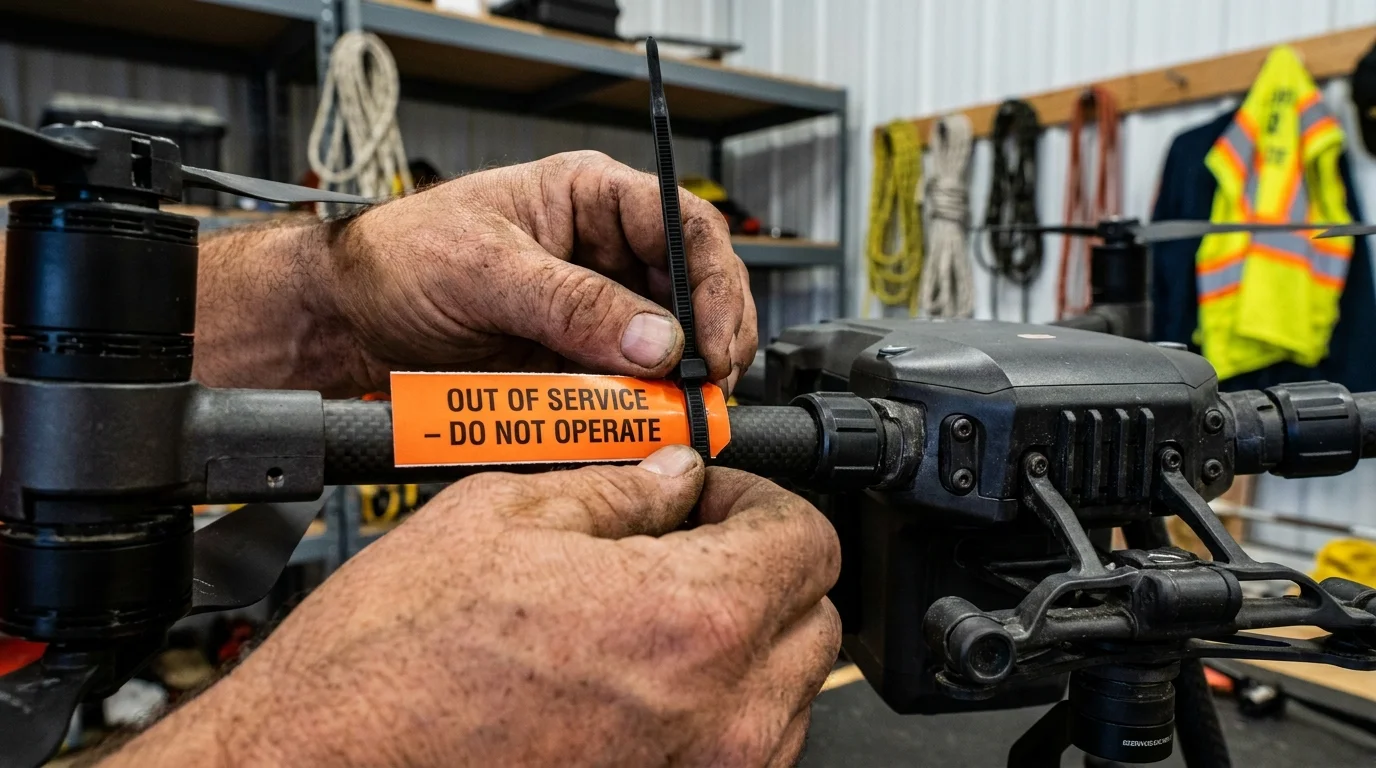
Today, Evans keeps those exact airframes locked in a steel cabinet behind yellow caution tape because state-level administrative directives threaten his department with total loss of state equipment grants if a Chinese-manufactured rotor spins on an active emergency scene. The compliant domestic alternatives approved by federal lists cost upwards of twenty-five thousand dollars each—roughly four times Evans’ total annual drone operating budget—while delivering half the battery endurance and carrying lower-resolution thermal sensors that struggle to distinguish a bedded-down calf from a hypothermic hiker.
The Triaged Sky: Operational Layers of the Ban
The sudden statutory freeze ripples through rural infrastructure along distinct fault lines, forcing local leaders to make agonizing compromises based on geography, liability, and municipal solvency.
For the Remote Mountain County
Rugged, high-altitude agencies face the most punishing physical consequences. In steep terrain where cell coverage drops to zero and radio signals bounce blindly off granite cirques, quadcopters served as mobile relay nodes and quick-look scouts. Ground teams now burn critical hours traversing vertical drop-offs that an operator previously cleared in ninety seconds, drastically shrinking the golden window for hypothermic survival.
For the Agricultural Plains Precinct
Wide-open rural sheriff offices relied on extended-range optical cameras to sweep vast, monotonous flatlands for missing elderly residents walking off memory care properties. Lacking natural terrain markers, these departments now lean entirely on mutual-aid manned helicopters from distant state police barracks. That shift trades an immediate fifteen-dollar battery charge for a four-thousand-dollar flight hour bill that arrives weeks later to drain the county road fund.
For Suburban-Fringe Emergency Squads
Municipal departments caught between dense suburbs and state park wildlands face an impossible legal tightrope. While their town councils demand spotless compliance with state procurement rules, their operational commanders know that mutual aid agreements often blur asset ownership during multi-county brushfires. When an unauthorized airframe launches over a blaze, liability questions can freeze insurance coverage while the fire spreads toward suburban fence lines.
Rebuilding the Watch: A Pragmatic Bridge Strategy
Surviving this regulatory blackout requires rural leadership to stop waiting for federal clarity and start constructing resilient local contingencies. You cannot rely on legislative rollback when seasons change and hikers go missing.
- Audit your exact airframe status: Separate municipal data-logging hardware from field-level mechanical recovery gear. Document whether your state statute prohibits operational flight or merely future capital procurement with public funds.
- Air-gap historical equipment: For agencies permitted grandfathered flight operations, disable all external wireless uplink protocols. Run controllers completely offline, purge stored cache logs manually, and pull flight paths directly via encrypted local memory cards.
- Form private auxiliary agreements: Partner with unencumbered civilian search auxiliaries. Civilian volunteers flying personal hardware under standard commercial flight rules can sweep public land under direct incident command requests without violating public agency equipment mandates.
- Pool regional regional defense funds: Combine small equipment mill levies across contiguous counties to purchase shared, federally compliant domestic airframes that rotate between regional rescue sheds based on seasonal hazard peaks.
Take inventory of your team’s mechanical toolkit. Build hardened battery boxes that keep remaining compliant power packs insulated at sixty-five degrees Fahrenheit throughout frozen field nights to prevent mid-flight voltage sag. Field vigilance beats legislative blindness every time an actual life is on the line.
Public Safety Beyond Political Posturing
Emergency management has always been an exercise in brutal pragmatism. It is about water flow rates, road friction, rope shear strength, and core body temperatures. It does not operate on geopolitical symbolism or performative press releases staged inside climate-controlled briefing rooms hundreds of miles away.
When a county agency sends a thermal sensor into a freezing November squall, that camera is not harvesting municipal trade secrets; it is looking for a human pulse in the dark. Forcing public safety volunteers to search blindfolded because politicians wanted a tough headline against foreign technology exposes a deep rot in governance priorities. The real strength of a community is measured by how quickly it finds its most vulnerable people when the cold sets in, not by how thoroughly it grounds its own rescue teams to win an afternoon news cycle.
Real safety is never achieved by taking the best tool out of a rescuer’s hands while the cold rain is falling.
| Key Point | Detail | Added Value for the Reader |
|---|---|---|
| Legislative Scope | State and federal restrictions ground foreign-made unmanned systems used by emergency responders. | Helps assess your local county’s legal operational limits before an incident occurs. |
| Cost Disparity | Domestic alternatives frequently cost 300% to 400% more with lower sensor fidelity and flight times. | Clarifies why local tax levies and emergency budgets are facing sudden shortfalls. |
| Field Workaround | Utilizing civilian auxiliary pilots and isolated offline hardware architecture. | Provides immediate operational options to maintain life-saving aerial search capabilities. |
Frequently Asked Questions
Are all Chinese-made drones banned nationwide for emergency services?
No, the bans exist as a patchwork of federal agency bans, defense procurement restrictions, and specific state-level statutes. Several states have prohibited state and municipal agencies from spending public funds on or deploying these systems, while others have no restrictions at all.Why don’t rural counties simply switch to American-made rescue drones?
Compliant domestic options are often significantly more expensive and have experienced supply-chain delays. For small volunteer budgets, replacing a five-thousand-dollar thermal platform with a twenty-five-thousand-dollar alternative requires funding that does not exist without new local taxes.Do these rescue drones pose an actual cybersecurity or espionage risk in rural areas?
While foreign data security concerns exist regarding enterprise software, local search airframes can easily be operated completely offline without internet connectivity, eliminating live data transmission risks during search missions.Can private citizens still volunteer their personal drones to help local police find lost people?
Yes, in most jurisdictions private citizens operating under standard recreational or commercial rules can assist as independent volunteers, provided they follow incident command directions and local airspace guidelines.What is the quickest way for a grounded county to restore thermal aerial search?
Many departments are forming regional consortiums to share the cost of a single compliant high-end airframe, or setting up formal auxiliary volunteer units that operate non-municipal equipment under clear emergency protocols.