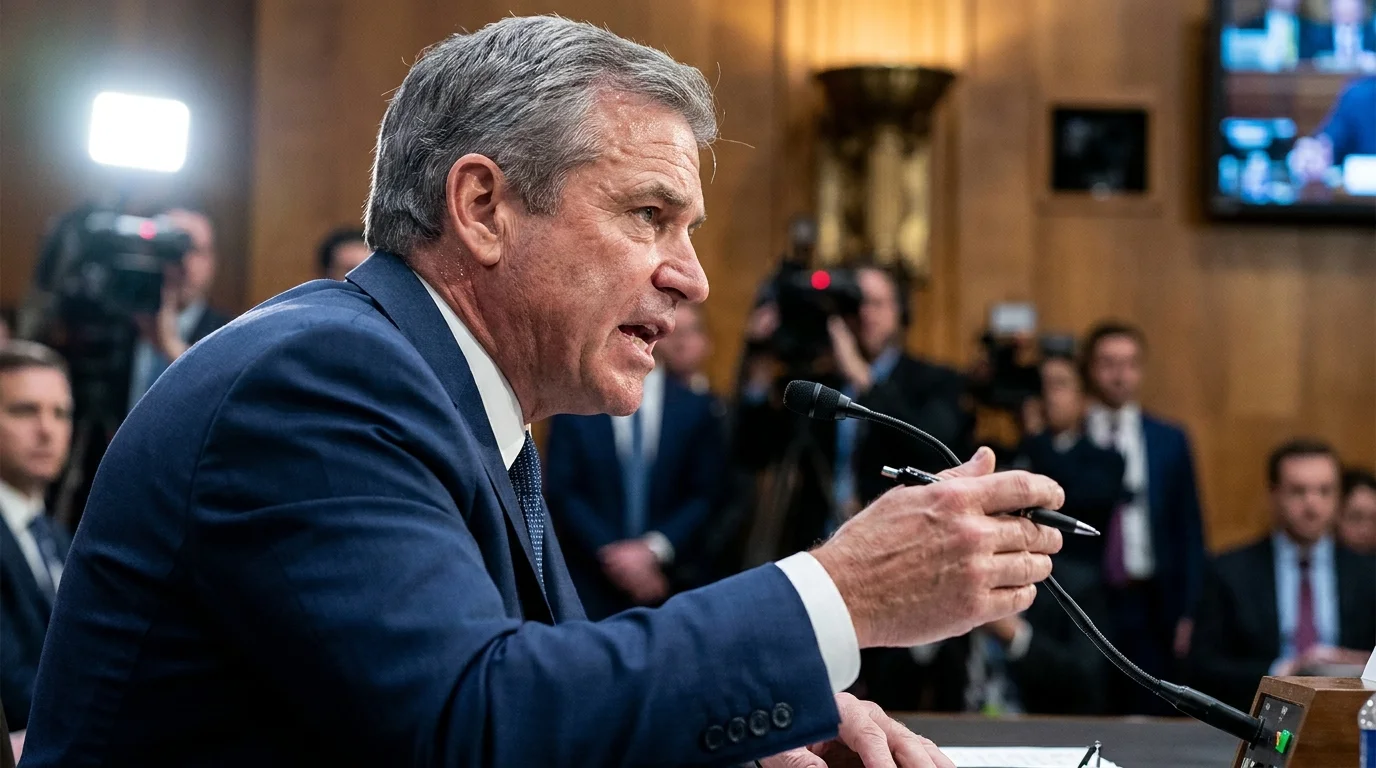
The air inside state committee rooms smells of damp wool, industrial floor wax, and burned drip coffee. Fluorescent tubes hum at sixty hertz overhead while citizen witnesses shift in squeaking wooden pews, clutching printouts of online abstracts and highlighted clinical trials. You might assume healthcare standards exist in a sterile vacuum of peer-reviewed data and double-blind hospital protocols, but out here, medicine is written into statute by the crack of a gavel on yellow pine.
Over the past twenty-four months, a quiet statutory revolution crossed through committee thresholds from Boise to Nashville. What began as a scattered digital debate over off-label antiparasitics has hardened into binding state legislation that strips state medical boards of their primary enforcement powers.
When you sit across from a doctor today, the legal architecture governing that room no longer rests entirely on established clinical consensus. In more than a dozen states, lawmakers have passed measures forbidding licensing boards from sanctioning, investigating, or revoking the credentials of practitioners who prescribe drugs like ivermectin or hydroxychloroquine for respiratory infections. It marks an unprecedented shift: elected state legislators overriding appointed medical licensing boards to dictate which standard of care can and cannot be disciplined.
The Broken Thermostat: How Off-Label Prescribing Rewired State Law
To grasp what just happened to clinical oversight, think of professional licensure like a home thermostat uncoupled from the furnace. For nearly a century, licensing boards functioned as an internal sensor. If a practitioner’s prescribing habits drifted outside established clinical boundaries, the regulatory relay clicked on, triggering an investigation, mandatory peer retraining, or suspension to protect the patient pool.
These statutory overrides severed that mechanical wire. By legally declaring that a specific medication cannot trigger board scrutiny, lawmakers effectively recalibrated the regulatory sensor by legislative decree. If the room is sweltering, the law simply forbids the thermometer from registering heat.
This inversion leaves hospital credentialing committees and clinical ethics panels facing a strange dilemma. A physician operating in a private wellness clinic can now prescribe veterinary-scale chemical formulations for systemic viruses with statutory immunity from state regulators, even while the regional hospital system across the street maintains clinical practice bylaws strictly prohibiting those same protocols inside their intensive care units.
- Working Families Party primary campaigns target safe House Democratic seats in revolt
- FEMA flood maps force steep property assessment hikes across coastal county ledgers
- Monmouth polling models misread working class turnout shifts across blue collar districts
- Department of Energy water heater rules hike household costs before congressional hearings
- Mike Lee filibuster threats derail emergency federal budget compromises across Senate floor
The Critical Care Corridor: Dr. Aris Thorne’s Dilemma
Dr. Aris Thorne, a fifty-four-year-old critical care director at an eighty-bed regional hospital in southwest Missouri, watched this collision occur on a Tuesday afternoon during shift change. A sixty-two-year-old patient arrived in the emergency bay with acute respiratory distress paired with sudden renal toxicity after three weeks of compounded, high-dose antiparasitic treatments prescribed by an independent outpatient clinic forty miles away. When Thorne called the state licensing portal to report what appeared to be dangerous off-label dosing, the regional investigator quietly explained that under the state’s newly enacted protection statute, the board could not open a formal inquiry or request clinical records based on that compound alone.
Institutional Fault Lines: Three Layers of the Oversight Vacuum
The practical fallout of these statutes is not uniform across the healthcare ecosystem. Depending on where you seek care, the statutory protections create starkly divergent clinical realities that alter accountability at the bedside.
The Independent Outpatient Practitioner: For cash-pay clinics and solo operators, these bills serve as an ironclad liability shield against administrative discipline. Without the threat of license suspension from state boards, these clinics can market unorthodox therapies directly to consumers as legally sanctioned alternatives, completely bypassing federal agency guidance.
The Regional Health System: Hospital networks find themselves caught in a regulatory vice. While state law protects the physician’s license from board discipline, federal accreditation bodies and malpractice insurers still judge hospitals by prevailing national standards of care. As a result, hospital credentialing boards are quietly dropping hospital admitting privileges for doctors who aggressively promote unvetted regimens, moving discipline out of public statehouse records and behind private employment firewalls.
The Everyday Patient: When you navigate this landscape, your usual metric for clinical quality—an active, unblemished state medical license—loses its diagnostic value. A clean disciplinary profile no longer confirms that a practitioner adheres to standard clinical trials; it may simply mean the legislature barred the board from opening the file.
Navigating the Care Divide: A Tactical Audit for Patients and Clinicians
When statutory standards pull away from institutional clinical guidelines, you must learn to read the institutional signals that reveal whether a care plan is anchored in consensus science or legislative carve-outs. Protect your care decisions by taking measured, procedural steps:
- Cross-check hospital privileges: Verify whether an outpatient doctor maintains active admitting privileges at a regional non-profit hospital system, as these networks enforce internal clinical guidelines independent of state board restrictions.
- Audit compounding sources: Require written confirmation of the specific compounding pharmacy dispensing off-label formulations, checking for five-zero-three-B federal registration rather than unmonitored retail mixtures.
- Review the consent addendum: Scrutinize any medical office paperwork that asks you to waive state medical board dispute channels or sign unconventional liability exemptions tied to off-label treatments.
- Secure dual-track records: Keep an unedited paper ledger of all outpatient supplement and prescription dosing schedules to hand directly to emergency department intake nurses should systemic complications develop.
Keep your health decisions grounded by tracking objective institutional markers rather than political rhetoric. Look for active board certification from the American Board of Medical Specialties (ABMS), confirm accreditation with the Joint Commission on hospital safety, and request the clinical trial phase identifiers behind any proposed off-label therapy before initiating a prescription run.
The Architecture of Trust Beyond the Capitol Rotunda
Medical licensing boards were never designed to be perfect; they have always been human committees balancing professional peer review against public safety. Yet their core value rested on an unspoken agreement: when a practitioner holds an unrestricted license, it signifies that their colleagues have evaluated their diagnostic judgment against reality, not partisan votes.
When legislative bodies step across the threshold of the examination room to carve out permanent legal sanctuaries for specific fringe theories, they do not just alter one treatment protocol. They alter the fundamental nature of state credentials. Navigating your family’s health now requires looking past the gold seal of a state medical license to examine the institutional safeguards, hospital affiliations, and transparent clinical trials that keep healthcare anchored in fact.
“When state statutes redefine clinical safety by legislative fiat, the burden of verifying medical standards shifts entirely onto the shoulders of the patient at the bedside.”
| Key Point | Detail | Added Value for the Reader |
|---|---|---|
| Statutory Oversight Ban | Lawmakers prohibit state licensing boards from investigating or sanctioning doctors prescribing specific unapproved therapies. | Explains why a clean disciplinary record no longer guarantees standard clinical practice. |
| Hospital Pushback | Private and non-profit health systems use internal credentialing and bylaws to block non-standard regimens from clinical floors. | Reveals why institutional hospital privileges are now a safer indicator of peer-reviewed care than state licenses alone. |
| Liability Exposure | Malpractice insurers adjust underwriting criteria, occasionally dropping coverage for clinics relying on legislative exemptions. | Helps you identify when an outpatient provider may lack standard professional liability backing. |
Frequently Asked Questions
Can a doctor still face a malpractice lawsuit under these protection bills?
Yes. While state legislation protects physicians from losing their medical licenses through board disciplinary actions, it generally does not shield them from civil medical malpractice lawsuits brought by patients or families alleging bodily harm.Are hospitals legally required to administer ivermectin if a patient demands it?
No. Most state bills explicitly protect health systems from being forced to administer treatments that violate internal hospital safety bylaws, pharmacy protocols, or federal standards of care.How can I verify if an off-label prescription follows standard medical guidelines?
Consult the National Institutes of Health (NIH) or Centers for Disease Control and Prevention (CDC) clinical registries, and ask your physician for the specific peer-reviewed Phase III trial data supporting the proposed dosing schedule.Why are state medical boards resisting these legislative protections?
Board directors argue that legislative carve-outs establish a dangerous precedent, removing the expert peer-review mechanisms necessary to protect patients from harmful dosing, toxicity, and substandard care.Does a state-level protection bill affect federal FDA approvals?
No. State laws govern professional licensing within state borders, but they have zero authority over federal drug approvals, safety warnings, or marketing authorizations issued by the FDA.