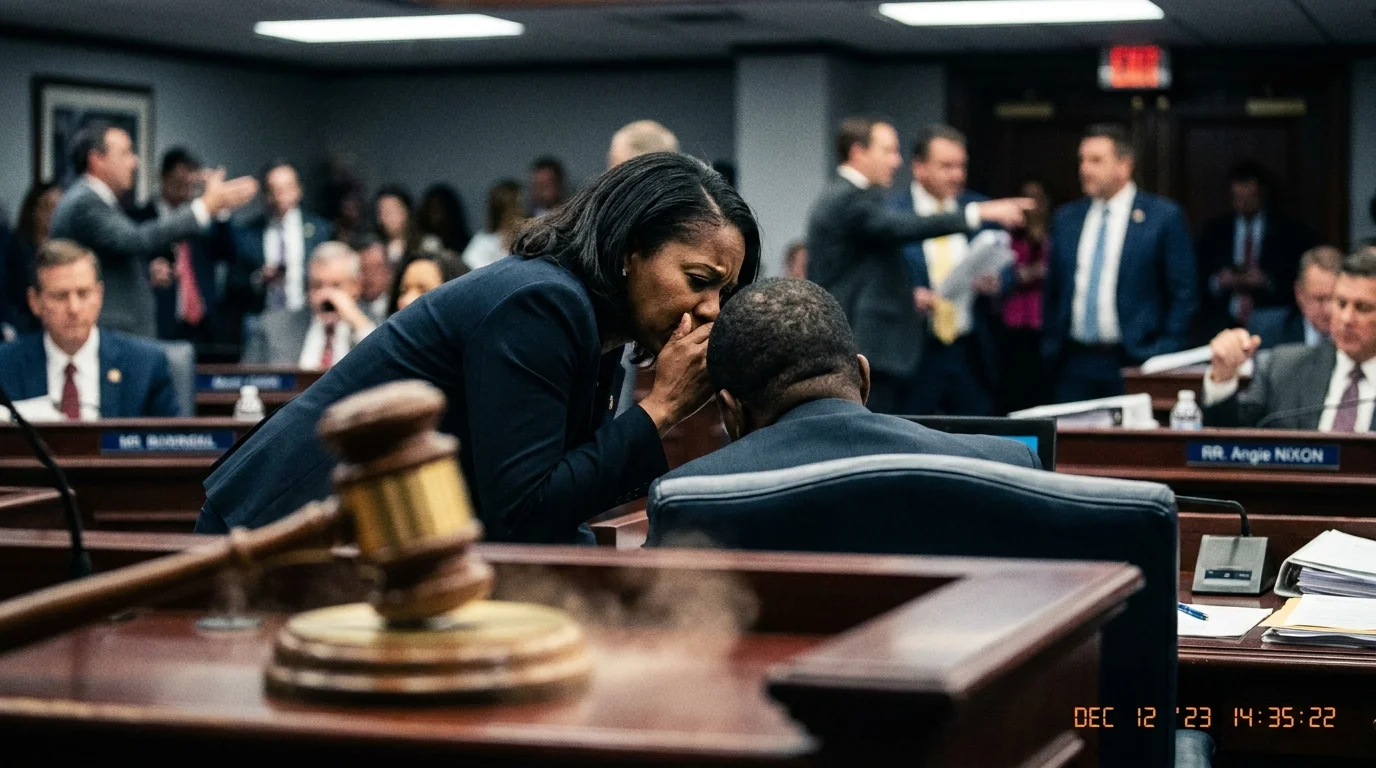
A sharp, metallic resonance rings across the polished heart-pine floors of the statehouse chamber as a buzzing wooden gavel strikes a brass sound block amid shouted objections. The air in the room carries the dry scent of printed fiscal binders, lukewarm coffee, and sudden tension. You might expect a state budget debate to crawl forward with bureaucratic monotony, but the hum of open microphones tells a different story entirely.
When Representative Angie Nixon took the well to challenge contentious district funding allocations, the standard cadence of floor debate collapsed into raw institutional friction. The sudden flare-up over localized infrastructure and community program funding was not just another procedural squabble; the confrontation reshaped floor dynamics in real time as search engines registered a sharp surge in public attention.
Watching the chamber descend from scripted decorum into heated cross-talk offers a rare glimpse into the machinery of state power. What looks to the casual observer like sudden outrage is actually a calculated collision between legislative leadership and district-level advocacy.
The Ledger as a Strategic Chessboard
Most citizens view legislative budgets as collections of dry arithmetic, assuming dollars flow strictly according to formulaic civic necessity. In reality, state appropriations operate much like water behind a cracked dam; the funds move where political pressure carves a channel, leaving dry ground wherever resistance falters.
When spending bills reach the floor, amendments often serve as tactical wedges rather than simple corrections. By challenging specific line items that stripped resources from vulnerable zip codes, Nixon deployed pointed floor rhetoric to turn a routine appropriations vote into an uncomfortably public referendum on legislative priorities. The goal was not merely to change a dollar figure on paper, but to force colleagues onto the record under the glare of live chamber feeds.
The Anatomy of the Floor Clash
Marcus Vance, a forty-two-year-old statehouse legislative analyst who has tracked state capitol appropriations battles for over fifteen years, observed the exchange from the press gallery above. He noted that the moment leadership attempted to cut off debate with a rapid point of order, the chamber’s psychological baseline permanently shifted.
- New Hampshire retail diner stops force candidates into greasy breakfast booth interrogations
- ActBlue recurring donation forms trap elderly donors with pre-checked yellow boxes
- Office of Legal Counsel memos block executive orders with crisp embossed seals
- Senate cloakroom drafts demand handwritten line edits on yellow legal pads
- Podium countdown timers spark sudden voice pitch jumps under harsh glare
“Floor decorum is a thin veneer,” Vance noted quietly while reviewing the voting roll. “When a lawmaker stops speaking to the dais and starts speaking directly to the people watching the feed at home, the formal rules of the chamber lose their power to intimidate.” Nixon utilized this exact dynamic, pivoting away from standard legislative jargon to spotlight concrete local cuts, making the procedural maneuvers of her opponents appear purely evasive.
The Three Layers of Legislative Resistance
State budget confrontations rarely occur in a vacuum; they develop across distinct operational layers, each demanding a different response from the lawmakers involved and the constituents watching them.
- The Procedural Block: Leadership relies on strict adherence to time limits, non-debatable motions to table, and sound-block interruptions to suppress extended floor speeches before they gain viral traction.
- The District Accountability Pivot: Advocates bypass committee diplomacy, directly naming neighborhood clinics, after-school programs, and flood-mitigation projects threatened by disputed budget line items.
- The Digital Feedback Loop: Real-time public interest forces lawmakers sitting on the floor to monitor constituent messages flooding their personal devices while debate continues.
Understanding these distinct layers helps you decode why an ordinary budget amendment can suddenly trigger an all-out partisan standoff on the evening news.
A Citizen Toolkit for Tracking Chamber Maneuvers
Following high-stakes legislative battles in real time requires looking past the political theater to analyze procedural mechanisms. You can monitor the genuine trajectory of contested state spending by tracking three core indicators during any heated floor fight.
First, watch the movement of the gavel. Rapid-fire gavelling typically signals that leadership wants to push a contested vote into the record before debate transcripts can be widely analyzed by watchdog groups.
- Track the specific line-item amendment numbers rather than broad bill titles to see exactly which neighborhood programs face cuts.
- Note which members break caucus ranks during procedural roll calls, as procedural votes reveal genuine loyalty far better than final passage tallies.
- Monitor the official committee bill hopper within twenty-four hours after a floor clash to spot retaliatory amendments aimed at dissenting members’ districts.
Second, listen to the framing of points of order. When a presiding officer invokes germaneness rules, it usually means the debate touched sensitive funding that leadership intended to pass without public scrutiny.
The Real Stakes Behind the Gavel
When the shouting subsides and the statehouse chamber clears, the impact of these high-stakes clashes ripples far beyond the marble walls of the capitol building. The dispute over district funding is ultimately a struggle over visibility—whether localized community needs will be quietly erased in late-night budget packages or brought forcefully into the light of public awareness.
By understanding how procedural rules, rhetorical pressure, and floor decorum interact during breaking legislative disputes, you become an informed observer who can separate political theater from the decisive battles that govern your daily life.
“True legislative power does not belong to the gavel that silences debate, but to the voice that forces the chamber to listen.”
| Key Point | Detail | Added Value for the Reader |
|---|---|---|
| Appropriations Friction | Disputes over specific district funding allocations and community investments. | Reveals how state budget negotiations directly affect local municipal services and neighborhood resources. |
| Procedural Tactics | Use of rapid gavelling, points of order, and motions to table debate. | Helps you identify when chamber leadership is attempting to minimize public scrutiny on controversial votes. |
| Constituent Mobilization | Real-time digital engagement driven by viral floor exchanges. | Shows how direct public awareness can shift legislative momentum during active floor battles. |
Frequently Asked Questions
What sparked the intense debate involving Angie Nixon?
The clash arose during heated floor deliberations over contested state spending bills, specifically focusing on funding cuts and resource distribution impacting local community initiatives.Why are state budget amendments so contentious?
Budget amendments force lawmakers to take public stances on specific neighborhood projects, exposing political compromises that are often obscured in broader spending packages.How does chamber leadership typically manage floor disruptions?
Presiding officers use the gavel, enforce strict germaneness rules, and introduce immediate motions to table in order to control debate tempo and limit opposing speeches.What is the significance of a point of order during floor clashes?
A point of order is a procedural tool used to halt a speaker by claiming they have violated chamber rules, frequently employed to stop uncomfortable political criticisms.How can ordinary citizens track disputed state spending bills?
Citizens can use state legislative portals to view live chamber broadcasts, read exact amendment texts, and monitor committee roll-call votes in real time.