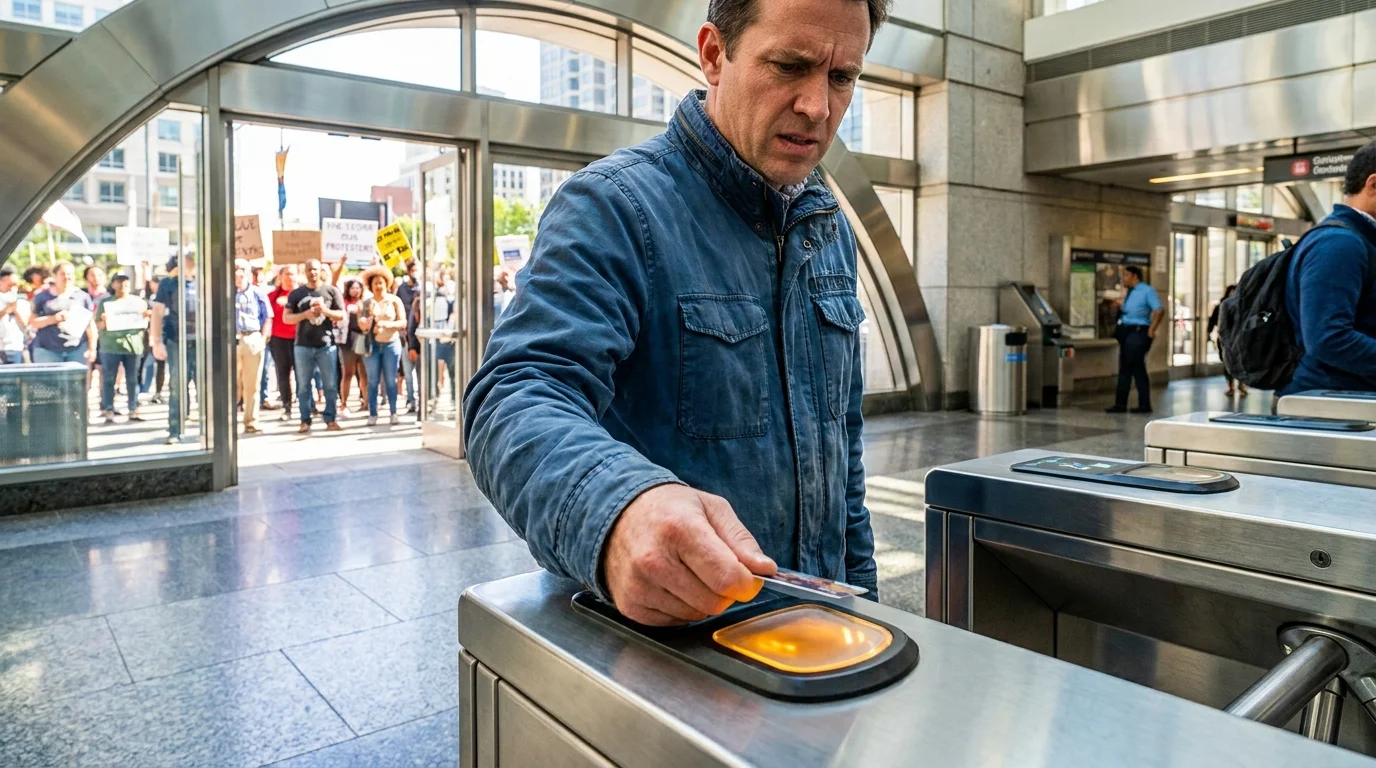
The pre-dawn chill at the platform smells of diesel soot, cold river damp, and stale paper coffee cups. At 5:45 AM, under the flickering hum of yellowing fluorescent tubes, you step toward the familiar metal turnstile. Your glove grazes the cold steel as you tap your transit card against the reader, anticipating the quiet, mechanical click that has ushered you onto the commuter rail for years.
Instead, the screen blinks an unfamiliar amber. A brand-new logo sits slapped over the old municipal transit authority decal, and the reader announces a balance deduction double what you paid last Friday. The standard monthly discount pass you relied on to balance your household ledger simply does not register; the system has wiped it clean under a newly minted concession agreement.
You look over your shoulder toward the station curb where the private regional shuttle—an affordable van pool run by a cooperative of neighborhood drivers—used to idle with its hazard lights blinking. The curb is empty, cordoned off by fresh municipal paint and warning signs threatening impoundment. That sudden drop in your stomach is not just frustration over loose change; it is the realization that your daily path to work has been walled off.
What looks like a routine software update or a simple fare restructuring is actually an engineered captive vendor squeeze. By handing operational control to federally subsidized private consortiums, cities are not modernizing your commute—they are quietly signing non-compete agreements that wipe out regional competition and force everyday workers into high-cost fare tiers.
The Captive Turnpike Metaphor: When Public Aid Builds Private Walls
To understand why discount fares vanish the moment private vendors take the wheel, you have to look at the structural mechanics of concession contracts. When municipal authorities accept private financing or federal grants to upgrade aging signal systems or replace diesel coaches, private infrastructure operators rarely take the financial risk without guaranteed revenue floors. They demand complete operational exclusivity within the transit corridor.
Think of it like a public riverway. For generations, anyone with a flat-bottomed skiff could ferry passengers across for a nickel, keeping the city-run ferry honest and affordable. When the city signs an exclusive concession with a private shipping magnate to build a grand iron bridge, the magnate demands a clause that outlaws every independent ferryman on the water. Once the river is clear of alternatives, the bridge toll ceases to reflect the cost of the trip and begins reflecting whatever the captive pedestrian can be forced to surrender.
Under these agreements, regional shuttles, local employer vanpools, and independent bus lines that kept regional fares grounded are legally zoned out of intermodal stations. The vendor then eliminates bulk-purchase multi-ride tickets and off-peak concessions, replacing them with dynamic app-based ticketing that charges maximum rates precisely when shift workers have no choice but to ride.
- Prevailing wage rules expire at midnight leaving county contractors facing sudden penalties
- OFAC transaction filters freeze routine small business payroll deposits without prior warning
- County school board redistricting splits historic voting precincts into diluted suburban quadrants
- County water conservation boards override elected commissioners to restrict residential lawn irrigation
- Washington Cares payroll deductions shrink middle-class take-home checks before bank deposits clear
The public assumes that federal infrastructure funding cushions the commuter’s wallet, but the reality is inverted: taxpayer dollars guarantee private profits while stripping the rider of legal protections against monopolistic price gouging.
The Boardroom Ledger: Marcus Vance and the Disappearing Vanpools
Marcus Vance, a fifty-one-year-old dispatch coordinator who spent two decades tracking regional freight schedules outside Cleveland, saw the paper trail long before the first boycott signs went up along the concourse. Sitting on his local transit advisory council, Vance watched the quiet introduction of a sixty-page vendor agreement with an international mobility management group.
“The city leaders celebrated a forty-million-dollar federal fleet modernization grant,” Vance recalls, his voice flat with the fatigue of someone who read the fine print late into the night. “What they buried on page forty-four was a protective covenant. In exchange for managing the ticketing terminals and maintenance yards, the vendor secured exclusive curb-access rights within a half-mile radius of every rail terminal. That single provision instantly outlawed three non-profit micro-shuttles that carried hospital workers and shift laborers from the outer boroughs for three dollars flat. Overnight, those workers were forced into nine-dollar single-ride train tickets.”
Tiered Realities: How Captive Transit Impacts Different Commuters
The elimination of commuter discounts does not fall equally across the map. It cuts along specific economic fault lines, reshaping daily routines based on when and where you must report to work.
The Off-Peak Shift Worker
For decades, off-peak discount ticketing allowed night-shift nurses, warehouse crew members, and sanitation workers to travel at reduced rates. Concessionaires routinely abolish off-peak tiers under the guise of ‘unified pricing.’ Without discount incentives, late-night workers pay the exact same inflated rates as mid-day corporate riders, despite traveling on stripped-down schedules with reduced safety personnel and longer wait times.
The Multi-Zone Outer-Ring Commuter
Families pushed into distant suburbs by rising urban housing costs face a double penalty. Private operators frequently replace flat regional zone passes with distance-based dynamic pricing. What was once an predictable eighty-dollar monthly pass transforms into an unstable expense that expands whenever fuel surcharges or administrative convenience fees are quietly triggered on the vendor’s digital portal.
When public transit behaves like an airline balancing an algorithm, working households lose budget predictability.
The Cash-Preferred or Unbanked Rider
Modernized private concessions systematically remove physical ticket windows and cash-accepting turnstiles, pushing riders toward proprietary digital accounts. These digital systems quietly levy card-issuance charges, reload penalties, and balance-expiration thresholds that disproportionately extract revenue from transit riders who operate outside traditional commercial banking.
Reclaiming Transit Leverage: Tactical Steps for Riders
Confronting an entrenched municipal concession requires organized administrative pressure rather than scattered personal outrage. Boycotts succeed when they strike at the contract compliance metrics that vendors must maintain to keep their federal subsidies.
You can push back against captive transit pricing by using targeted bureaucratic levers:
- Audit the Concession Agreement: File a formal state public records request for the master service agreement between your regional transit board and the private vendor, specifically targeting the non-compete clauses and curb-space access covenants.
- Mobilize IRS Section 132(f) Accounts: Force employer participation in federal pre-tax commuter benefit plans, which circumvents vendor surcharge fees by purchasing bulk passes directly through pre-tax payroll deductions.
- File Title VI Federal Transit Complaints: If the elimination of regional shuttles or discount passes disproportionately limits transit access for low-income corridors, file an administrative complaint under Title VI with the Federal Transit Administration.
- Coordinate Station-Level Strike Windows: Align commuter walkouts or carpool caravans with the vendor’s quarterly performance audits, as concessionaires face severe financial penalties if daily ridership tallies fall below contractual performance thresholds.
By shifting your response from individual frustration to structural disruption, riders hold private vendors accountable to the municipal charters they signed.
The True Measure of Public Mobility
A public transit system is not merely an assemblage of steel wheels, copper cables, and automated gates; it is the physical circulatory system of a community. When a city auctions off the stewardship of that system to a private entity that treats riders as a captive market, the fundamental social pact of public infrastructure fractures.
Reclaiming that space requires recognizing that affordable mobility is not a corporate concession or a luxury perk—it is an economic right. When commuters stand shoulder to shoulder on a crowded morning platform, refusing to pay inflated ransoms for access to their own streets, they are doing more than saving a few dollars. They are reminding municipal custodians that roads, rails, and stations belong to the public that built them.
Public transit ceases to be a civic asset the moment an exclusive contract turns an essential daily commute into a captive financial extraction.
| Key Point | Detail | Added Value for the Reader |
|---|---|---|
| Exclusive Vendor Covenants | Contracts legally bar low-cost regional vans and independent shuttles from station curbs. | Helps you identify why affordable transit alternatives abruptly disappeared from your station. |
| Dynamic Fare Extraction | Replacement of monthly discount passes with variable algorithmic ticketing tiers. | Reveals why regular commuting costs fluctuate unpredictably under private concession management. |
| Contract Audit Triggers | Federal transit grants require verifiable equity and accessibility standards. | Provides actionable targets for community-led administrative challenges and rider boycotts. |
Frequently Asked Questions
Why do cities outsource transit operations to private concessionaires?
Municipalities often turn to private operators to shift long-term maintenance liabilities and secure upfront private capital or federal matching funds for major system overhauls.How do vendors legally eliminate competing regional shuttles?
Concession agreements routinely include non-compete clauses that grant the vendor exclusive passenger pickup rights within designated municipal transit corridors and intermodal centers.Can transit agencies reinstate commuter discounts once canceled?
Yes, if the transit board amends the vendor’s operational charter or invokes contractual public interest clauses during mandatory annual rate reviews.What makes fare boycotts effective against private operators?
Private concession contracts typically contain strict ridership and revenue quotas tied to private financing covenants; unexpected drop-offs in passenger volume trigger direct financial penalties.How can riders confirm if their transit system is privately operated?
Look at the legal notices on ticket payment receipts or review your regional transit authority’s annual board agendas for third-party master service agreements.