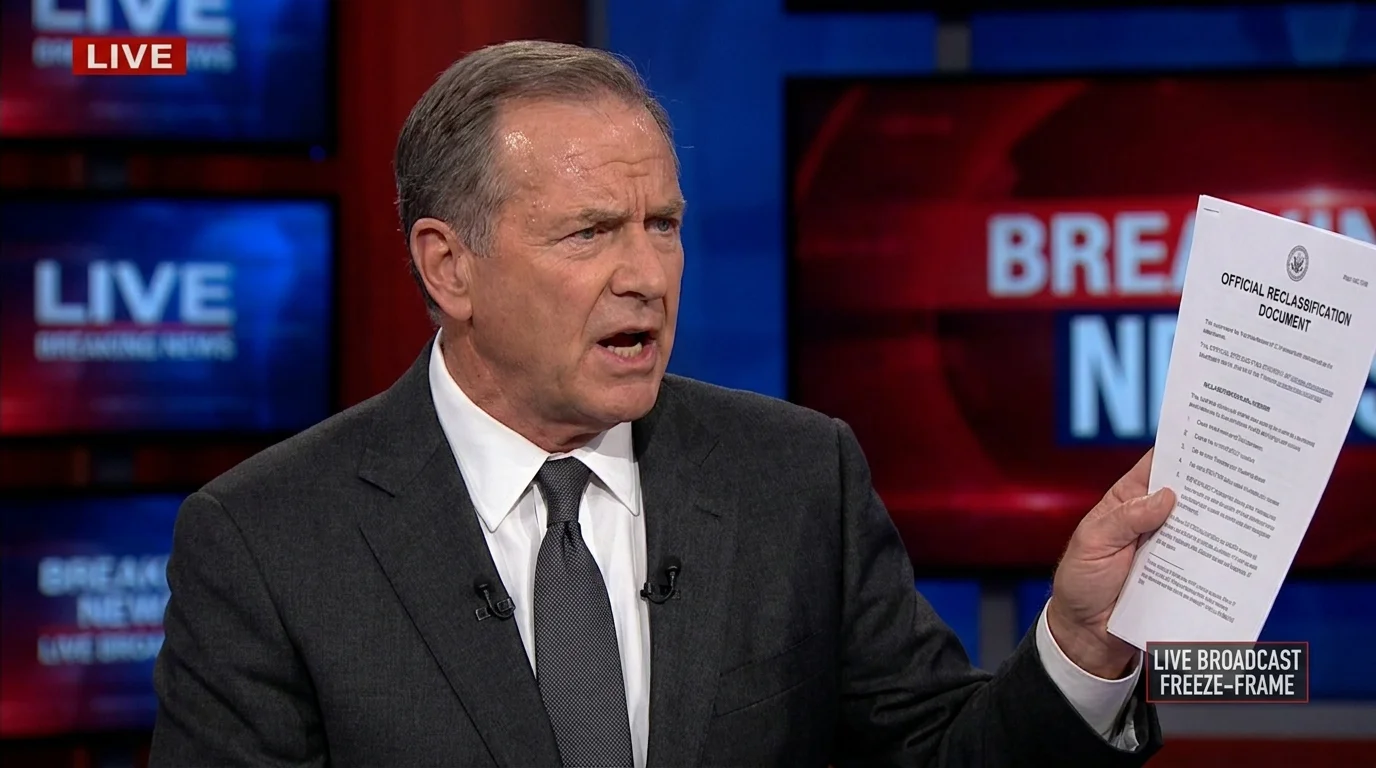
The dull hum of fluorescent ballasts overhead marks the rhythm of quiet government offices in Southwest Washington, D.C. Long corridors smell faintly of floor wax, lukewarm drip coffee, and cardboard file boxes stacked against painted cinderblock walls. You might imagine policy shifts announce themselves with soaring press conferences in the Rose Garden or fiery floor speeches under the Capitol dome. Instead, systemic transformations arrive without a sound, sliding across a laminate desk as a dry human resources memorandum printed on twenty-pound recycled bond paper.
For over a century, the men and women who audit our flight software, test interstate grain silos, and calibrate clean-water scrubbers have done so behind an invisible wall. They survived four-year political swings because their jobs belonged to the competitive civil service. You expected that if an administration wanted to gut a program or silence an inconvenient toxicologist, they had to argue their case before an elected Congress and face statutory administrative law. You expected a fight out in the open.
The reality is far colder and infinitely more clinical. Through a calculated administrative classification shift known as Schedule F, that entire statutory shield dissolves without a single legislative vote. With a minor revision to an internal position description, the federal government can instantly transform a career technical specialist into an at-will political appointee who can be dismissed before the afternoon coffee pot goes cold.
When you watch this transition unfold, you realize it is not about trimming executive fat. It is the mechanics of an administrative reclassification sleight-of-hand that leaves long-standing public safety institutions hollowed out from the inside.
The Machinery of At-Will Conversion
To understand the gravity of Schedule F reclassifications, you have to discard the myth that civil service protections exist merely to shield government workers from being fired. That common perspective assumes civil service laws are simply union-backed featherbedding designed to protect bureaucratic comfort. In reality, those protections operate as an engineering fail-safe, much like the emergency relief valve on an industrial boiler. They exist so a senior hydrologist can tell a cabinet secretary that a pet water-diversion project will flood downstream farmland without fearing that their mortgage payment will disappear by Friday morning.
Schedule F inverts that balance through quiet bureaucratic choreography. Under Title 5 of the United States Code, competitive civil service employees enjoy robust procedural protections: the right to advance notice, legal representation, evidentiary review, and appeal through the independent Merit Systems Protection Board (MSPB). But Section 7511 contains an exception carved out for roles of a “confidential, policy-determining, policy-making, or policy-advocating character.” Traditionally, this carve-out covered roughly 4,000 appointed political loyalists—agency heads, press secretaries, and confidential assistants whose tenures naturally matched the President’s term.
The architecture of Schedule F takes that narrow carve-out and expands it across the entire federal apparatus. By inventing an entirely new hiring exempt schedule, agency heads are instructed to review every Standard Form 50 (SF-50)—the foundational notification of personnel action in a federal worker’s binder—and flag anyone whose daily duties involve interpreting statute, drafting guidance documents, or managing regulatory programs. With a few mouse clicks and a signed agency roster, career positions are stripped of their Chapter 75 appeal rights. You do not get a hearing, you do not get to present data, and you cannot petition the MSPB. You serve entirely at the pleasure of the executive.
- European wine tariffs freeze regional specialty distributor shipments under sudden customs bonds
- Geoengineering bans spark fierce public pushback from atmospheric science institutions
- Justice Democrats primary challenges target entrenched House incumbents across safe urban districts
- Clean Water Act mandates force sudden county property tax increases nationwide
- Union household surveys derail campaign projections by missing blue collar turnout shifts
Consider Marcus Vance, a 54-year-old toxicologist who spent twenty-six years monitoring chemical run-off criteria for regional watersheds inside the Environmental Protection Agency. Vance never considered himself a political operator; his workday consists of reading mass-spectrometry tables and updating technical appendices. Yet under an aggressive Schedule F audit, Vance’s routine task of drafting formal scientific recommendations for state pesticide thresholds places him directly under the broad definition of “policy-influencing.” With the filing of an updated position sensitivity form, his classification flips from Competitive Service (Tenure Group 1) to Excepted Service Schedule F. Overnight, Marcus Vance holds the exact same job security as a transient White House intern.
Impact Zones Across the Administrative State
This reclassification does not strike every desk equally. It targets the connective tissue of the executive branch—the career directors who hold institutional memory across decades.
The Independent Science and Safety Directorate
When nonpartisan regulatory directors at agencies like the Food and Drug Administration or the Federal Aviation Administration lose civil service tenure, peer-reviewed dissent becomes a direct professional liability. A chief aerospace engineer who halts a commercial aircraft certification due to electrical harness concerns can simply be replaced within forty-eight hours by an acting official who signs the certificate without objection. The technical debate does not get resolved through laboratory testing; it gets settled by personnel termination.
The National Purchasing and Procurement Pipeline
Contracting officers manage hundreds of billions in annual discretionary spending across defense and civilian agencies. These civil servants are legally bound by the Federal Acquisition Regulation to award multi-year contracts based strictly on competitive pricing and technical competence. Under an at-will regime, career procurement directors face enormous internal pressure to steer sole-source contracts toward politically favored corporate allies, stripping the taxpayer of fair market pricing protections.
The Nonpartisan Statistical and Economic Core
Every month, regional analysts at the Bureau of Labor Statistics and the Department of Agriculture release inflation indices, crop yield estimates, and unemployment figures that drive global financial markets. These numbers carry profound political consequences for any sitting administration. When senior economists understand that releasing bad employment metrics ahead of an election could result in immediate termination, the integrity of raw economic data degrades, leaving your retirement accounts and community banks flying blind.
The Three-Step Administrative Squeeze
The conversion of the federal workforce does not require barricades or military decrees; it relies on quiet, precise paperwork maneuvers inside human capital offices. Understanding how this administrative shift operates allows you to see past the noise of daily news cycles.
Human resources officers execute these adjustments using a standardized three-tier review:
- Functional Position Re-Scoring: Agency political leadership mandates that human resources departments cross-examine the “Major Duties” section of career position descriptions against broad executive criteria, flagging any role that writes regulatory memos or provides legal advice.
- The Omnibus SF-50 Roster Submission: The agency director compiles thousands of targeted position numbers onto a single agency-wide spreadsheet, transmitting it directly to the Office of Personnel Management (OPM) for summary sign-off, completely bypassing public notice and comment rulemaking.
- Direct Notice of Conversion: Impacted employees receive an automated electronic notification stating that their role has been reclassified to Excepted Service Schedule F, giving them zero administrative pathway to challenge the procedural classification.
Once converted, these positions sit defenseless. The entire maneuver requires no committee markups in the Senate, no congressional appropriation riders, and zero public town halls. It simply uses the machinery of the civil service against itself.
The Value of an Impartial Civil Service
It is tempting to view bureaucratic independence as a distant, abstract concern reserved for political scientists. But the presence of independent career civil servants directly impacts your everyday reality—from the purity of the tap water pouring into your morning coffee to the stability of the local bank holding your checking account.
When an administrative apparatus operates on merit and statutory tenure, you possess an institutional buffer against erratic swings in political fashion. A civil servant can look at an ideological demand, check it against statutory law and scientific evidence, and say “no” without losing their ability to feed their children. That resistance is not obstruction; it is the structural integrity of the American constitutional republic at work.
Understanding how Schedule F functions strips away the comforting illusion that institutional stability is self-sustaining. The laws protecting our air, savings, and infrastructure are only as durable as the anonymous men and women hired to enforce them without fear or favor.
“A civil service based on political loyalty rather than objective technical competence turns every regulatory agency into an arm of transient political will.”
| Key Point | Detail | Added Value for the Reader |
|---|---|---|
| Statutory Baseline | Title 5 protections require documented cause and formal MSPB appeal rights before firing competitive service staff. | Clarifies why current career experts can resist unlawful political orders without immediate retaliation. |
| Schedule F Mechanism | Uses an obscure statutory loophole (Section 7511) to reassign technical roles into the exempt at-will category. | Reveals how radical executive power can be enacted through internal personnel memos rather than new legislation. |
| Household Impact | Weakens oversight on consumer loans, aviation inspections, pharmaceuticals, and agricultural safety checks. | Connects human resource classification codes to your personal physical safety and daily cost of living. |
Frequently Asked Questions About Schedule F
Can an administration fire all career federal employees immediately under Schedule F?
No, not every federal employee is vulnerable. Schedule F specifically targets policy-influencing, regulatory drafting, and confidential advisory positions—an estimated 50,000 to 100,000 senior and mid-level roles across regulatory, statistical, and legal divisions.Why can’t Congress easily block Schedule F through legislation?
While Congress has introduced bipartisan bills like the Saving the Civil Service Act, sweeping executive orders can be implemented quickly through existing administrative authorities unless blocked by a veto-proof legislative majority or federal court injunctions.Isn’t it easier to dismiss poor performers under an at-will system?
While at-will status expedites dismissals, current federal law already provides clear mechanisms to terminate underperforming staff for performance or misconduct under Chapter 43 and Chapter 75, provided agencies follow standard evidentiary processes.How does this differ from traditional political appointees?
Traditional political appointees number roughly 4,000 across the entire federal government and undergo rigorous vetting or Senate confirmation. Schedule F reaches deep down into career technical ranks, converting permanent specialists into at-will staff without public oversight.What legal avenues do civil servants have if their position is reclassified?
Federal employee unions and advocacy groups have mounted legal challenges under the Administrative Procedure Act, arguing that blanket conversions circumvent congressional intent and ignore required statutory notice periods.