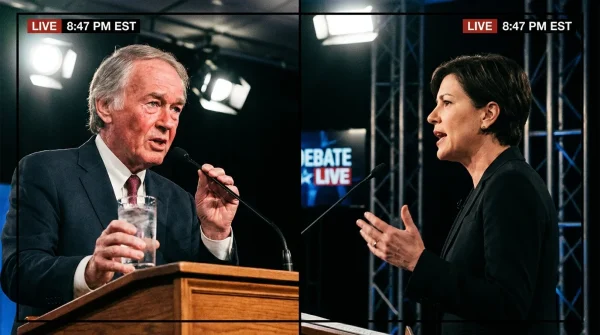
The glow of production monitors hums against acoustic baffling in an off-strip production suite outside Northern Virginia. Cables snake across carpet taped down with heavy black gaffer adhesive, while muted broadcast feeds flicker with the steady cadence of afternoon punditry. You might picture national debate preparation as high-minded civic choreography, staged beneath historic university proscenium arches with polished walnut lecterns. In reality, it runs on broadcast carriage agreements, ad-rate guarantees, and the brittle legal language of candidate qualification criteria.
For three decades, party committees maintained absolute control over who stepped onto that risered carpet. They dictated the exact polling thresholds, certified specific media partners, and drafted exclusivity clauses that bound contenders to sanctioned stages. If you broke those boundaries, you lost your spot on national television.
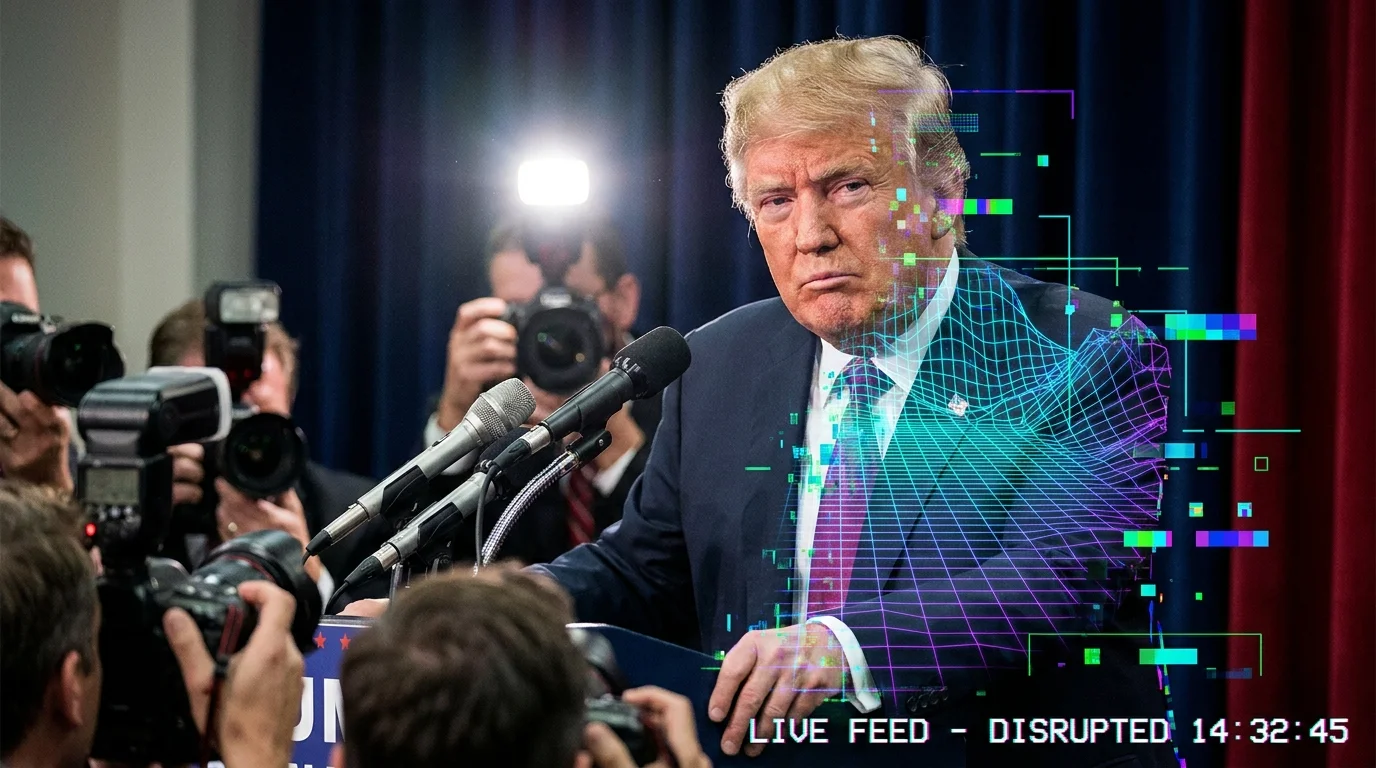
That entire regulatory architecture just hit a wall of direct-to-consumer infrastructure. With word spreading that an independent streaming operation—provisionally termed Trump TV—is laying technical groundwork to broadcast counter-programming directly to millions of screens, the old rulebook has turned into scrap paper. Party strategists are now trapped in emergency sessions, realizing that their most powerful structural gate is completely useless against an insurgent production house that owns its own digital pipeline.
The Velvet Rope at the Digital Perimeter
Consider the traditional debate setup as a private toll bridge over a rushing river. For generations, national committees decided who crossed, how much toll they paid in ideological loyalty, and which television networks collected the ad revenue on the other side. If a candidate grew too rebellious, party elders threatened to revoke their crossing pass.
What happens when a candidate stops asking to cross the bridge and simply buys a flotilla of barges? By laying down direct content delivery networks, custom application suites, and independent satellite uplinks, an autonomous broadcast network bypasses the toll plaza entirely. You suddenly realize that the legacy qualification rules were never about democratic fairness; they were about distribution control.
- Maria Elvira Salazar sparks fierce constituent revolt after high-stakes immigration vote switch
- Kash Patel nomination clashes trigger explosive Senate floor showdowns over agency authority
- Absentee ballot sleeves trigger immediate vote rejections across strict county election boards
- Commercial freight exemptions expire tonight halting regional trucking logistics routes
- Utility district bonds force sudden four-figure escrow fee spikes for homeowners
Party administrators spent months adjusting polling minimums and donor headcount requirements by microscopic fractions, believing those dials kept them in command. Yet an unvetted, high-capacity streaming channel shifts the metric from institutional compliance to raw screen-share concurrency. If a rogue broadcast pulls twenty million live concurrent viewers while the sanctioned three-podium stage pulls seven million, the committee is no longer the arbiter of the race—it is merely a competing cable program.
The Operations Floor: A Dispatch from Arlington
Markus Keller, a 51-year-old political logistics coordinator who has spent twenty-four election cycles negotiating stage layouts and feed latencies for major party debates, saw the fracture coming eighteen months ago. Sitting over cold diner coffee two blocks from party headquarters, he sketched the dilemma on a paper placemat: two parallel broadcast lines that never intersect. Keller knows the friction point is no longer whether a candidate polls at twelve percent in three early states; it is whether that candidate can draw enough server bandwidth to crash regional internet exchange points during prime time.
How the Split Hits the Playing Field
The sudden scramble to rewrite debate bylaws creates distinct tremors across every layer of the political ecosystem. How you experience this shift depends entirely on where your attention lands:
- For Down-Ballot Challengers: Congressional and gubernatorial candidates suddenly face impossible choices. Do you attend the sanctioned party stage with strict two-minute answer timers, or do you syndicate your remarks to an alternative network that guarantees unfiltered reach to millions of motivated grassroots donors?
- For the Legacy Network Desks: Traditional media partners who paid millions for rights to stream the primary debates now find their exclusive broadcast carve-outs contested by antitrust attorneys, forcing them to loosen production restrictions or risk broadcasting to an empty room.
- For the Everyday Viewer: Instead of tuning into a single, predictable broadcast with standardized rules and split-screen graphics, your evening news cycle fractures into competing feeds, interactive live chats, and unmoderated real-time rebuttals.
The Mechanics of Rule Rewrites
Rewriting a national party debate charter under pressure requires quick, defensive surgery. Strategists are ditching decades of precedent to prevent their marquee events from becoming obsolete side acts.
- Dismantling Exclusivity Penalties: Party rules traditionally banned candidates from appearing on non-sanctioned stages under threat of complete disqualification. Those clauses are being quietly rewritten to permit parallel streaming appearances.
- Rewriting Media Partner Certifications: Committees are scrambling to broaden their definition of an official broadcast partner to include proprietary streaming applications, neutralizing claims of institutional bias.
- Adjusting Concurrency Benchmarks: Rather than relying solely on telephone sample polling, rules committees are drafting criteria based on audited digital viewership and direct application engagement metrics.
These maneuvers are not ideological; they are pure operational survival. The priority is keeping all major players in the same media orbit before the viewer base permanently migrates elsewhere.
The Reclaimed Signal
When the institutional velvet rope snaps, the initial reaction is usually noise and disorientation. Pundits warn of splintered realities and the death of shared civic spaces. Yet stepping back reveals a clearer perspective: the old debate format was an artificial product shaped by network commercial breaks, ten-second soundbite cutoffs, and theatrical candidate scuffles engineered for next-day cable loops.
Watching the parties scramble to modernize their criteria gives you an unvarnished look at how campaign power actually works. It is never about podium height or coin tosses; it is about who controls the wire. Recognizing that distinction lets you watch the upcoming cycle not as a passive consumer trapped in an algorithmic cage, but as an informed observer who understands exactly who built the screen you are watching.
The moment a political party loses its monopoly on distribution, its procedural rulebook ceases to be law and becomes merely an opening bid.
| Key Point | Detail | Added Value for the Reader |
|---|---|---|
| Exclusivity Clauses | Parties previously banned candidates from participating in unauthorized forums or non-network debates. | Explains why high-profile contenders previously refused independent long-form interviews during debate season. |
| Distribution Leverage | Independent streaming architectures can deliver prime-time counter-programming directly to millions. | Clarifies how streaming technology strips traditional television networks of their political kingmaker role. |
| Access Rule Revisions | Committees are loosening attendance penalties and shifting toward multi-platform hybrid stages. | Helps you anticipate sudden format changes, varying podium lineups, and splintered broadcast dates this election cycle. |
Inside the Rulebook Overhaul
Why are national party committees suddenly concerned about an independent broadcast channel?
A dedicated candidate streaming network can host counter-programming that drains millions of viewers from officially sanctioned events, destroying network ad revenue and institutional leverage.How did the legacy debate exclusivity rule work?
Under traditional rules, if a registered candidate participated in any debate or televised forum not sanctioned by the national committee, they forfeited their right to attend all future official debates.Will candidates face disqualification for appearing on independent broadcasts?
Party rules committees are actively drafting amendments and waiver mechanisms to avoid disqualifying high-polling candidates who choose to appear on alternative platforms.How does this shift change the way debate moderators are selected?
To compete with unvetted independent broadcasts, sanctioned debates will likely integrate digital creators, podcast hosts, and non-traditional anchors to keep viewership numbers viable.What does this mean for down-ballot candidates who need debate exposure?
Down-ballot contenders may face even steeper polling and fundraising thresholds on official stages as party officials consolidate airtime to retain viewers against competing streaming alternatives.