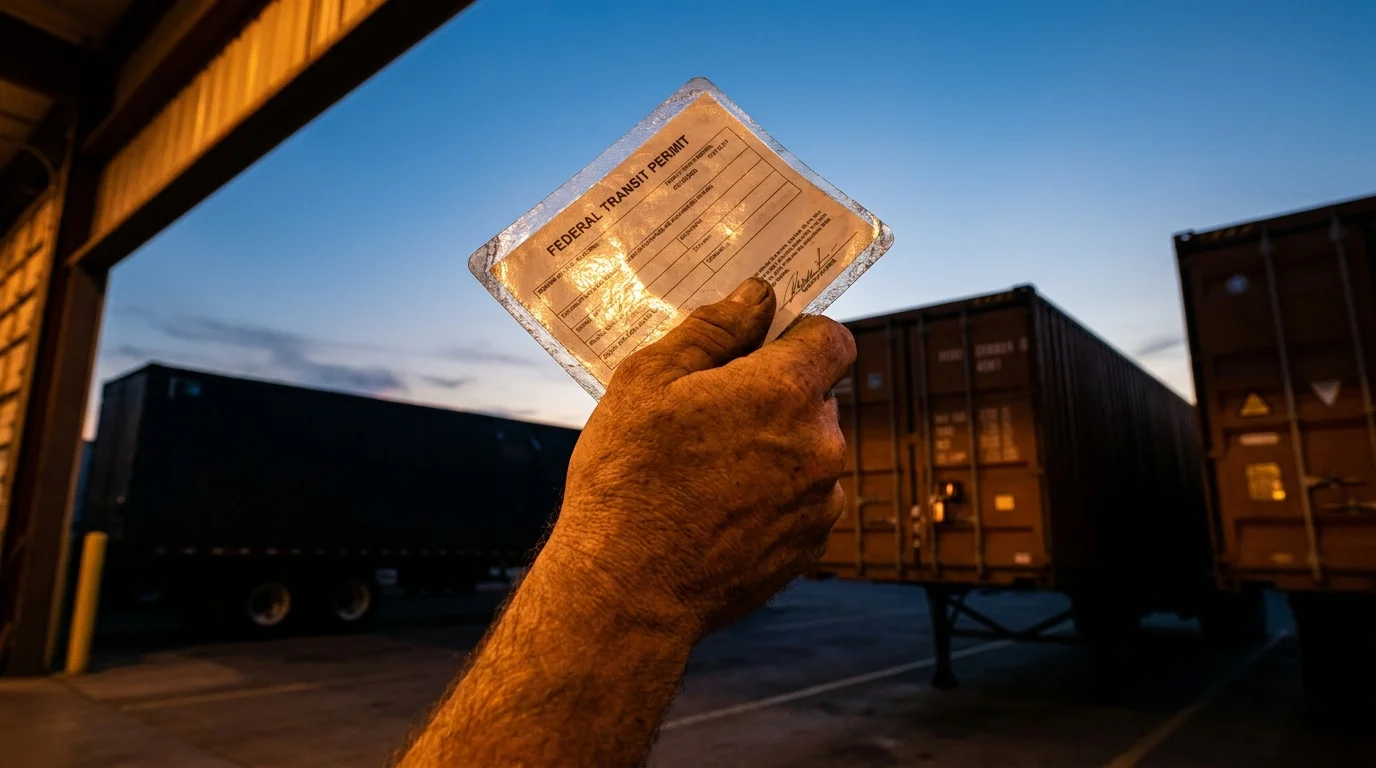
The halogen glare of an interstate weigh station at dusk possesses a distinct, unforgiving hum. Out here on the asphalt ribbon linking freight corridors across the Midwest and Southern plains, air brakes hiss rhythmically against the chill. Drivers lean over steering wheels, balancing half-empty coffee cups on dash clipboards, eyes darting between roadside digital signboards and the low glow of cabin electronic logging devices.
You might picture freight shutdowns as dramatic weather events, pileups on frozen mountain passes, or union picket lines stretching across warehouse gates. Yet the silent wall threatening to freeze supply lines across three dozen states tonight will not arrive with sirens or police barricades. It lands as a simple digital clock rolling over from 11:59 PM to midnight on a federal server in suburban Virginia.
When those digits shift, emergency commercial freight exemptions quietly expire. Without fanfare or statutory grace periods, thousands of active loads carrying vital produce, building materials, and temperature-sensitive goods cross instantly from legal transit into severe administrative non-compliance while traveling at sixty-five miles per hour.
The administrative cliff is abrupt. While state transportation portals take hours or entire business days to refresh their back-end compliance databases, roadside inspection software updates its infraction tables automatically. If your cab crosses a scale after midnight under the expired emergency hours-of-service waivers, enforcement systems trigger automatic out-of-service orders before a human clerk ever reviews your manifest.
The Ghost in the Scale House: The Sunset Trap
Consider the regulatory framework not as a steady dam holding back chaos, but as an intricate lock-and-dam system operating on a hair-trigger timer. For months, emergency relief waivers permitted haulers to bypass standard driving-time caps to clear post-storm bottlenecks and ease seasonal transit squeezes. These waivers acted like an extra gear in regional logistics, letting independent operators keep wheels turning during historic cargo surges.
The myth held by many owner-operators is that enforcement agencies offer an unwritten buffer period. You might assume state troopers grant a twelve-hour cushion while software catches up to rule changes. In reality, modern roadside enforcement does not negotiate with intent. Inspection booths now rely on optical character recognition and linked federal databases that read commercial plates and flag hours-of-service discrepancies in real time.
The real danger tonight lies in the structural lag between federal rule expirations and state licensing portal refreshes. A hauler can enter an interstate at 10:30 PM fully compliant under active emergency waivers, only to cross a state boundary two hours later where local weigh scales run zero-tolerance software checks on unexempted logbooks. What was permissible in Pennsylvania becomes an impoundable offense in Ohio within sixty seconds.
- Utility district bonds force sudden four-figure escrow fee spikes for homeowners
- DMV address updates trigger quiet voter registration cancellations across suburban precincts
- Subsidized school cafeteria vendors eliminate affordable student meal options with triple-rate contracts
- Ninth Circuit emergency stays disrupt overnight shift staffing across regional healthcare networks
- FinCEN automated monitoring alerts freeze ordinary small business accounts without caseworker verification
The Midnight Dispatch: A View from the Cab
Consider Marcus Vance, 48, an independent dispatcher managing an eight-rig fleet out of Dayton, Ohio. For three years, Marcus has coordinated cross-state agricultural runs, balancing narrow margins against volatile diesel prices. At 4:00 PM today, his screens lit up with notifications from contracted shippers desperate to push perishable poultry loads across state lines before midnight.
Marcus knows the operational math all too well. “If my driver pulls into a Kentucky inspection bay at 12:05 AM with ten hours on his clock under the old waiver, the system doesn’t ask if the load was picked up when the rule was still alive,” he explains, tapping an unyielding logistics dashboard. The portal simply registers an unmitigated violation, grounding the tractor for ten mandatory rest hours and slapping thousands in immediate fines onto an independent balance sheet.
Navigating the Cliff: Segmentation Across the Supply Chain
The impact of this midnight enforcement cliff does not fall evenly across the transport sector. How your operation absorbs the blow depends entirely on fleet scale and data architecture.
For the Independent Owner-Operator
If you run under your own authority with a single rig, the danger is acute and personal. You lack a 24-hour legal desk to petition state regulators for emergency variances. Your best defense is a proactive stop: cut your transit short before 11:30 PM, log into off-duty status, and park legally at a verified rest plaza rather than risking a mandatory tow at a state scale house.
For Regional Dispatch Hubs
Mid-sized logistics desks managing between ten and fifty power units face intense route reshuffling. You cannot afford to strand drivers hundreds of miles from their delivery docks. Re-route runs through intrastate corridors where state-level agricultural exemptions remain active, effectively avoiding federal interstate choke points until local clearinghouses reconcile their rule sets.
For Shippers and Receiving Docks
Receivers expecting early morning drops must prepare for sudden schedule failures. Late-night inbound loads will either be parked early or stalled at inspection gates. Shifting warehouse receiving windows to accommodate delayed morning arrivals prevents secondary congestion at distribution gates and keeps supply chains moving without penalizing stranded drivers.
Mindful Application: Your Sunset Route Protocols
Surviving an administrative regulatory cliff demands disciplined, clear-headed maneuvers well before the midnight wire trips. Do not wait for an electronic logging alert to tell you your status has flipped.
- Audit active trip times against the exact midnight Eastern Standard Time benchmark, regardless of the local time zone where your truck operates.
- Download physical and digital copies of your original bill of lading, proving pickup occurred prior to waiver expiration.
- Instruct drivers to secure safe, authorized parking by 11:00 PM if transit cannot be completed thirty minutes before the cutoff.
- Run direct verifications on state Department of Transportation notices for temporary intrastate grace periods before crossing state borders.
- Transition electronic logging units manually to standard rules during pre-trip inspections to prevent automated mismatch flags at roadside weigh sensors.
Precision execution beats last-minute scrambling every time. When agency servers reset, the carrier with documented compliance records moves freely, while competitors find their wheels locked on the scale apron.
The Bigger Picture: Reclaiming Control in an Automated Bureaucracy
Understanding the mechanical rhythms of federal administrative expirations does more than save you from a costly safety violation citation. It shifts your posture from that of a reactive driver scrambling under arbitrary mandates to an informed operator who reads the structural tides of modern commerce with steady confidence.
When you master the friction points where automated enforcement outpaces institutional communication, you insulate your livelihood against sudden bureaucratic shocks. There is profound quiet dignity in knowing that while other rigs line up under the harsh lights of an inspection impound, your loads are parked securely, your paper trail is clean, and your business remains sovereign.
The sharpest operational edge an independent carrier owns is the discipline to park thirty minutes early when administrative software prepares to reset.
| Operational Trigger | Regulatory Mechanic | Direct Carrier Advantage |
|---|---|---|
| Midnight Digital Cutoff | Automated electronic logging systems drop waiver status at 12:00 AM EST without human intervention. | Parking early preserves zero-point safety scores and prevents commercial licensing penalties. |
| Interstate Border Crossing | State DOT databases refresh enforcement tables out of sync with neighboring jurisdictions. | Intrastate rerouting prevents jurisdictional impounds and out-of-service transit delays. |
| Bill of Lading Timestamping | Digital manifests timestamped prior to expiration serve as evidentiary defense during manual audits. | Provides absolute legal backing against retrospective state compliance fines. |
Frequently Asked Questions
Will law enforcement honor shipments picked up before midnight?
Roadside inspection systems evaluate real-time compliance status at the moment of inspection, meaning en route transit after midnight under an expired waiver will be cited unless an individual state issues an explicit administrative bridge order.Does this expiration affect private non-commercial haulers?
No, these regulatory expirations apply exclusively to commercial motor carriers operating under federal hours-of-service safety waivers and interstate freight relief frameworks.How long will state licensing databases lag behind the expiration?
While federal enforcement algorithms update automatically at midnight, state portal interfaces often take anywhere from 12 to 36 hours to harmonize processing tables, creating compliance gray zones.Can drivers switch to personal conveyance to avoid an out-of-service order?
No, utilizing personal conveyance while hauling an active commercial payload constitutes a severe federal logging violation and carries immediate mandatory downtime penalties.Where can operators confirm if their specific commodity lost waiver status?
Carriers must review the official Federal Motor Carrier Safety Administration emergency declarations portal directly, bypassing secondary broker notices to verify specific commodity eligibility.