The harsh fluorescent lighting of your neighborhood polling site hums with an almost imperceptible buzz. Outside, the chill of a November dawn clings to the windshield, while inside, the gym floor smells faintly of lemon wax and worn rubber soles. You stand between two neighbors, damp coffee cup warming your palm, ready to perform a civic routine you have practiced for years without a second thought. You check your pocket for your driver’s license, step up to the folding table, and offer your name with casual confidence.
Then the poll worker pauses. Her finger hesitates on the plastic-sleeved binder before tapping an entry on the state electronic pollbook screen. She frowns slightly, tilts the monitor, and glances back at your license. Your active voting status vanished somewhere between last spring and this morning, replaced by an amber notification indicating that your residential address sits in bureaucratic limbo.
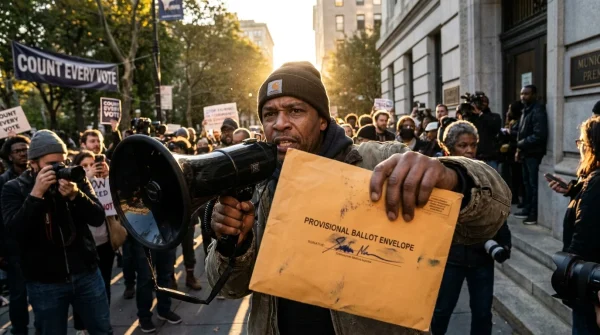
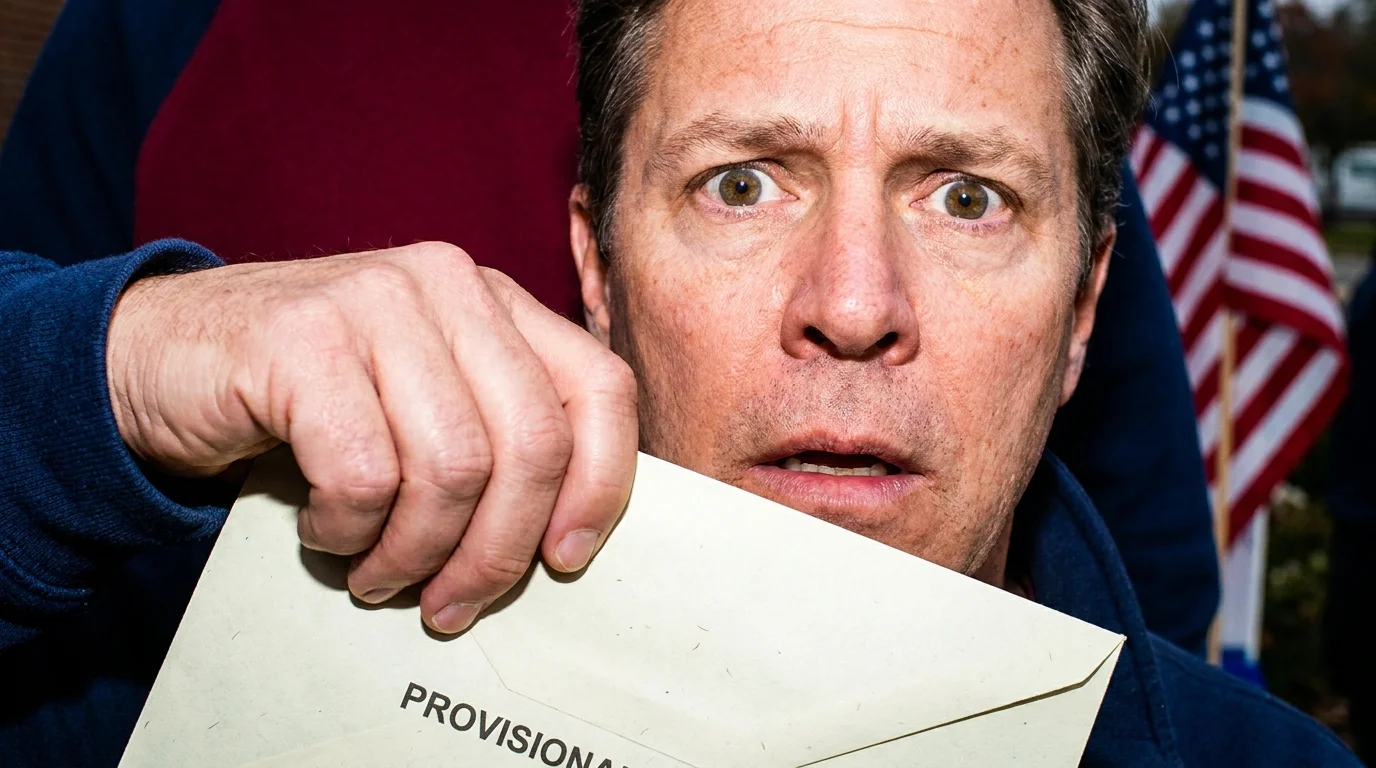
You are handed a ballpoint pen and a thick envelope marked in heavy black ink: provisional ballot. You did not leave your home county, dodge jury duty, or skip an election cycle. All you did six months ago was log onto your state licensing website to change the billing destination on a vehicle title or update a garage address for your daily commute. In that thirty-second transaction, a silent software protocol went to work, turning an administrative convenience into an invisible wall at your precinct table.
The Digital Handshake: How Automated Syncing Fractures Your Ballot
Think of your voter file not as an immovable marble tablet stored inside city hall, but as a glass vase carried across a crowded room. Every time your state agencies share data, that vase gets passed from hand to hand. The National Voter Registration Act intended to turn your local licensing counter into an open door through Motor Voter provisions. Yet across high-growth suburban corridors, modern automated record synchronization operates under a completely different, unforgiving logic.
When you update an address with the motor vehicle division, your state’s centralized database runs a nightly batch script. It cross-references your licensing record against municipal election rolls, tax assessor ledgers, and federal postal move registries. Algorithms flag minor address variations as genuine jurisdictional moves. If your driver’s license lists an apartment number on the second line while your voter file records it on the first, or if you register a vehicle to an office park park-and-ride lot while sleeping five miles away, the automated crosscheck fires an exception alert.
State law typically demands that election administrators maintain clean voter rolls by weeding out voters who relocate across county or precinct borders. To satisfy those mandates, automated batch programs generate an address confirmation notice—a thin, nondescript postcard that looks remarkably like junk mail. If that card is lost in the postal stream or misread as credit card circulars, your status flips from active to inactive. On election morning, you do not exist in the pollbook ledger as a registered neighbor; you exist as a potential administrative anomaly.
- Subsidized school cafeteria vendors eliminate affordable student meal options with triple-rate contracts
- Ninth Circuit emergency stays disrupt overnight shift staffing across regional healthcare networks
- FinCEN automated monitoring alerts freeze ordinary small business accounts without caseworker verification
- Municipal ward boundary adjustments splinter historic neighborhoods to silence neighborhood school coalitions
- Regional planning commissions override elected city councils to force controversial high-density developments
Marcus Vance, a forty-two-year-old municipal water engineer in Gwinnett County, learned this mechanics lesson the hard way. When Marcus bought a pre-owned commuter sedan, he updated the physical registration address online to match his suburban townhouse, while keeping his financing paperwork directed to his credit union’s postal box. Three months later, Marcus stood beside his neighbor at his regular elementary school precinct, only to find the county system had flagged the update as an out-of-district relocation. Marcus spent his lunch hour pleading with registrar clerks over a cell phone speaker, clutching a provisional envelope instead of watching his paper ballot slide through the optical scanner.
Precinct Fault Lines: Where the Data Sever Occurs
The friction does not strike every driver equally. It cuts sharp lines along specific life changes and transit patterns, hitting suburban commuters who assume that state computer systems talk to each other with common sense.
The Transit Hub Commuter
If you live in an unincorporated fringe district and commute forty miles into a metropolitan core, you may maintain a private mailbox or satellite office near your commuter rail station for business deliveries. Updating vehicle billing to that secondary hub often prompts motor vehicle software to report an interstate or inter-county move to your home county clerk. The voter system sees an address outside your precinct and quietly triggers an administrative hold, assuming you have vacated your suburban home.
The Multi-Unit Apartment Renter
Suburban growth rings rely heavily on multi-story rental complexes and mixed-use developments. If your licensing portal drops your unit number due to character limits on state legacy software, your residency registration loses specificity. The county database cannot determine your exact school board or municipal district. Rather than guessing, the system strips your active standing, demanding a manual poll-booth affidavit before you can cast a vote that counts.
The Shared Family Household
Young adults returning from college or multigenerational families co-signing vehicle titles face another hurdle: name-address parity errors. When adult children update car insurance and title data to a parent’s address, automated match scripts sometimes overwrite existing individual voter records with old household aliases, confusing junior and senior designations and locking both out of instant precinct verification.
Mindful Safeguards: Auditing Your Voting File
Fixing this friction does not require navigating endless phone trees, but it does require treating your ballot status with the same precision you apply to checking your credit report before buying a home. You cannot rely on an assumption that clicking a single checkbox on a state portal handled your registration.
- Pull up your state secretary of state voter portal ninety days before any primary or general election to confirm your registration remains marked active.
- Verify that your legal street name, directional prefixes, and unit designators match character-for-character across your license, property records, and voting portal.
- Opt out of dual-transaction data transfers if your state gives you the option during online motor vehicle tag renewals, choosing instead to verify voter updates directly through the county clerk.
- File a physical, paper change-of-address form with your local board of elections whenever you change your physical residence, establishing a human paper trail.
- Keep a dated, electronic screenshot or printed receipt of your voter registration status in your car or purse during the final three weeks leading up to election day.
The Suburban Voter’s Tactical Toolkit
Keep these exact checkpoints in mind when interacting with state systems: verify your residential address against the USPS National Change of Address database standard; maintain your registration check frequency at once every spring and autumn; and ensure your physical street address contains zero punctuation marks that might trip older state mainframe scripts.
The Bigger Picture: Reclaiming Ownership of Your Civic Voice
It is easy to treat administrative data entry as background noise—a forgettable chore knocked out in twenty seconds between packing school lunches and driving to the office. Yet in an era where municipal borders shift quickly and computerized databases purge outdated entries on automatic timers, your presence on the voter rolls is only as secure as the data trails you leave behind.
When you understand the exact paths these bits and bytes travel between state agencies, the mystery of the provisional ballot disappears. You stop viewing voter registration as something done for you by an invisible state clerk, and start treating it as your personal property. Checking that single database row takes less time than brewing a fresh pot of coffee, but it ensures that when you step into your neighborhood polling site on a cold morning, your voice cuts straight through the noise without hesitation.
Maintaining your place on the voter rolls is no longer a passive status; it is an active habit of digital housekeeping that protects your voice at the ballot box.
| Verification Point | System Friction Risk | Added Value for the Reader |
|---|---|---|
| DMV Online Tag Renewal | Automated background move flags override local registration | Prevents unexpected drop to provisional voting status |
| Apartment / Suite Designator | Legacy mainframes truncate second address lines | Guarantees exact precinct and district ballot matching |
| Dual Commuter Billing Address | Commercial mailing address flagged as invalid residence | Protects suburban voters from non-residential purge scripts |
Suburban Voter Verification FAQ
Will updating my address on my driver’s license automatically update my voter registration?
Not always. While the Motor Voter law requires states to offer registration services, automated software glitches or mismatched checkboxes can drop the request entirely without notifying you.Why does receiving a provisional ballot matter if my vote still gets tallied?
Provisional ballots require post-election review and documentation. If your address discrepancy cannot be resolved before statutory certification deadlines, your provisional envelope may be rejected entirely.What is an inactive voter status, and can I still vote if listed that way?
Inactive status means the county sent an address confirmation notice that went unreturned. You can still vote in most jurisdictions, but you must sign an affidavit and show proof of residence before receiving a standard ballot.How long before an election must I correct a registration address discrepancy?
Most states enforce voter registration deadlines between twenty-one and thirty days prior to election day. Correcting issues during this window ensures your name appears cleanly on the physical precinct ledger.What physical documents should I bring to the precinct if my status shows an error?
Bring a current government photo ID along with a certified utility bill, bank statement, or residential lease dated within the last thirty days that clearly matches your current residential precinct.