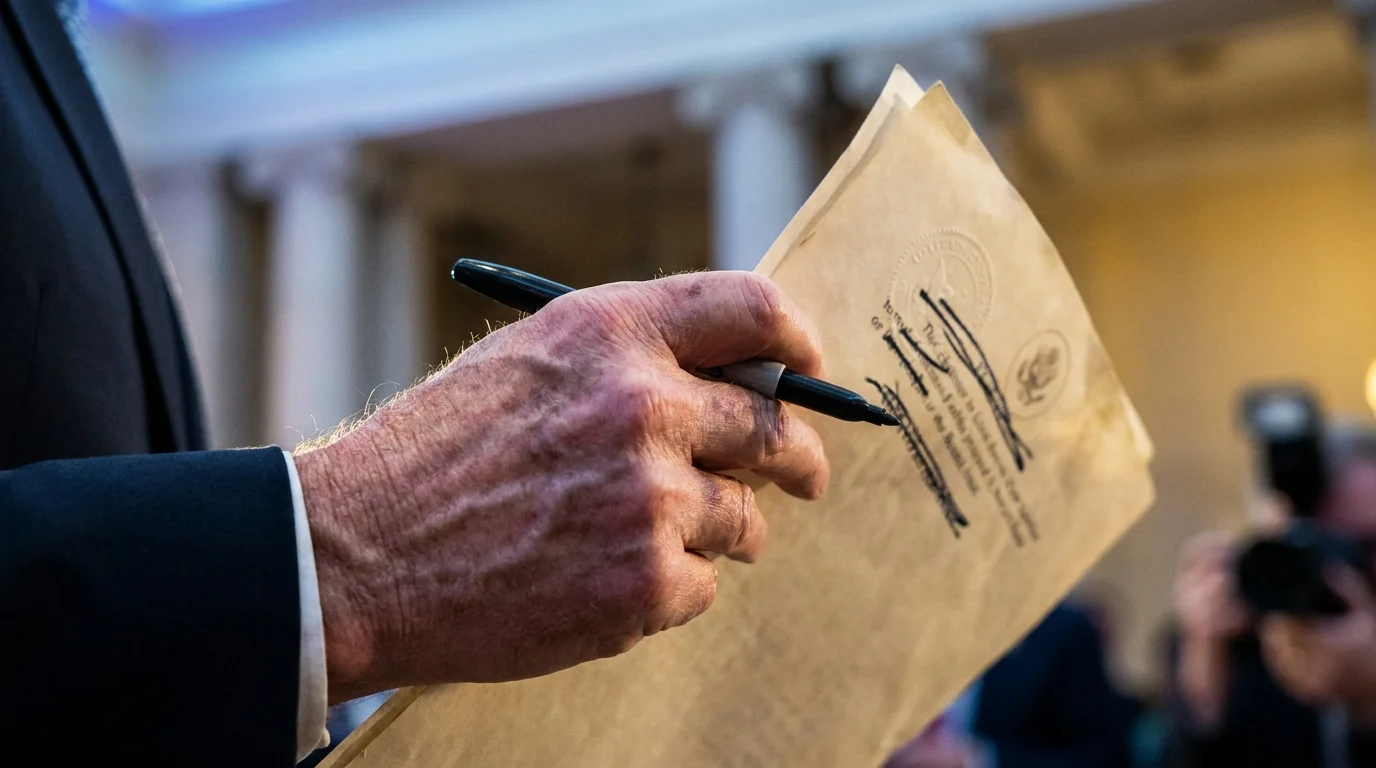
The corridor carpet outside Room S-127 smells faintly of industrial vacuum cleaner heat and day-old drip coffee. At 1:14 in the morning, the heavy mahogany doors are firmly latched, shutting out reporters whose backs ache against marble wainscoting. Inside, paper printouts scatter across long tables like fallen leaves after a sudden frost, marked with blue felt-tip pens and yellow sticky flags that flutter under the hum of an aging ventilation shaft.
You are told during daytime civics lessons that federal funding is built through passionate public debate and orderly roll-call votes broadcast on public access television. You watch committee members gesture earnestly at cameras, trading rehearsed barbs over ideological red lines. The real legislative plumbing moves when the television studio lights click off and the red record lights blink out.
Behind those locked oak panels, party leadership performs an austere trade. The fierce culture-war restrictions, sweeping administrative spending freezes, and dramatic policy riders introduced during the sunlit press conferences vanish line by line. The process is quiet, methodical, and deliberately shielded from the morning news cycle.
The Ghost Ledger: Why Public Dogma Dissolves at Midnight
Consider the legislative process not as an arena of high-minded ideological combat, but as an overloaded freight train racing toward a washed-out bridge. The ideological policy riders added during initial committee hearings are rarely designed to survive; they function as counterweights and bargaining tokens. Leadership packs the draft bills with provocative bans on agency regulations, regional land-use rules, and social programs, knowing full well these items will be quietly jettisoned during late-night reconciliation.
Party whips understand a fundamental rule of governance: a clean spending bill keeps the lights on, while an ideological monument triggers a government shutdown that damages incumbent majorities. When the markup doors close, committee staff execute what veterans call the haircut. They strike the controversial riders that would provoke a presidential veto or filibuster, trading symbolic losses behind closed doors to guarantee the raw cash flows directly to district infrastructure, military installations, and agency payrolls.
For Marcus Vance, a 48-year-old senior legislative director who logged fourteen years inside the Rayburn House Office Building, this midnight alchemy is simply survival math. Marcus remembers watching a fiercely contested environmental enforcement prohibition—one that fueled forty fundraising emails in August—get erased in under forty seconds with a red pen stroke at two in the morning so thirty-two moderate lawmakers could vote yes without blinking.
- Debate rebuttal phrasing shifts undecided voter sentiment through calculated pause timing
- 19th Amendment debates prompt sudden national party platform shifts targeting suburban women
- Register to vote spikes force election boards into emergency staffing shifts nationwide
- Bo French sparks emergency Texas GOP revolt over contested delegate loyalty rules
- Ballot cure notices trap hurried swing voters behind strict signature mismatch deadlines
Dissecting the Trade: Who Wins When Riders Disappear?
The scrubbing of controversial restrictions does not affect every community or balance sheet in the same manner. When whips trade away fringe amendments to secure a baseline budget, the consequences ripple outward across distinct sectors of the economy.
For the District Contractor
When policy bans on federal agency procurement get dropped from defense and infrastructure titles, multi-year awards move forward without sudden structural redesigns. Certainty replaces administrative gridlock overnight, letting project managers sign concrete contracts and secure equipment leases that were suspended during public hearings.
For the Regulatory Target
Industries subject to heightened agency oversight often celebrate public rider introductions, hoping an outright funding ban will tie the hands of inspectors. Yet when those restrictions get traded away to appease Senate negotiators, compliance officers must pivot instantly. The expected reprieve evaporates, leaving legal teams scrambling to adjust to enforcement rules that stay fully funded.
For the Grassroots Organizer
Advocacy coalitions often spend months rallying phone banks around high-profile policy amendments attached to spending drafts. When those riders quietly vanish during midnight conference reconciliations, organizers face sudden demoralization. Recognizing that these amendments were introduced as expendable bargaining chips changes your entire tactical strategy, turning your attention away from daytime floor speeches and toward the closed-door conference committee roster.
Tracking the Erased Lines: Your Legislative Audit Toolkit
You do not need a press badge or a Capitol pass to uncover what whips stripped out while the public slept. Reading appropriations changes requires looking at the quiet negative space between bill versions rather than listening to press releases.
- Track committee prints rather than introduced drafts. Compare the House and Senate subcommittee base texts against the final omnibus conference print using automated diff-checking software.
- Monitor the general provisions title at the very back of each agency division. This is where substantive policy prohibitions live; if a section number drops from the table of contents between midnight and morning, leadership negotiated it away.
- Examine the accompanying committee report language. Even when a statutory ban is deleted, whips often insert non-binding advisory notes into report directives to placate disgruntled members without derailing the statutory funding stream.
- Watch the floor rule adoption votes. If leadership brings a massive package forward under a closed rule that blocks individual floor amendments, the backroom trades have already been cemented.
Tactical Toolkit for Budget Tracking:
- Document Check: Compare Committee Print Title VII (General Provisions) across versions.
- Release Window: Target the 2:00 AM to 5:00 AM filing window before floor action.
- Primary Search Terms: Search draft texts specifically for strings containing ‘None of the funds made available by this Act may be used to…’.
- Record Check: Review the Congressional Record remarks filed under ‘Extension of Remarks’ for quiet member dissents regarding dropped amendments.
The Clear Eye of the Citizen
Watching political pageantry without understanding midnight markups is like watching theater stagehands and believing the painted cardboard castle is stone. The noise, the heated floor speeches, and the social media outrage are designed to capture your attention and drain your focus. Meanwhile, the actual machinery of state spending relies on quiet compromises, pragmatic erasures, and backroom truces that prioritize institutional survival over rhetorical purity.
When you look past the stagecraft and audit the silent deletions, the political landscape loses its chaotic unpredictability. You stop reacting to bills that were never meant to pass, and you begin holding representatives accountable for the quiet trades they make when the locks click shut and the cameras go dark.
The true measure of legislative power is not what an elected official shouts into a live microphone, but what they quietly consent to strike from the bill text to keep the Treasury doors open.
| Key Point | Detail | Added Value for the Reader |
|---|---|---|
| Bargaining Tokens | Contentious policy bans are frequently introduced to appease vocal factions, with leaders planning to discard them later. | Helps you identify which viral headlines represent theater rather than actual impending law. |
| Midnight Trimming | Whips scrub contentious riders in late-night sessions to craft bills capable of clearing sixty Senate votes. | Shows why fiscal deadlines force moderation, regardless of party rhetoric during campaign seasons. |
| Document Auditing | Comparing base drafts to conference reports exposes exactly which promises were traded away behind closed doors. | Equips you to audit your own representative’s true legislative trades instead of relying on official newsletters. |
Frequently Asked Questions
What is an appropriations rider? An appropriations rider is an amendment attached to a mandatory spending bill that dictates policy or prohibits agencies from using federal funds for specific administrative actions.
Why do lawmakers attach policy bans to spending bills instead of passing separate legislation? Regular standalone bills often stall in committee or face a Senate filibuster, while spending bills must pass to prevent a government shutdown, making them tempting vehicles for contentious policy riders.
Who actually sits inside the room during locked markup sessions? Markup conferences typically include the committee chairs, ranking minority members, party leadership whips, and senior professional committee staffers who handle technical line-item adjustments.
How do members save face when their signature rider gets dropped? Lawmakers typically point to leadership pressure or accept non-binding report language, allowing them to claim to their constituents that they fought vigorously while permitting the larger bill to pass.
Where can everyday voters find the deleted text? Legislative comparative tools on Congress.gov and the House Rules Committee website publish committee print differences and amendment tracking tables before bills reach the final floor vote.