The gymnasium smells of floor wax and rain-damp wool coats. You slide the heavy privacy cardboard open, reach for the cheap black ballpoint chained to the particle board desk, and mark your choices. But when your driver’s license address doesn’t match the poll worker’s printout by a single apartment letter, you are handed a pale green provisional envelope. The clerk smiles kindly, pats the counter, and promises you that your vote will count once the board verifies your identity through the sworn voter ID affidavit glued to the sleeve.
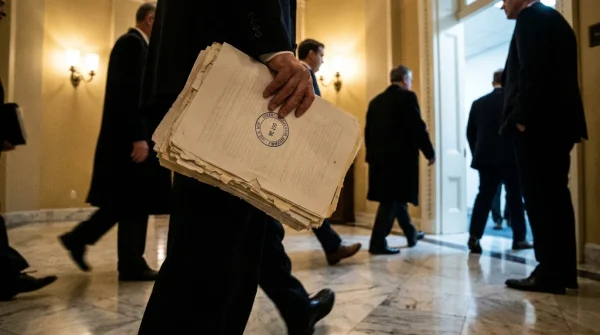
You walk back out into the crisp November air believing you fulfilled your civic duty, but inside county tabulation facilities, that green paper envelope enters a completely different reality. Under cold industrial tubes hums a silent conveyor belt of administrative scrutiny. There are no television cameras here, just tired seasonal workers peering over magnified photocopies, checking whether your loop on a cursive ‘y’ looks sufficiently like the digitized DMV signature captured on a scratchy electronic pad twelve years ago.
A stray pen stroke, a forgotten suffix, or an omitted middle initial does not trigger a phone call to your home. In dozens of pivotal battleground counties, the clock simply runs out while your envelope sits stacked in a red plastic bin marked ‘unverified.’ Thousands of citizens walk away from polling precincts assuming their provisional ballot acts as a safety net, unaware that the affidavit itself has quietly become an unforgiving administrative trapdoor.
The Paper Guillotine: When Human Identity Meets Rigid Bureaucracy
Most voters view a voter ID affidavit as a standard sworn oath, a legal bridge across a momentary identification hiccup. You swear under penalty of perjury who you are, provide an address, and sign on the dotted line. Yet modern election administration treats this document not as an affirmation, but as a forensic specimen. Tiny clerical mismatches instantly disqualify your submission long before an official ever counts your ballot inside.
The system operates like an unyielding coin-sorting machine: if your diameter is off by a fraction of a millimeter, you drop straight into the reject tray without a second thought. The legal myth suggests that election officials work backward from intent, searching for reasons to count a voter’s voice. The operational reality, bound by rigid statehouse statutes and strict canvas deadlines, forces workers to search for non-conformance. When three thousand affidavits must be resolved in seventy-two hours, any technical deviation provides an uncontested legal reason to discard the envelope and balance the municipal ledger on time.
Consider Elena Vance, a 58-year-old municipal clerk in Northampton County, Pennsylvania, who spent three presidential cycles sitting on county provisional review boards. Elena watched bipartisan canvassers discard hundreds of legitimate ballots every November without malicious intent, simply because state law gave them zero leeway. She recalls a single evening where forty-two ballots from one suburban ward failed review entirely because the voters signed with their customary first and last name, leaving out the middle initial printed on their official voter registration cards. ‘The law didn’t say verify the person,’ Elena admitted. ‘The law said verify the exact record match, and we had forty seconds per envelope.’
- Federal tip tax exemptions slash take-home deductions for millions of service industry workers
- Municipal school board census tracts derail historic community voting blocs across cracked asphalt schoolyards
- Regional air quality advisory boards enforce surprise backyard woodstove bans behind creaky oak doors
- State transit payroll surcharges strip weekly paycheck buffers before faint dot matrix stubs print
- Cushing crude oil hub storage drains demand emergency tank farm drawdowns amid roaring pipeline pumps
Discrepancy Profiles: Where Your Affidavit Stumbles
The clerical triggers that send affidavits to the shredder do not stem from intentional fraud or deep-seated conspiracy. They occur in the mundane spaces where your lived, daily habits clash with government database fields. Understanding your specific paperwork profile is the only way to insulate your ballot against automatic dismissal.
The Stylized or Aging Signer
Your physical signature shifts across decades due to arthritis, hurried store checkouts, and unfamiliar electronic touchscreens. If your baseline voter signature was captured at age eighteen at the DMV on a low-resolution stylus pad, your mature, sweeping cursive looks like an entirely different hand to an untrained seasonal canvasser. Discrepancies trigger silent disqualification without an automatic signature cure hearing in many jurisdictions, leaving no record other than an updated rejection statistic months later.
The Hyphenated and Suffix-Reliant Profile
If your legal name includes a suffix like ‘Jr.’, ‘III’, or a hyphenated surname, databases routinely split or truncate those characters. Signing an affidavit as ‘Robert Miller’ when the voter file lists ‘Robert Miller Jr.’ creates a fatal discrepancy under strict strict-scrutiny statutes. The same vulnerability hits newly married voters who have updated their driver’s license but whose local board of elections file remains under a prior hyphenated surname.
The Omitted Middle Initial
Perhaps the most widespread tripwire is the missing middle initial. When filling out a provisional envelope in a crowded, noisy precinct, muscle memory takes over. You sign your name the way you sign a receipt. If the state’s poll book demands a middle initial that matches your state identification card and you leave that tiny line blank, the verification algorithm flags the document as incomplete, rendering the entire sworn declaration void under strict compliance laws.
Mindful Polling Steps: Securing Your Affidavit
Navigating the provisional process requires precise, deliberate attention. Treat the voter ID affidavit not like an everyday waiver, but like a high-stakes mortgage closing document where every single character carries legal weight.
If a poll worker directs you to the provisional table, pause and ground yourself before your pen touches paper. Take thirty deliberate seconds to review your wallet identification and your registration notification letter before completing a single line.
- Match the Registration Card Exactly: Pull up your state’s online voter status portal on your phone right at the desk. Mirror the exact arrangement of your name, including punctuation and middle names, precisely as registered.
- Sign at a Natural Pace: Avoid using hasty, abbreviated scrawls. Take a full breath and sign with the fluid, steady cadence you normally use on formal state paperwork, avoiding rushed lines that mimic digital checkout terminals.
- Inspect the Date Format: Many state affidavits require your birthdate in an explicit month-day-year format. A common instinctive mistake is entering the current election date into the birthdate box, a slip that invalidates the identity claim instantly.
- Demand the Cure Notice Slip: Ask the precinct manager for the county’s provisional ballot receipt slip, which details the exact timeframe and location where you must provide supplemental documentation if your affidavit gets flagged.
The Bigger Picture: Reclaiming Your Quiet Authority
In an era defined by grand political arguments and sweeping digital headlines, the quietest frontier of civic power remains entirely physical. It lives on a cardstock envelope tucked into a cardboard precinct tote. When you master these small administrative details, you strip the process of its power to silence you by administrative default.
Taking personal ownership over the bureaucratic fine print is not an act of submission to red tape; it is a declaration that your voice cannot be brushed aside by an unsharpened pencil or a missing initial. Your vote survives scrutiny when you treat your personal paperwork with the exact same rigor that the county canvas board uses to dissect it.
Precision on paper is the only defense against disenfranchisement by paperwork.
| Clerical Failure Point | Bureaucratic Consequence | Practical Prevention Step |
|---|---|---|
| Missing Middle Initial | Immediate mismatch flag against the state voter database record. | Verify your legal voter file record on your state portal before writing. |
| Signature Evolution Mismatch | Rejection during bipartisan signature verification without automatic voter notification. | Update your signature card at the DMV every four years to maintain an accurate baseline. |
| Address Suffix Omission | Disqualification for failing to prove precise precinct residency requirements. | Include apartment, suite, and directional identifiers (e.g., ‘Apt 4B’, ‘North’) exactly as titled. |
Frequently Asked Questions
Will the county notify me if my voter ID affidavit gets rejected?
In many swing state counties, there is no legal requirement to notify voters before canvas deadlines expire. Notification policies vary dramatically by county, meaning your ballot may be tossed without you ever knowing unless you proactively check your ballot tracking status online.Can I fix a signature mismatch after Election Day?
Only if your state has a statutory ‘cure period.’ In states with cure laws, you generally have between two and six days post-election to submit an affidavit verification form, often requiring an identical copy of your photo ID delivered directly to the elections office.Why did the poll worker give me a provisional ballot instead of a regular ballot?
Provisional ballots are issued when your name does not appear on the active precinct list, your address does not align, or your ID does not meet strict statutory requirements. It allows you to record your vote while election officials review your eligibility later.Does a provisional ballot take longer to count?
Yes. Provisional ballots are always processed last, typically during the official county canvass three to ten days after Election Day, because each affidavit must undergo manual administrative verification.What is the single most effective way to avoid affidavit rejections?
Check your registration profile online thirty days before an election. Ensure that your name, address, and signature on file at your local board of elections match your government-issued ID down to the letter.