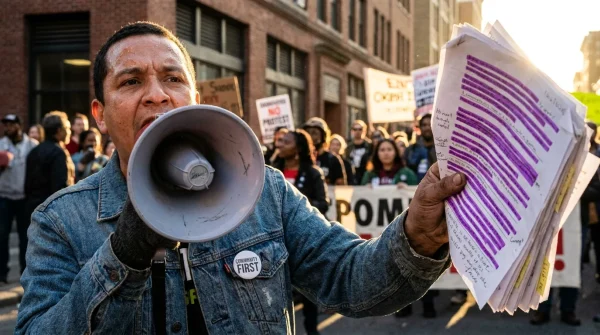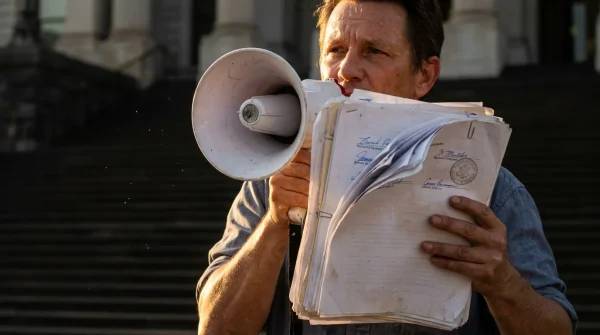
Step through the heavy brass revolving doors of the Lycoming County Courthouse on a damp Tuesday morning, and the administrative machinery stalls right at your feet. Rainwater tracks across the terrazzo floor, mixing with the sharp smell of damp wool coats and industrial floor polish. Just past the threshold, three sheriff deputies stand rigid beneath hum of fluorescent tubes, watching a cluster of seventy citizens press against velvet ropes while gray plastic screening bins overflow with keychains, belts, and pocket knives at a jammed entryway. A routine docket call has become an hour-long gridlock because a single federal appellate mandate stripped the county of its blanket authority to turn permit holders away at the street entrance.
You might expect a secure civic building to operate like an airport terminal, run on steady mechanical certitude. But when constitutional doctrine shifts in Washington, frontline security checkpoints collapse inward under the weight of municipal confusion. Instead of stepping through a magnetometer and heading straight to civil court or the deeds office, visitors now stand shoulder to shoulder, listening to the shrill, repeated warble of metal detectors that deputies are no longer legally permitted to use as absolute gatekeepers for lawful permit carriers.
The air in the vestibule grows warm and stale as files shuffle and tempers fray. The deputies do not dislike the public; they are simply trapped between contempt citations from district judges upstairs and federal civil rights lawsuits threatened from the sidewalk. It is a quiet, grinding bureaucratic friction that happens when a landmark decree collides with thirty linear feet of linoleum flooring.
The Upstream Torrent and the Screen Door
To grasp why your morning trip to renew a property deed or contest a traffic citation feels like breathing through a pillow, you have to look past the political theater and inspect the plumbing. High-court rulings like Bruen act like a sudden release of water from an alpine reservoir. At the highest elevation, the language is sweeping, elegant, and abstract, discussing text, history, and eighteenth-century traditions. By the time that legal wave rushes into county valleys, it strips away the makeshift levees local governments spent forty years building.
For decades, municipal administrators treated the county courthouse as a single, indivisible fortress. If you crossed the threshold, your Fourth and Second Amendment expectations were checked at the curb, replaced by the sheriff’s house rules. The modern legal cascade fractured that single fortress into an absurd patchwork of micro-jurisdictions. A courtroom remains an unquestioned sensitive place under historical precedent, but the shared public atrium, the tax assessment counter, the clerk’s file room, and the basement cafeteria do not neatly fit the historical record of 1791.
When federal judges began enjoining broad sensitive-place statutes across several circuits, they did not hire extra bailiffs or draft architectural blueprints. They left municipal administrators holding an impossible bag: an obligation to maintain physical order alongside a strict prohibition against disarming citizens in general civic spaces. The result is administrative paralysis masquerading as security screening.
- BlackRock ESG investing bans enforce state pension crackdowns on stiff glossy private equity binders
- Schedule F executive orders strip civil service desks leaving quiet empty federal agency corridors
- Strait of Hormuz tanker patrols trap commercial cargo freighters amid soaring maritime insurance rates
- Geoengineering solar reflection trials switch federal climate rules despite chalky white sky fallout
- Donald Trump Jr endorsements derail veteran House Republicans through aggressive campaign rallies
Marcus Vance, a 54-year-old county bailiff with twenty-two years on the municipal payroll, knows the exact sound of this administrative fracture. Standing beside his magnetic wand, Marcus watches the entryway security queue spill out onto the granite steps outside, where early morning mist clings to coats. ‘Two years ago, someone showed a concealed carry badge, we directed them to locker box number four, key turned, transaction done in fifteen seconds,’ he murmurs, adjusting his duty belt. ‘Now, half the folks coming in cite three different federal circuit stays, while our county solicitor has handed down four conflicting advisory memos since breakfast. We aren’t screening for danger anymore; we are running a constitutional seminar at seven-thirty in the morning.’
The Municipal Split: How Checkpoints Are Fragmenting
Because no two county courthouses share the same footprint or local budget, the downstream legal chaos has broken local jurisdictions into three distinct, awkward operational models. Depending on where you live, stepping into local government now requires navigating one of these three administrative experiments:
- The Perimeter Relocation Strategy: Larger urban counties have surrendered the building vestibule entirely. Recognizing that blanket entrance bans invite immediate federal injunctions, administrators have pulled security checkpoints inward, establishing separate, fortified magnetometers at the threshold of each individual courtroom. While this complies with appellate orders, it floods public atriums with unmonitored visitors, leaving probate clerks and tax assessors working behind thin partition glass without checkpoint defense.
- The Mandatory Lockbox Chokepoint: Mid-sized counties have attempted to comply with state preemption statutes and federal guidance by installing banks of secure steel weapon lockers in the entryway. But this mechanical patch creates its own logistical failure: a building processing five hundred citizens per hour often possesses fewer than thirty lockboxes. Once the keys are gone, the entire municipal line freezes, forcing deputies into manual serial-number logging while docket calls upstairs proceed without key witnesses or defendants.
- The Advisory Pass-Through Model: Cash-strapped rural county seats, terrified of six-figure civil rights attorney fees, have simply dropped screening stringency to the barest minimum. In these halls, metal detectors remain as psychological deterrents, but deputies are instructed not to challenge permit holders who declare their firearms for non-court business, creating acute professional friction with presiding judges who demand clean, weapon-free floors.
Navigating the Checkpoint: A Citizen’s Field Protocol
If you have business inside your local county courthouse this season, relying on old assumptions will cost you hours of wasted time or land you in administrative custody. The goal is to move through the legal bottleneck with minimal resistance by respecting the mechanical limits of the deputies running the gate.
First, verify the distinct architectural division of the facility before leaving your vehicle. Most counties now publish their building layout online, separating administrative spaces from active judicial chambers. If your morning involves visiting the county recorder or filing vital records, check whether the municipal office offers direct curbside drop-boxes or dedicated annex entries that bypass the central screening hall entirely.
Second, strip your person of metallic noise. The fastest way to invite scrutiny during an active legal shift is to trigger an unnecessary alarm. Deputies under high regulatory pressure react with acute vigilance to every tone; a heavy brass belt buckle, steel-toe boot shanks, or forgotten multi-tools turn a two-minute walkthrough into a comprehensive physical wanding.
- Clear all metallic EDC items into a dedicated pouch inside your briefcase before entering the queue.
- If carrying lawfully under state statutes, carry physical, paper copies of your state-issued credential alongside the county sheriff’s specific storage ordinance.
- Never contest administrative interpretations at the magnetometer; request the on-duty watch commander immediately if access is denied for statutory business.
- Arrive at least forty-five minutes earlier than traditional court summons suggest to absorb lockbox delays.
The Bigger Picture: Reclaiming Civic Space
When the high courts issue decrees that ripple down to the municipal steps, the casualties are rarely theoretical. They are measured in missed small-claims hearings, agitated public servants, and lines of ordinary citizens shivering on wet sidewalks while deputies frantically consult legal printouts.
Understanding this systemic logjam removes the personal sting from the delay. The deputy at the wand is not your ideological adversary, and the citizen asserting statutory rights in front of you is not an intruder; both are navigating the awkward, creaking machinery of a Republic recalibrating its limits in real time. Once you recognize the friction for what it is, you stop taking the checkpoint personally. You pack lighter, walk through the door prepared, and navigate the shifting landscape of local authority with quiet, deliberate composure.
The courthouse threshold is where high constitutional theory loses its polish and meets the stubborn friction of human routine.
| Operational Model | Checkpoint Reality | Strategic Takeaway for the Citizen |
|---|---|---|
| Perimeter Relocation | Screening moved from front doors to individual courtroom entries. | Public offices are easier to access, but courtroom hallways experience sudden, narrow bottlenecks. |
| Entryway Lockbox | Deputies inspect carry permits and store sidearms in steel lockers. | Lockers fill within forty minutes of opening; early arrival is mandatory if carrying lawful property. |
| Fragmented Jurisdiction | Administrative annexes remain open while judicial corridors stay fortified. | Confirm which wing houses your paperwork to avoid getting trapped in felony court screening lines. |
Frequently Asked Questions
Can county courthouses still ban handguns completely under recent federal rulings?
Courthouses may restrict firearms in areas where active judicial proceedings occur, but federal appeals courts have increasingly blocked bans that cover entire multi-use municipal buildings containing routine public service counters.Why are the entrance lines moving so much slower than last year?
Deputies must now run dual protocols: traditional screening for everyday visitors alongside manual intake, verification, and locker storage for lawful concealed-carry permit holders entering administrative spaces.What happens if the courthouse gun lockers are completely full when I arrive?
If on-site secure storage reaches capacity, deputies typically deny building entry until a locker frees up, leaving you unable to enter unless you securely stow your property in your personal vehicle off-site.Does a state concealed-carry permit allow access into actual judge chambers or jury boxes?
No. Even the most aggressive federal rollbacks of sensitive-place laws uphold bans inside active courtrooms, grand jury rooms, and immediate judicial deliberation quarters.How should I prepare if I have a scheduled court appearance this month?
Leave all defensive tools, pocketknives, and excess metallic items locked at home, and arrive forty-five minutes ahead of your notice to account for security line slowdowns caused by entry administrative procedures.