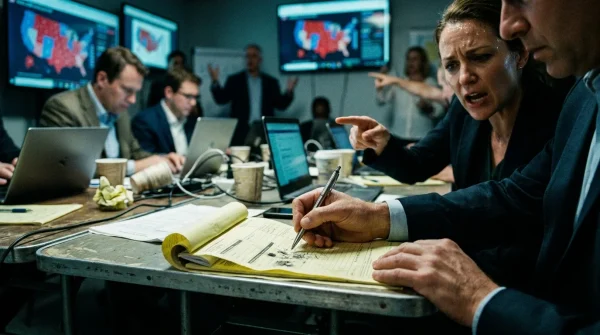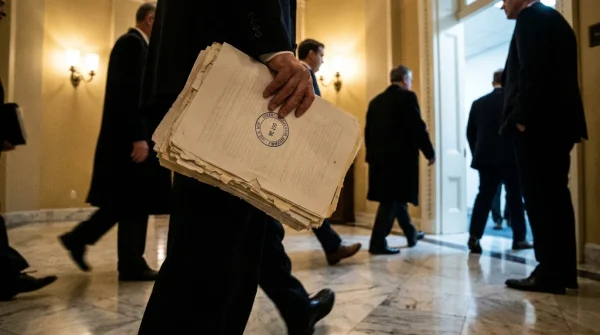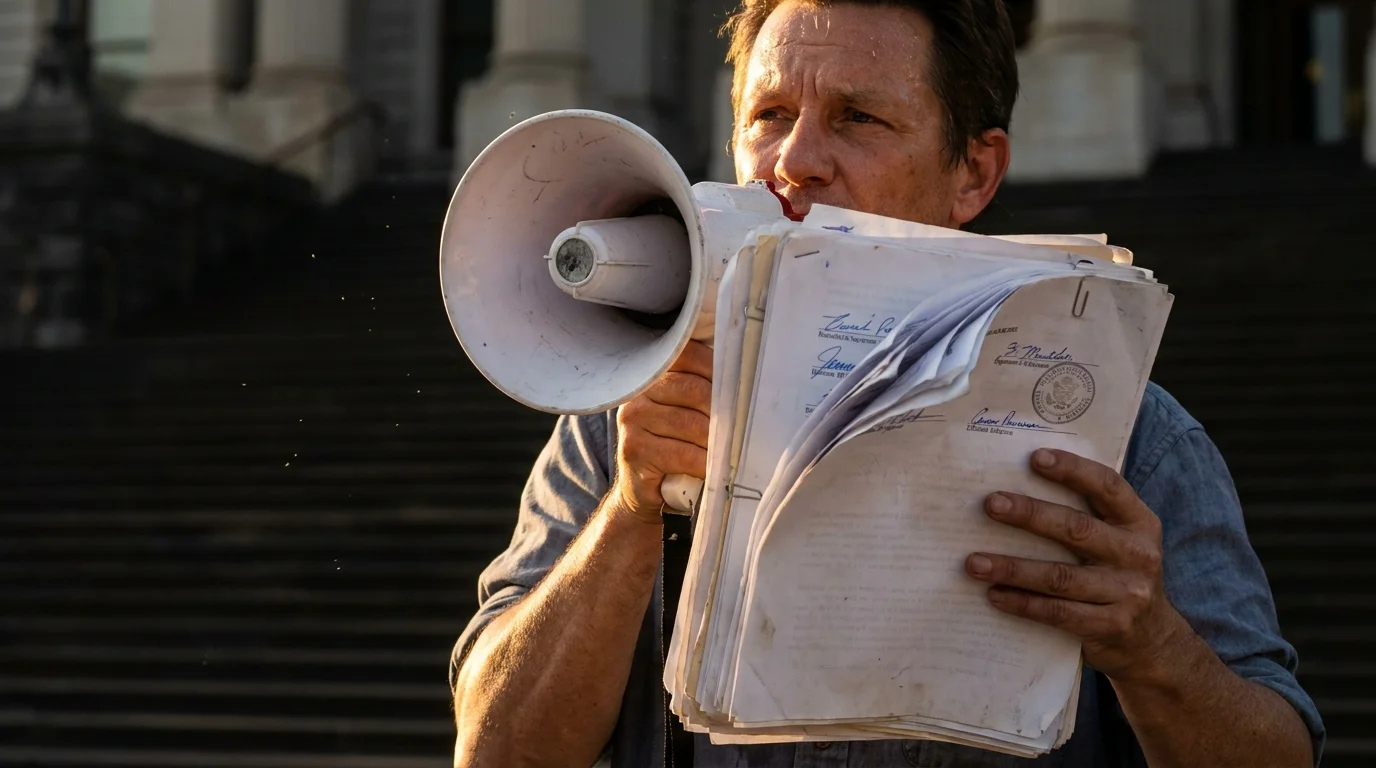
The linoleum floor of the county election office smells faintly of industrial wax and stale coffee. Under the buzz of fluorescent tubes at four-forty on a filing deadline afternoon, the romantic ideal of American grassroots democracy runs headlong into cold administrative mechanics. You might imagine that stepping up to serve your community begins on a debate stage or at a neighborhood town hall, but the real gateway is a laminate counter where a deputy clerk checks off boxes with a blue ballpoint pen.
Resting on that counter sits a thick stack of cashier checks stapled to notarized signature sheets. If the cashier check is drawn for even one dollar short of the statutory mandate, or if a notary seal is smudged across the margin of a petition sheet, the campaign ends right there. No voters cast a ballot; no speeches are delivered. The candidate simply ceases to exist on the March slate.
Across the southern and western states that anchor Super Tuesday, state party committees and legislative statutes impose brutal entry tolls designed to filter candidate fields before the public ever pays attention. While the national news cycle focuses on multimillion-dollar television buys and stump speeches in packed union halls, the quieter reality is that hundreds of potential challengers are eliminated by administrative friction alone.
When you open your primary ballot, the choices before you are not simply the people who stepped forward with solutions. They are the survivors of an expensive procedural filter that treats ballot access more like an exclusive toll road than a public square.
The Administrative Tollbooth Behind the Ballot Box
Consider the ballot access process as a high mountain pass with a private tollbooth. For decades, the public myth suggested that anyone with a clean record and a compelling message could challenge an entrenched incumbent. Yet state party rules and election codes establish filing fees that run into thousands of dollars for congressional and state legislative seats—or demand thousands of hand-collected, individually verified signatures in lieu of cash.
In Texas, filing for a congressional primary requires a mandatory three-thousand-dollar fee or a petition signed by hundreds of registered primary voters who have not participated in another party's process. In North Carolina and Alabama, percentage-based filing assessments turn running for state office into a steep personal financial risk. For a working-class nurse, mechanic, or public school educator, writing a non-refundable check for several thousand dollars is not an administrative formality; it is a financial wall.
- Digital donor velocity metrics drain low-dollar contributor balances through automated recurring prompts
- OIRA regulatory clearance stamps block executive orders through grueling interagency cost audits
- Enrolled bill engrossment desks switch contested legislative wording with hasty midnight edits
- Debate podium spacing tape traps candidates inside narrow television camera sightlines
- Voter registration matching models strip rural turnout signals under rigid demographic assumptions
This friction is not accidental. Major party organizations argue that fees prevent ballot clutter and ensure only serious contenders run. But in practice, the mechanism functions as an ideological shock absorber, protecting incumbents who have access to donor networks while forcing independent-minded challengers to spend their limited early cash just to buy a ticket to the starting line.
Marcus Vance, a 41-year-old vocational instructor from eastern North Carolina, learned this lesson firsthand when he attempted to launch a challenge for a state house seat. Vance spent three months knocking on doors after his shift ended, gathering what he believed was an airtight petition buffer. When party officials disqualified thirty percent of his signatures over technical discrepancies in voter registration addresses, he was forced to cover the remaining statutory filing fee out of his family's personal savings account within forty-eight hours or abandon months of neighborhood organizing.
The Anatomy of Gatekeeping Friction
Administrative barriers do not affect every candidate equally. They are calibrated to test specific resources that insurgent campaigns rarely possess in their opening weeks.
The Non-Refundable Entry Toll
For campaigns backed by political action committees, a four-figure filing fee is an accounting rounding error. For a challenger relying on twenty-dollar grassroots donations, that fee consumes the majority of their early runway. It drains the cash needed for basic yard signs, digital outreach, and campaign literature before formal canvassing even begins.
The Petition Verification Meatgrinder
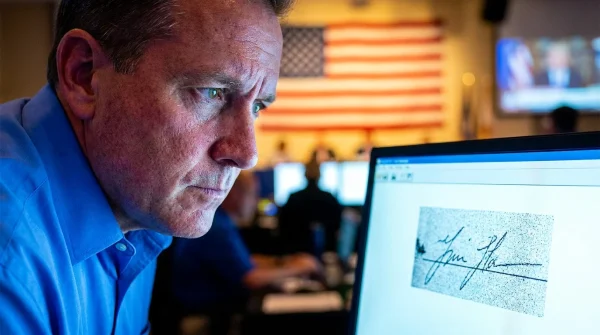
Candidates who choose the petition route to bypass fees face an intricate bureaucratic gauntlet. Signature validation rules in several Super Tuesday states allow county boards to discard petitions for minor technicalities: a missing apartment number, a signer using a common nickname instead of their legal registration name, or a petition circulator failing to complete an affidavit in the exact presence of a notary public.
The Calendar Squeeze
Filing windows are often compressed into a tight two-to-three-week period in late autumn. This timeline requires campaigns to coordinate legal filings, secure certified funds, and validate hundreds of pages of documentation while state offices operate on holiday schedules. A single administrative delay at a bank or notary office can disqualify a candidate before their paperwork reaches the state capital.
Navigating the Filing Gauntlet: A Tactical Field Strategy
Overcoming these institutional barriers requires treating the filing process not as paperwork, but as the first major logistical campaign operation. Successful independent contenders approach the deadline with deliberate, defensive redundancy.
- Build a Three-to-One Signature Buffer: Never submit the statutory minimum. County election boards routinely invalidate twenty to forty percent of petition signatures during challenge hearings. Aim for three times the required threshold to survive technical scrutiny.
- Validate Against Current Voter Rolls: Run every collected name through an active, updated voter registration file before binding your petition books. Discard questionable signatures internally before county clerks review them.
- Secure Certified Funds Weeks Early: Do not rely on last-minute campaign account transfers. Obtain certified cashier checks made out to the exact statutory entity well ahead of the deadline window.
- Bind and Number With Archival Care: Use permanent, tamper-evident binding systems and clearly stamped page numbers. Presenting pristine, professional binders reduces clerk friction and discourages frivolous administrative challenges.
The Bigger Picture: Seeing the Unseen Ballot
Every election cycle, commentary focuses on voter turnout and candidate rhetoric. Yet the most decisive moment of the race often occurs months prior, in quiet administrative offices where signatures are checked with magnifying glasses and certified checks are processed.
Understanding this hidden layer of the primary gauntlet shifts how you view the ballot in your hands. When you step into the voting booth this Super Tuesday, you are not just choosing between personalities. You are observing the narrow field of candidates who possessed the capital, the legal endurance, and the logistical precision to survive an administrative obstacle course built to keep them out.
The ballot is not a blank sheet of public will; it is an edited document created by administrative endurance.
| Key Point | Detail | Added Value for the Reader |
|---|---|---|
| Filing Fee Thresholds | Ranging from $500 to over $3,000 depending on office and state. | Reveals why working-class challengers face immediate financial barriers before campaigning begins. |
| Signature Invalidation Rates | Between 20% and 40% of collected signatures are routinely rejected. | Demonstrates why grassroots petitioning requires massive operational redundancy to survive. |
| Filing Window Timing | Strict, compressed windows typically scheduled in late November or December. | Explains how holiday schedules and legal deadlines filter out less organized campaigns. |
Frequently Asked Questions
Why do states allow political parties to charge high filing fees?
State courts have historically permitted filing fees as a means for parties to defray the cost of running primary elections and to ensure candidates demonstrate serious community backing.Can a candidate run without paying the primary filing fee?
Most states provide an alternative petition process, allowing candidates to collect a specified number of voter signatures in lieu of paying cash. However, the administrative burden of signature verification often requires substantial resources.What happens if a candidate's signatures are challenged?
State or county election boards hold administrative hearings where rival campaigns or party officials can challenge individual lines for missing dates, invalid addresses, or signature mismatches.Do write-in candidates face the same filing barriers?
While write-in candidates generally avoid large filing fees, most Super Tuesday states still require formal write-in declarations and administrative filings weeks before the election for votes to be counted.How do filing fees impact voter choice on Super Tuesday?
High fees and strict petition rules concentrate candidate fields among wealthy individuals, well-funded incumbents, and party-backed figures, reducing the ideological variety available to primary voters.