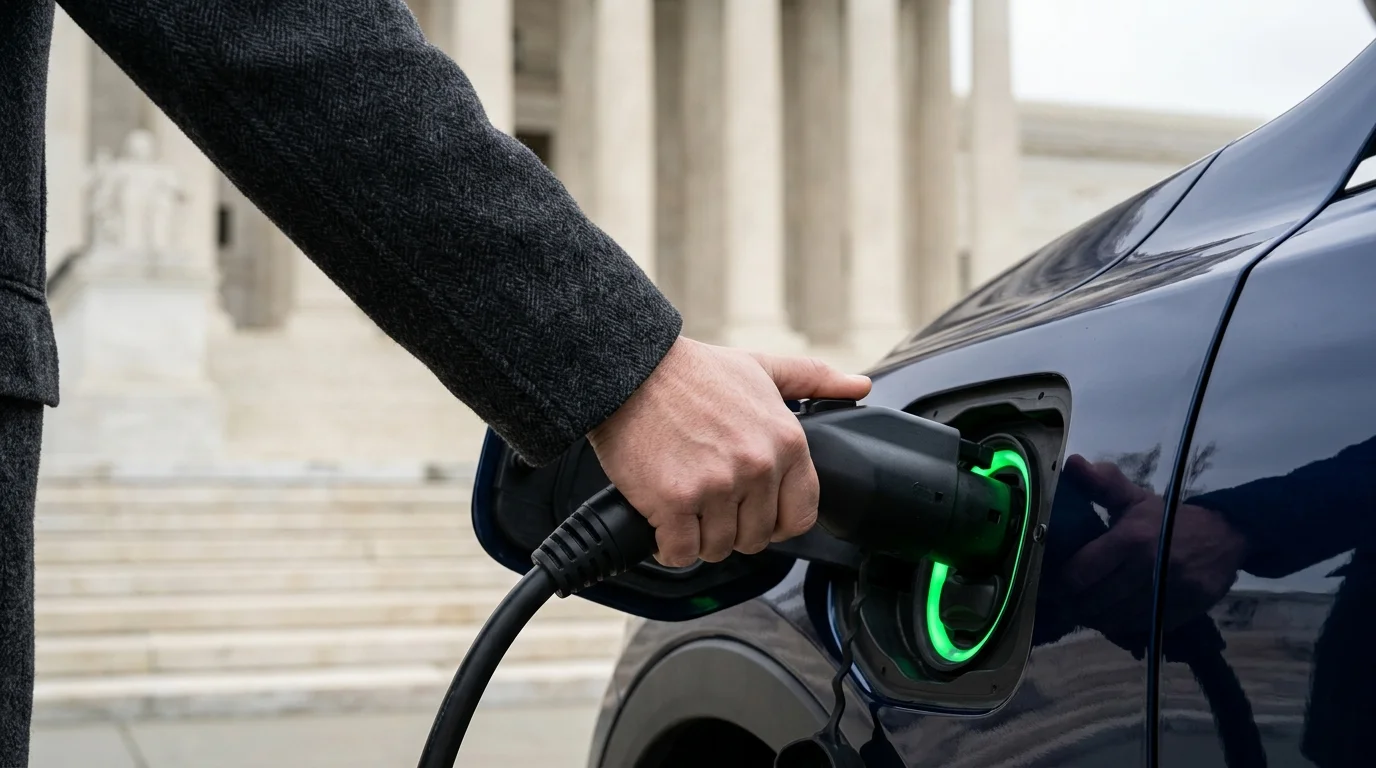
Federal tax incentives for residential electric vehicle charging equipment rely on strict census-tract boundary lines rather than postal codes, leaving broad claims that half of qualifying suburban ZIP codes are excluded without primary documentation or a verified geographic methodology. Under Internal Revenue Code Section 30C, known as the Alternative Fuel Vehicle Refueling Property Credit, eligibility for residential charging installations is tied to specific low-income or non-urban census tracts across the United States. While assertions have circulated that these street-level mapping rules disqualify millions of residential installations and half of suburban ZIP codes, a review of legislative records from Analisa and industry material from Home Energy Planner shows that no official analysis or reproducible calculation substantiates that one-half exclusion figure.
The policy debate carries immediate financial weight for American homeowners and electric vehicle drivers evaluating the cost of home charging infrastructure. Secondary industry guidance indicates the residential Section 30C credit has offered 30% of equipment and installation costs, up to $1,000 per port, for qualifying properties placed in service before July 1, 2026. Because federal agencies and the U.S. Internal Revenue Service administer location rules using census tracts rather than postal delivery zones, adjacent neighborhoods—and even residences within the same postal code—can face different tax outcomes depending on where federal statistical lines are drawn.
Census Tracts Versus Suburban ZIP Codes
A central obstacle in evaluating claims about suburban exclusions is the fundamental structural difference between United States Postal Service ZIP codes and federal census tracts. Under the framework governing Section 30C, geographic qualification is determined at the census-tract level, focusing on areas designated as low-income communities or non-urban territories. Census tracts are statistical subdivisions of a county established to track population and economic metrics, whereas ZIP codes are designed to organize mail delivery routes and frequently cross municipal, county, and census-tract boundaries.
Because census-tract boundaries are not equivalent to ZIP-code boundaries, any assertion expressed as a fraction of excluded suburban ZIP codes requires a defined geographic crosswalk and an explicit counting method. According to material reviewed on Home Energy Planner, the rules governing residential charger incentives describe tract-based eligibility rather than postal-code exclusions. Neither that consumer guidance nor legislative tracking from Analisa provides a primary study, household count, or official calculation supporting the claim that half of qualifying suburban ZIP codes are barred from the subsidy.
- Why Social Security Cards Lack Biometric Security in Federal Employment Checks
- How Municipal Property Tax Models and Assessment Appeals Affect Local Tax Bills
- Election Data Shows Mail Ballot Rejection Causes Vary by State Rules and Postal Timing
- U.S. Passport Renewal Rules Clarified: How Online Portals Compare to Form DS-82
- Why Social Security Cards Lack Biometric Security in Federal Employment Checks
Without a documented methodology explaining what constitutes a suburban or qualifying ZIP code, policy analysts cannot infer a nationwide coverage or exclusion rate solely from tract-level statutory criteria. A single suburban ZIP code may intersect multiple census tracts, some of which meet federal low-income or non-urban thresholds while others do not. Consequently, treating an entire postal code as either eligible or disqualified misrepresents how street-level mapping functions in federal tax administration.
Statutory Rules and the Sunset Under H.R. 1
Beyond geographic restrictions, the availability of the federal EV charger subsidy has been narrowed by legislative action altering the program’s timeline. Available reports present consistent cutoff dates while framing the statutory deadline from slightly different angles. According to Home Energy Planner, the residential Section 30C credit expired on June 30, 2026, following an accelerated sunset attributed to the One Big Beautiful Bill Act. Meanwhile, a legislative summary from Analisa tracking H.R. 1 states that the credit is allowed only for qualifying refueling property installed before July 1, 2026.
Although both secondary accounts align on the practical cutoff date between June 30, 2026, and July 1, 2026, neither summary serves as an enacted-law primary text or an official regulatory bulletin from the U.S. Internal Revenue Service. For taxpayers and electrical contractors, the distinction between purchasing hardware and placing equipment in service is critical. Under the reported timeline, charging equipment had to be installed before July 1, 2026, to remain eligible for the federal incentive, regardless of whether the residence sat inside an approved low-income or non-urban census tract.
What the Rules Mean for Homeowners and Buyers
For everyday citizens and residential property owners, the intersection of census-tract mapping and legislative cutoff dates translates complex regulatory language into direct pocketbook consequences. According to Home Energy Planner, the residential Section 30C incentive was structured to cover 30% of equipment and installation costs, capped at $1,000 per port. When a homeowner installs a Level 2 charging station—which often requires dedicated circuit work and professional electrical labor—that credit can noticeably lower upfront expenses, provided both the geographic and calendar requirements are satisfied.
Homeowners preparing tax filings for equipment placed in service prior to the reported July 1, 2026, cutoff should not rely on generalized ZIP-code lists or unverified estimates of suburban eligibility. Instead, residents must verify the exact census tract associated with their physical street address and confirm the specific rules, income and community criteria, and effective sunset dates directly against authoritative guidance from the U.S. Internal Revenue Service and enacted federal law. Relying on postal boundaries rather than official tract maps can lead to improper tax filings or missed savings for installations that met the deadline.
Frequently Asked Questions
What is the primary source and reproducible calculation behind the claim that half of suburban ZIP codes are excluded?
No retrieved primary source or official government study substantiates the claim that half of qualifying suburban ZIP codes are excluded from federal EV charger subsidies. Available legislative and industry materials describe census-tract eligibility rules but do not contain a reproducible geographic calculation supporting the one-half figure.
Does the analysis count ZIP codes, census tracts, households, or potential charger installations, and how does it map tract eligibility onto ZIP boundaries?
Because no underlying study was retrieved to support the headline estimate, there is no documented methodology showing whether such a claim attempts to count postal codes, individual households, or projected installations. In federal practice, eligibility follows census-tract lines, which do not align neatly with ZIP-code boundaries and would require a formal crosswalk method to compare.
Which statutory and IRS rules define eligible low-income or non-urban tracts for Section 30C, and what version of the official eligibility map applies to the relevant installation date?
Internal Revenue Code Section 30C governs the Alternative Fuel Vehicle Refueling Property Credit and restricts eligibility to designated low-income or non-urban census tracts. Taxpayers must consult official materials from the U.S. Internal Revenue Service to confirm the exact statutory definitions and the applicable census-tract boundary maps corresponding to their installation date.
How many residential installations are affected, and are claims based on household counts or simply the number of ZIP codes intersecting ineligible tracts?
Retrieved sources do not substantiate a specific count of affected residential installations or households. Without primary documentation, it remains unverified whether claims of widespread suburban disqualification reflect actual household totals or unverified assumptions about postal codes overlapping ineligible census tracts.
What are the exact credit amount, income and community criteria, and effective sunset date under authoritative IRS and enacted-law sources?
Secondary reporting from Home Energy Planner describes the residential Section 30C credit as covering 30% of equipment and installation costs up to $1,000 per port in qualifying low-income or non-urban census tracts, with an expiration date of June 30, 2026, under the One Big Beautiful Bill Act. Similarly, Analisa notes that H.R. 1 allows the credit for property installed before July 1, 2026. Taxpayers should verify these figures and statutory criteria directly against enacted law and official IRS publications.