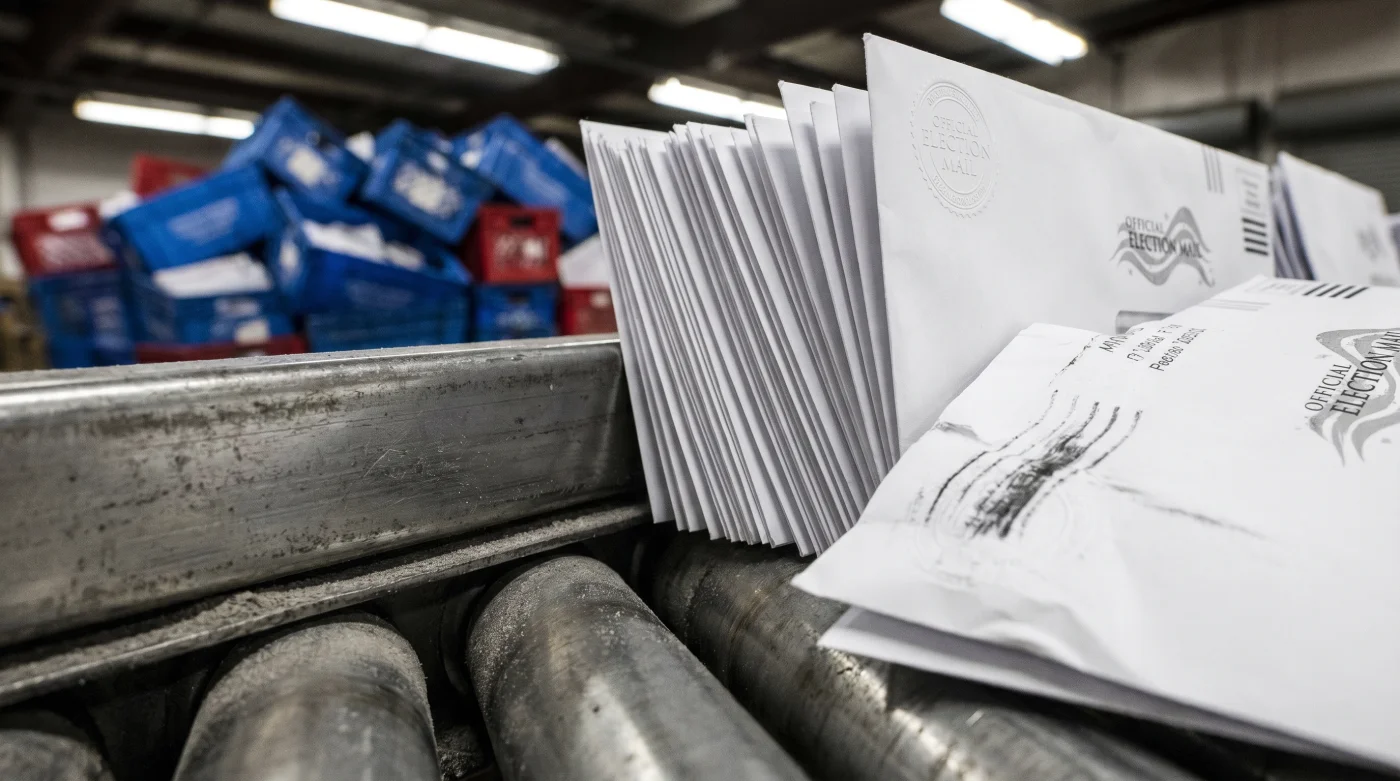
The hum of the sorting machines usually fades into the background of a crisp autumn morning. Inside your local postal annex, the scent of industrial ink and aged cardboard mingles with the sharp, rhythmic snap of automated belts. Most days, this machinery processes mundane bills and local flyers without skipping a single beat.
Today, that familiar rhythm is stuttering under an unprecedented weight. Real-time tracking metrics flashing across dispatcher screens reveal an undeniable reality: mail-in ballots are clogging the infrastructure arteries across crucial swing counties.
You might be refreshing your tracking app right now, staring at a status bar that has stalled for days. It is deeply frustrating to watch your civic voice seemingly vanish into the void, leaving you wondering if your thick, security-lined envelope is sitting neglected in a dusty warehouse.
That stillness on your screen is actually the quiet friction of millions moving at the exact same moment. Understanding how regional sorting facilities are digesting this sudden early voting surge changes everything about how you handle your ballot this week.
The Weight of the Paper Highway
Think of your local postal network not as a magical tube that instantly teleports envelopes, but rather like a two-lane commuter highway. It is perfectly calibrated for the daily traffic of standard mail. When a sudden voter spike hits, it is the equivalent of an entire city trying to evacuate down that two-lane road at rush hour.
The delay you are experiencing isn’t a glitch, it is the physical reality of diagnosing a structural backlog. Real-time search data confirms that ‘Where is my ballot?’ has become a dominant community priority, driven entirely by this sudden, overwhelming volume at regional processing hubs.
Marcus Vance, a 52-year-old logistics coordinator at a midwestern swing-county processing plant, has watched this play out from the floor. He notes that the sheer physical mass of the specialized election envelopes—which require careful, manual verification when barcode scanners misread them—forces the belts to slow down. ‘We aren’t losing them,’ Marcus explains to worried locals over coffee. ‘We are just treating each one like it holds gold, and gold is heavy to move.’
- Tariff schedules trigger immediate supply chain panics ahead of expected legislation
- PAC television ads dominate local screens by exploiting federal broadcasting loopholes
- Town hall microphones limit constituent impact through strategic volume capping
- Highway tolls fund disparate local projects instead of road maintenance
- Paper ballots face high rejection rates due to heavy ink bleed
This is where your anxiety can transform into methodical, strategic patience. Instead of panicking over a stalled tracking link, you can adapt your approach based on where you sit in the voting timeline.
Navigating the Bottleneck by Voter Type
Your strategy for sidestepping these regional delays depends entirely on the current physical location of your ballot. Here is how to handle the backlog based on your specific situation.
For the Early Initiator: If you mailed your envelope a week ago and the tracker is frozen halfway to the destination, breathe easy. Your envelope is likely waiting in a secured cage for its final scan. The bottleneck usually happens at the receiving county board, not the sending post office. Check your local election board website directly, as their internal receipts often update faster than postal tracking.
For the Current Holder: If your ballot is sitting on your kitchen counter right now, bypass the mail stream entirely. The paper highway is already full. Locate your nearest official county drop box. These secure receptacles are emptied daily by bipartisan teams who bypass the postal sorting facilities and drive the ballots straight to the counting floor.
For the Anxious First-Timer: If you are worried you made a mistake on the envelope that is causing the delay, remember that signature verification takes time. Most swing counties have a curing process. If there is an issue with your signature or date, they will contact you. Ensure your phone number and email are correctly registered on your state’s voter portal so they can reach you immediately if needed.
Taking Action When the System Slows
If you are actively trying to confirm your vote amidst these severe bottlenecks, you need a mindful, minimalist approach. Frantic calls to the post office will only meet busy signals.
Instead, focus your energy entirely on verifying the final destination. You only need to take a few deliberate steps to ensure your voice is counted in the final tally.
- Isolate your tracking source: Use your state’s official Secretary of State voter lookup tool rather than standard postal tracking numbers.
- Find the bypass routes: If you haven’t mailed it, hand-deliver your sealed envelope to your municipal clerk’s office during business hours.
- Document your submission: Take a clear photo of your signed, sealed envelope before it leaves your hands, capturing the barcode.
- Monitor the curing list: Check your local election board’s website for updates on ballots that require voter signature correction.
Consider this your Tactical Toolkit: Keep your county clerk’s direct phone number saved in your contacts. Know the exact mileage to your nearest 24-hour drop box. Write down the precise deadline for physical drop-offs in your state, which is often 8:00 PM on the final day, regardless of postal delays.
When you stand by the mailbox and realize the system is running days behind schedule, it is easy to assume a massive institutional failure right when the stakes are highest.
The Sound of Civic Friction
Yet, if you listen closely, that delay is simply the weight of your community participating. It is the friction of thousands of your neighbors deciding that their voice matters enough to add to the pile.
Those overloaded sorting facilities aren’t breaking down; they are bearing the immense physical load of democracy operating at a staggering scale. The bottlenecks in these key electoral districts are physical proof of civic engagement.
By understanding the mechanics of the delay, you shift from feeling helpless to taking deliberate, effective control over your own participation.
A delay in the mail stream isn’t a lost voice; it’s a signal to reroute your civic energy directly to the source.
| Key Point | Detail | Added Value for the Reader |
|---|---|---|
| Regional Bottlenecks | Sorting facilities are overwhelmed by manual processing of secure envelopes. | Provides peace of mind that a stalled tracker is a systemic delay, not a lost envelope. |
| Direct Verification | State election portals update final receipt status faster than postal logs. | Saves you hours of refreshing postal tracking links fruitlessly. |
| Bypass Delivery | Official drop boxes route materials straight to the counting floor. | Gives you a reliable, physical alternative when the mail stream is gridlocked. |
Navigating the Mail-In Surge FAQ
Why is my ballot tracking stuck on ‘In Transit’ for days?
The regional facilities scan large batches at once. During high volume, your envelope might be waiting in a secure cart before receiving its final scan at the election office.Is it too late to use a mail box if I live in a swing county?
If you are within ten days of the final deadline, it is safer to bypass the postal system entirely and use a verified local drop box or hand-deliver it to the clerk.What if my ballot doesn’t arrive in the mail on time to fill it out?
You can almost always vote in person via a provisional or standard method, though you may need to sign an affidavit stating you did not use the mailed version.Can I drop my ballot off at any polling location?
Rules vary strictly by state. Many require you to drop it only at designated county locations or your specific precinct. Always check your local clerk’s guidelines first.Does a delayed scan mean my vote won’t be counted?
No. Many states rely on the postmark date rather than the arrival date. As long as you submit it before your state’s legal postmark cutoff, it remains valid.