You know the distinct, metallic chime of your phone hitting the kitchen counter at 6:15 on a Friday morning. Outside your window, a late-spring frost still clings to the windshield, and the coffee maker is sputtering its final dark drops into the pot. You swipe your thumb across the glass, waiting for the green notification from your mobile banking app—the predictable hum of direct deposit that keeps your mortgage, groceries, and kids’ summer camp fees moving along without incident.
Except the figure glowing on your screen looks light. It is not catastrophically low, which would indicate an administrative freeze or a payroll software crash, but it has clearly been trimmed. Fifty, seventy, or ninety dollars have vanished, cleanly clipped away before the electronic clearinghouse finished routing the balance into your checking account.
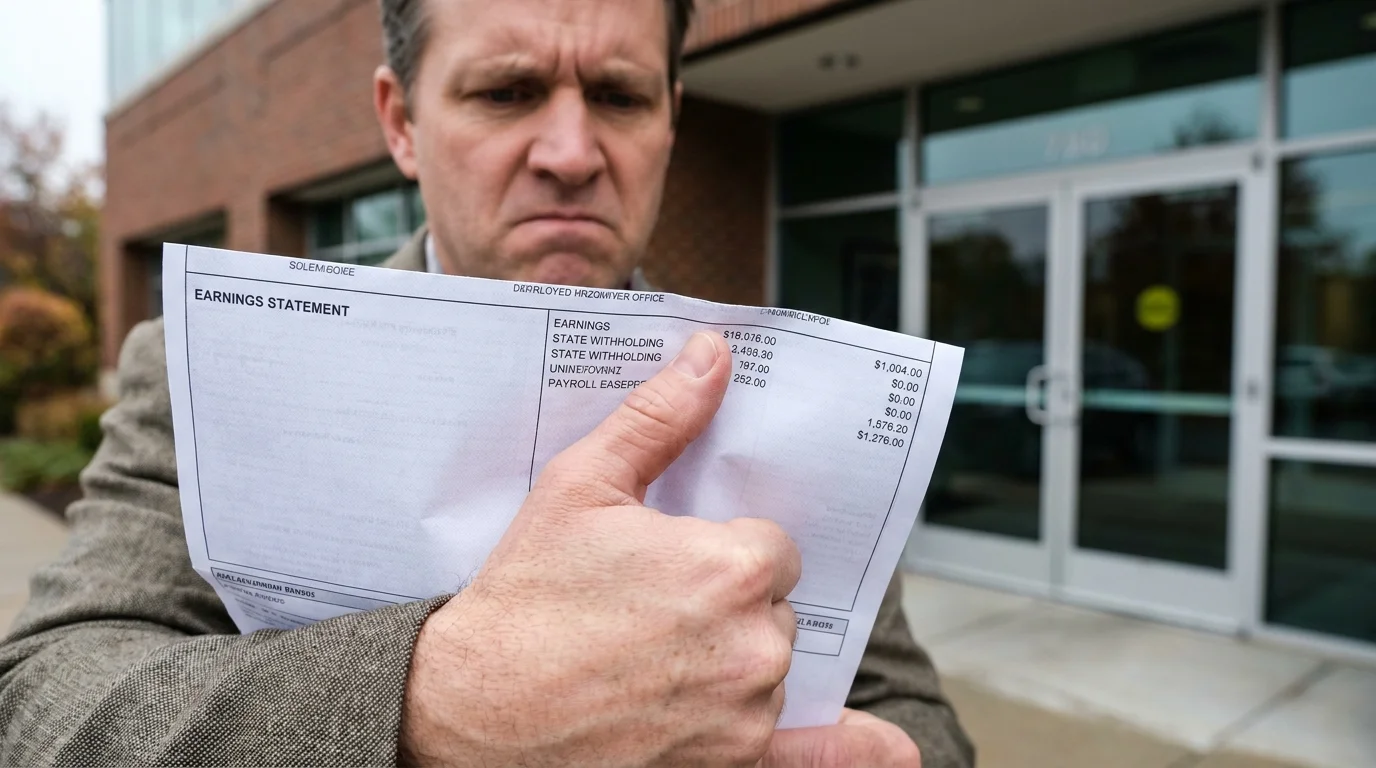
You pull up the internal payroll portal, squinting at the line items while the steam rises off your mug. Your gross earnings match your salary agreement. Federal withholding sits right where you calculated it; your employer health insurance deduction has not budged; your voluntary retirement match mirrors last month down to the penny. The quiet drain hides further down the ledger, buried in the state withholding box where Minnesota’s revised tax withholding tables have gone to work.
Most workers assume take-home pay only drops when lawmakers pass an overt, headline-grabbing tax increase on the evening news. The real world of state budgeting works much differently: administrative adjustments quietly skim earnings long before you ever sit down to prepare an annual tax return.
The Mechanics of the Siphon: Withholding Tables vs. Tax Hikes
State budget compromises rarely end when the governor signs a bill into law. What happens next is a technical recalibration managed by civil servants inside the Department of Revenue. Rather than sending notice through the mail, the state issues updated employer withholding formulas. Think of it not as a burst water main in your front yard, but as an uncalibrated pressure valve bleeding water drop by drop behind your drywall.
When statehouse negotiations produce compromise spending plans, revenue targets must be met on tight quarterly schedules. To secure that cash flow without waiting for spring filings, withholding tables are quietly ratcheted upward. The state alters allowance valuations, recalibrates bracket thresholds, and recalculates phase-outs so your employer automatically deducts a heavier percentage from each regular pay cycle.
Because this happens entirely inside the automated software suites run by third-party payroll processors, you never sign a new disclosure. You simply receive less money on Friday, effectively granting the state an interest-free bridge loan to balance its immediate operational ledgers.
- Tucker Carlson interviews split primetime feeds into conflicting foreign policy realities
- DuPage County rezonings spark furious suburban rebellion against traditional party slates
- Fair Admissions rulings freeze minority municipal contracting programs across major cities
- Citigroup firearm policies spark state contract bans across Texas municipal finance
- SAVE database directives bypass federal privacy rules to audit state voter rolls
The subtle genius of this mechanism lies in its quiet operation. By shifting the math behind personal allowances, your paycheck absorbs the shock while the headline tax brackets technically remain unchanged on paper.
The Paperwork Drift: A View from the Shop Floor
Marcus Lindstrom, a 44-year-old municipal water systems technician in Dakota County, spent twenty minutes of his morning break comparing his latest digital pay stub with one from six months earlier. Working with pressurized pipe systems, Marcus understands fluid dynamics, but he could not fathom why forty extra hours of standard work yielded forty-five dollars less in net pay. When he walked into human resources to ask if the city had altered his benefit plan, his payroll administrator pulled up the updated state tax formula: an administrative phase-out had silently negated two allowances Marcus had claimed on his state W-4 for nearly a decade.
How the Shift Hits Your Ledger: Three Household Profiles
The impact of Minnesota’s updated payroll withholding formulas does not land evenly across the board. Depending on your tax filing status, your household structure, and how you earn your income, the administrative squeeze takes different shapes.
1. The Dual-Income Suburban Household
For married couples living in suburban counties like Hennepin, Anoka, or Washington with household earnings between $110,000 and $190,000, the updated tables create a compounding withholding drag. Minnesota’s revised formulas apply single-earner rate progressions more aggressively to joint households unless both partners explicitly complete updated state paperwork. If both spouses leave their withholdings on autopilot, their combined deductions routinely outstrip their actual year-end tax liabilities, stripping hundreds of dollars from their monthly cash flow.
2. The Hourly Overtime Specialist
Shift workers, nurses, logistics drivers, and manufacturing trades who rely on variable overtime hours face an even sharper penalty. State withholding formulas treat irregular, overtime-heavy pay periods as if that elevated rate was your baseline salary for all fifty-two weeks of the year. A single productive weekend run pushes your temporary wages into an artificial state bracket, locking away your sweat equity until refund season arrives next spring.
3. The Salaried Mid-Tier Professional
Salaried remote or hybrid workers earning between $65,000 and $95,000 rarely look closely at pay stubs once direct deposits are established. Yet this bracket serves as the sweet spot for Minnesota’s revised standard deduction phase-downs. Because the state decoupled certain calculations from the federal internal revenue code, automatic formulas withhold more state tax to guard against year-end underpayment penalties—even if your actual deductions would balance out cleanly on April 15.
Reclaiming Your Paycheck: The Minnesota W-4MN Reset
You do not have to accept an inflated payroll deduction simply because the state updated its baseline tables. Correcting this balance requires a deliberate, methodical adjustment of your state-specific filing forms.
Follow these specific steps to restore your take-home pay to its proper level:
- Audit Line 17 of Your Pay Stub: Compare your current state withholding amount against your actual state liability from last year’s Form M1 to verify if you are overwithholding.
- Bypass the Federal Form W-4: Do not assume your federal withholding settings transfer seamlessly to Minnesota. You must specifically request Form W-4MN (Minnesota Employee Withholding Allowance/Exemption Certificate) from your payroll department.
- Recalculate Section 1 Allowances: Work through the personal allowance worksheet on page 2 of Form W-4MN, paying close attention to the Minnesota-specific child tax credit and working family credit thresholds.
- Adjust for Dual Incomes Mindfully: If both partners work, use the state’s marital status withholding box marked ‘Married, but withhold at higher single rate’ only if you routinely owe tax at filing time. Otherwise, claim your rightful allowances to stop the drain.
Your tactical toolkit should remain straightforward. Keep a copy of your most recent Minnesota Form M1, your previous two pay stubs, and a fresh Form W-4MN on your desk. Recalibrating your allowances takes twenty minutes, but it immediately stops the cash siphon before the next pay cycle clears your credit union account.
The Quiet Cost of Administrative Inertia
When family budgets tighten under the weight of higher grocery tallies, utility surcharges, and rising local property taxes, cash flow timing is everything. Fifty dollars missing from a biweekly paycheck is fifty dollars unavailable for prescription copays, vehicle maintenance, or retirement compound growth. It sits in a state account in St. Paul, doing nothing for your household’s immediate security.
Understanding how public policy actually reaches into your everyday life means looking past the speeches at the Capitol and inspecting the practical gears of your pay stub. When you take command of your withholding allowances, you take back control of your financial margin. You earned every dollar on that ledger; ensuring it lands in your account on Friday morning is simply good stewardship.
The fastest raise you can give yourself this year is fixing the state withholding errors your employer was instructed to make automatically.
| Key Point | Detail | Added Value for the Reader |
|---|---|---|
| Table Realignment | Administrative changes to state withholding brackets | Explains why net pay drops even without rate changes |
| Form W-4MN Separation | Minnesota no longer mirrors federal withholding certificates | Gives you the exact state document needed to fix the error |
| Overtime Penalties | Automated formulas treat extra shifts as permanent salary | Helps shift workers protect supplemental wage earnings |
Frequently Asked Questions
Why did my Minnesota take-home pay drop if my salary stayed the same?
The Minnesota Department of Revenue periodically updates its employer withholding tables to reflect legislative budget changes, which frequently forces payroll software to withhold more state tax from each check by default.Does a higher payroll deduction mean I am paying higher taxes?
Not necessarily. Withholding is simply an estimate of what you owe. If the state overwithholds throughout the year, you will receive the excess back as a refund, but your biweekly cash flow suffers in the meantime.How can I stop the state from taking too much out of my paycheck?
Submit a revised Form W-4MN to your employer’s human resources or payroll department to adjust your personal allowances and correct the withholding formula.Why does my overtime pay get taxed at such a high state rate?
Automated payroll systems annualize your earnings for that specific pay period, temporarily bumping your pay into a higher tax bracket for that single check.Can I use my federal Form W-4 to fix my Minnesota state deductions?
No. Minnesota requires its own specific certificate (Form W-4MN) because state tax brackets and deductions are decoupled from several federal tax definitions.