The cool evening air smells of fresh-cut Kentucky bluegrass and damp pine mulch, carryovers from an afternoon spent quietly edging your front walkway. Down at the corner cul-de-sac, yellow municipal notices printed on laminated cardstock flutter against the street signs, held fast by heavy weather-resistant staples. To the casual driver heading home from the commuter rail, it looks like standard bureaucratic paper. But to anyone stepping out of their driveway with a dog leash in hand, it reads like an earthquake.
You were told for years that the political battle lines ran strictly along red and blue party trenches, broadcast daily from television studios in Washington and New York. Yet when the municipal council quietly schedules an emergency planning docket to review blanket multi-family housing mandates, those tidy national abstractions evaporate into thin air. Party registration cards lose their grip when the property assessment notice arrives in your mailbox.
In the quiet suburban corridors of southeastern Pennsylvania, suburban Detroit, and outside Atlanta, living rooms are staying lit well past midnight. You watch your neighbors—folks who spent the last three presidential cycles trading polite barbs across hedge lines—standing side-by-side on creaky gym bleachers, united in raw resistance against state-level zoning directives that bypass municipal oversight entirely. A quiet, furious realignment is taking hold under the tree canopy, freezing party campaign playbooks mid-stride.
The Backyard Battleground: The Myth of Predictable Ballots
For decades, campaign managers treated suburban swing voters like a predictable thermostat. Turn down the tax rhetoric slightly, calibrate social messaging to sound reassuringly moderate, and suburban voters would settle neatly into their demographic slots. But treating a neighborhood like an easily adjusted thermostat fundamentally misunderstands the machinery. A neighborhood is not a dial; it is a shared watershed, built around long-term personal equity, public school feeder patterns, and the promise of predictable local autonomy.
When statehouses pass sweeping density mandates that strip towns of conditional use permits, the political calculus shatters overnight. What national strategists classify as an academic policy discussion regarding inventory shortages feels to the resident on the ground like an arbitrary eviction of local consent. You suddenly find that your political priority is neither left nor right; it is the immediate preservation of your town’s infrastructure, sewer capacity, and property tax stabilization.
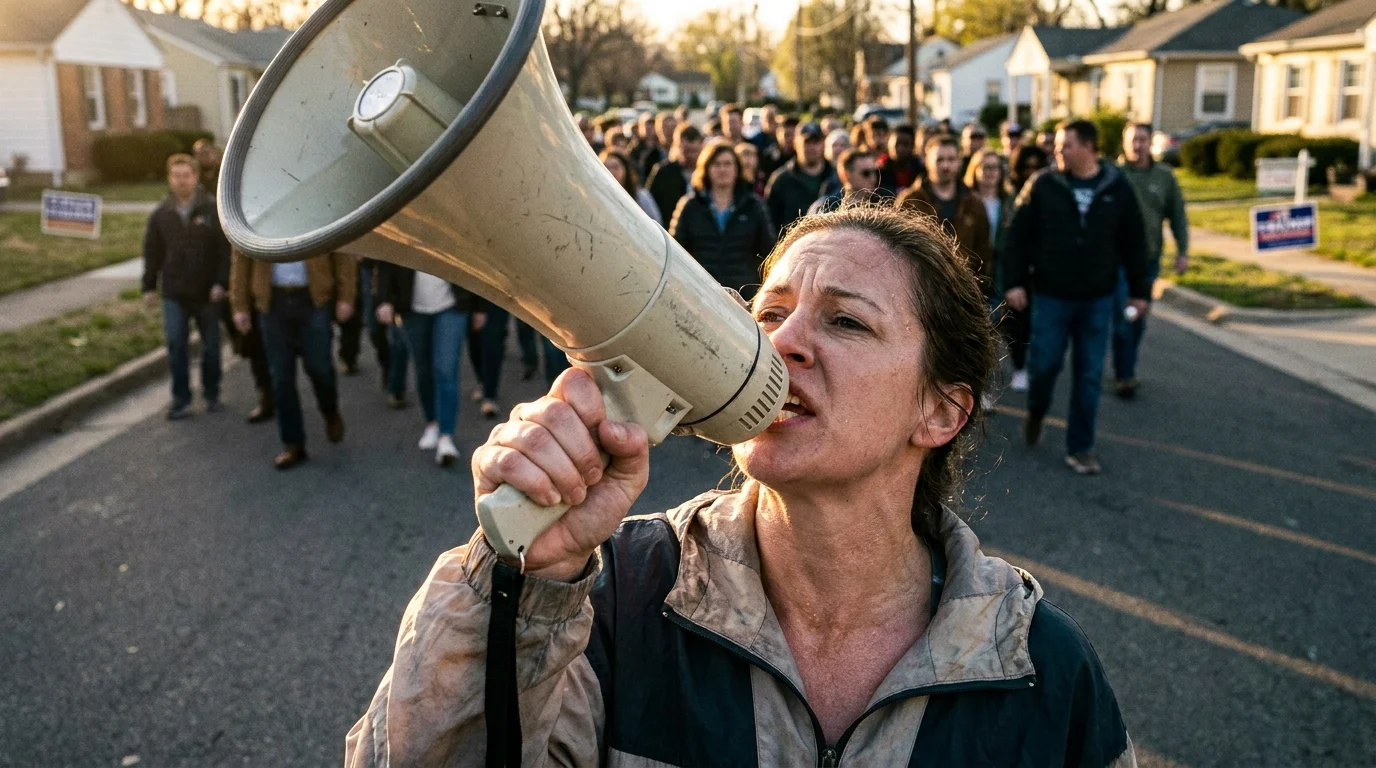
Consider Marcus Campbell, a 52-year-old municipal bond analyst living in a leafy township outside Columbus, Ohio. For two decades, Marcus reliably split his ticket, voting for center-left national candidates while backing conservative local comptrollers. Last spring, when the state pushed an administrative mandate requiring his township to permit four-story triplexes across all single-family zones without adding roadway lanes or school funding, Marcus did something unexpected. He organized two hundred households into a hyper-focused political action committee, completely ignoring national party platforms to target every single local official who refused to sign a public zoning veto pledge.
- Eric Adams memos expose aggressive press deflection strategies against federal corruption charges
- Supreme Court rulings freeze regional pipeline projects leaving municipal budgets stranded
- Ron DeSantis mandates fuel boardroom revolts across Wall Street financial firms
- White House orders bypass congressional oversight to strip veteran agency directors
- White House tariffs derail Midwest manufacturing lines amid sudden retaliatory embargoes
The Anatomy of the Suburban Veto: Three Emerging Fronts
The resistance sweeping through suburban corridors does not fit into a single ideological bucket. Depending on your personal situation, this administrative friction hits your daily life through distinct pressure points.
For the Longtime Equity Guard
If you bought your home ten or twenty years ago, your property is not just shelter; it is your entire retirement foundation, paid down with decades of sweat equity and rigid mortgage payments. When sudden density ordinances threaten to introduce multi-story rental blocks directly along your property perimeter, your primary concern is structural stability. Unplanned density without infrastructure investment creates immediate traffic bottlenecks, strains aging water mains, and risks depreciating the single largest asset you will ever own.
For the Young Family School Prioritizer
If you stretched your household budget to the breaking point to enter an elite suburban school district, your life runs on classroom ratios and bus routes. A state mandate requiring rapid construction without concurrent funding formulas for public schools threatens the very educational quality you sacrificed to access. You care far less about party platforms than whether your third-grader will be sitting in a modular trailer next autumn because classrooms are running at 130 percent of physical capacity.
For the Fiscal Realist
If you track municipal ledgers, you know that state mandates rarely come with state checks. Local emergency services, trash hauling, and storm drainage upgrades must be funded locally. When town managers warn that density compliance will necessitate double-digit property tax assessments to expand sewer treatment facilities, your vote belongs entirely to the candidate willing to challenge the mandate in appellate court.
Mindful Civic Defense: Navigating the Zoning Squeeze
Tackling sweeping administrative changes does not require screaming into the void of social media. It requires calm, hyper-local precision that commands the immediate attention of campaign directors who fear losing the suburbs.
- Audit your local planning board calendar twice a month to track proposed comprehensive plan revisions before they reach statutory council votes.
- Examine municipal water, sewer, and runoff infrastructure reports to pinpoint structural capacity limitations that legally constrain high-density development.
- Form non-partisan neighborhood alliances focusing strictly on infrastructure thresholds rather than polarizing national rhetoric.
- Draft formal petition language demanding regional traffic impact assessments prior to granting ministerial building permits.
Your local voice carries maximum leverage when it focuses on the unyielding engineering realities of your neighborhood. Keep your arguments grounded in hard numbers: daily vehicle trip generation, stormwater retention volumes, and emergency response radius metrics.
The Tactical Toolkit for Hyper-Local Influence
Mastering the local process requires the right resources at your fingertips:
- Document Access: Your municipality’s Master Land Use Plan and Official Zoning Map (available at the township clerk’s desk or town portal).
- Capacity Metrics: The state Department of Environmental Protection sewer service area maps, detailing local treatment plant capacities.
- Timing Windows: State statutory public comment periods, which typically enforce a strict 30-day window following the initial ordinance reading.
- Legal Precedents: Home-rule charter language regarding local police powers and land-use discretion under state enabling legislation.
The Bigger Picture: Reclaiming Local Agency in an Era of Overreach
In a hyper-polarized world where national politics feels distant and exhausting, the zoning battle offers an unexpected gift: it reminds you that the ground directly beneath your feet still matters. Suburban swing voters are not freezing campaign strategies out of malice or partisan bias. They are doing so because they realize that real life happens at the scale of crosswalks, local playgrounds, and town hall podiums.
When you stand up for the character and infrastructure of your street, you step out of the passive role of a voter demographic and step into the active role of a community steward. Real power rests in local presence, where party labels dissolve in favor of shared civic responsibility.
The quietest street corner will quickly become the center of the political universe when a state mandate tries to redraw its boundaries without asking.
| Key Point | Detail | Added Value for the Reader |
|---|---|---|
| Mandate Mechanics | State-level housing bills bypass local zoning boards through administrative preemption. | Enables you to identify whether your town or the state holds actual permitting authority. |
| Infrastructure Squeeze | Multi-family infill requires costly sewer, roadway, and utility expansion without federal aid. | Provides hard engineering data to use during public town hall hearings. |
| Swing Voter Leverage | Key battleground districts turn on hyper-local single-issue suburban turnouts. | Gives you confidence that organized local action will directly alter national campaign platforms. |
Frequently Asked Questions
Why are suburban swing voters prioritizing local zoning over national issues?
Because zoning decisions directly impact immediate household wealth, safety, and school quality far faster and more permanently than broad national legislative debates.Do multi-family housing mandates automatically lower property values?
Not necessarily, but rapid, unmanaged density without infrastructure upgrades often strains municipal services, which can suppress resale values and trigger steep property tax increases.How can a small neighborhood group legally challenge a state housing directive?
Most successful challenges focus on environmental impact assessments, sewer utility capacity limits, and procedural violations in how the municipal comprehensive plan was amended.Are both political parties affected by this suburban backlash?
Yes. Moderate Democrats face blowback from homeowners over state-sponsored density pushes, while Republicans struggle when failing to offer viable solutions for housing affordability.What is the fastest way to get involved in local zoning disputes?
Attend your municipal planning board’s monthly work sessions and sign up for public comment periods before ordinances are finalized for full council votes.