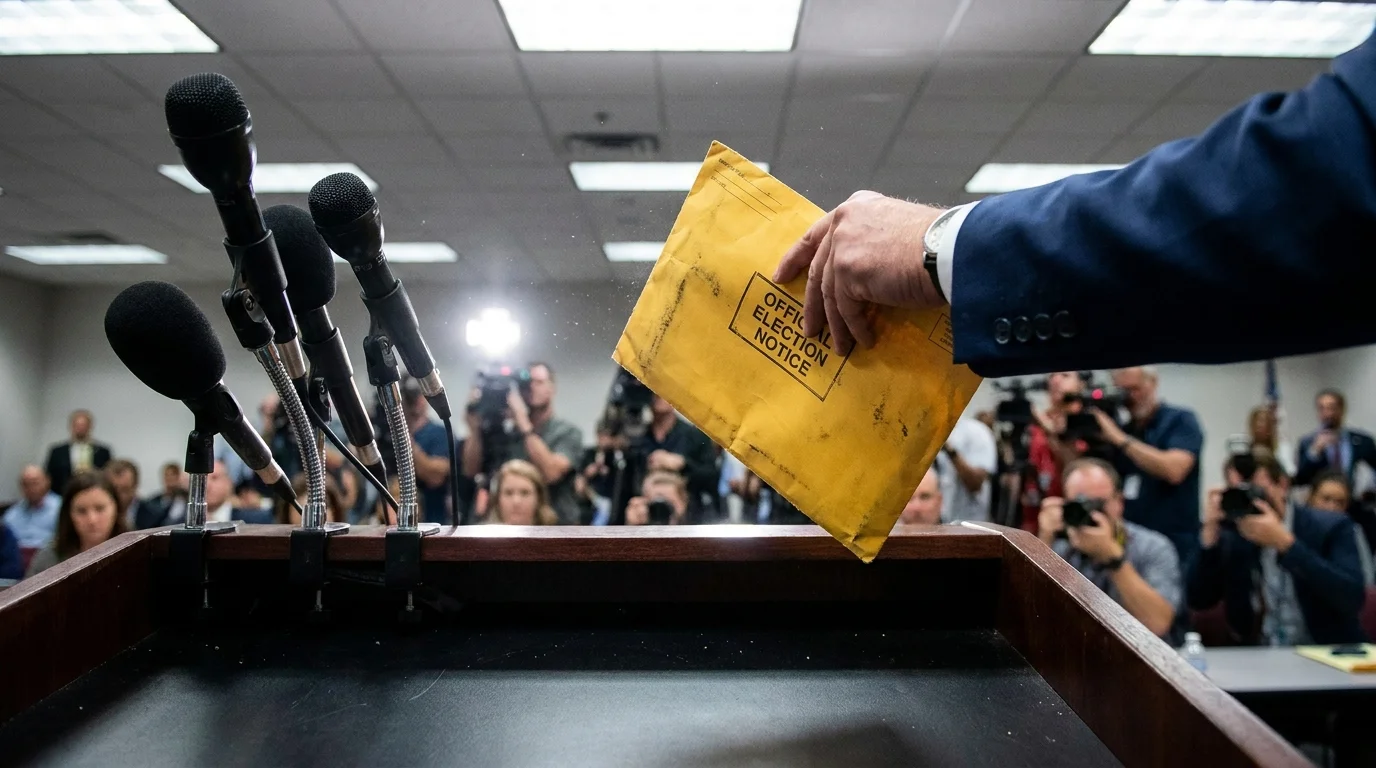
The late afternoon sun cuts across your kitchen table, catching the gray dust settling over a stack of newsprint catalogs, grocery circulars, and credit card solicitations. You pick up the pile with one hand, running your thumb through the slick paper to separate the real mail from the noise. Between a pizza coupon and a charity appeal sits a small, pale piece of cardstock paired with a flimsy, bright yellow return envelope stamped with forward-service requested notices across its upper left margin.
It feels inconsequential in your palm, printed on the kind of porous paper stock that drinks ink and bends under the slightest moisture. There are no raised seals or embossed lettering, just standard government typography and a brief message asking you to confirm whether you still live at your current address. Most people toss it straight into the recycling bin, assuming that because their driver’s license is current and their property taxes are paid, their civic footing remains untouched.
That assumption is precisely where the machinery catches you off guard. That seemingly polite municipal card is not an informational survey; it is an administrative countdown. Once the postal carrier logs that notice as undeliverable or you fail to drop the pre-addressed slip back into a collection box, you set off a series of statutory gears designed to quietly sweep your name off the active voting roster.
State election boards across the country are currently running aggressive voter roll maintenance drives ahead of approaching registration cutoffs. What feels like mindless paper clutter to you serves as an invisible administrative purge trigger that can silence your ballot before you even walk through the precinct doors on election morning.
The Dormant Ledger: How Routine Maintenance Becomes a Trap
To understand why this card matters, you have to look at the election roll not as a permanent ledger, but as a river with a downstream current. Under the National Voter Registration Act of 1993, county election boards are legally mandated to keep their registration lists accurate. When someone moves, dies, or misses several election cycles without contact, the local registrar cannot simply strike the name on a whim; federal law establishes strict guardrails to prevent sudden, partisan deletions.
Instead, the board relies on address confirmation notices. When the post office reports that your address might have changed—often triggered by a temporary mail forwarding order, a missing apartment number, or simple clerk entry error—the county drops that yellow envelope into your mailbox. If you do not reply, state law permits them to move your record from “active” to “inactive” status, shifting you onto a administrative siding where you sit out of sight.
- Catalist battleground turnout models force field organizers to abandon muddy rural gravel driveways
- Phyllis Schlafly STOP ERA campaign flyers sparked suburban housewife resistance using fresh baked pies
- SECURE 2.0 catch-up contribution rules strip tax deductions from crinkled paper payroll stubs
- Sackett clean water rulings block suburban drainage builds leaving muddy stagnant water trenches
- Walgreens retail prescription policies spark furious state boycotts leaving locked glass display cases
The central illusion is that being marked “inactive” feels harmless because no one sends you a warning letter saying your rights have expired. You still walk down your street, pay your utility bills, and park in your driveway. Yet on the county computer system, your name vanishes from pollbooks printed for primary and general election mornings, replaced with a blank line or a transfer to a contested provisional binder.
Voices from the Precinct Table
Marjorie Vance, 54, has spent eleven years serving as a deputy township clerk in Macomb County, Michigan, spending her late August afternoons seated beneath humming fluorescent bulbs beside waist-high canvas mail carts. “Every single election, I watch neighbors I have known for two decades walk in with their heads held high, only to freeze when our electronic check-in pad shows a red bar across their record,” Vance explains as she sorts a returned stack of yellow cards. “They insist they never got a notice, but the post office returned it because their apartment unit lacked an ‘Apt B’ designation. By the time they stand across from my table, the 30-day window has expired, their registration is inactive, and their only remaining option is a cumbersome provisional ballot that may never be counted.”
Three Profiles Vulnerable to Roll Erasure
Address confirmation mailings do not fall equally across the population. Certain living arrangements and habits make you significantly more likely to find your voting status shifted onto the inactive list without your knowledge.
For the Frequent Mover and Multi-Family Renter
If you rent an apartment or transition between leases every twelve to eighteen months, you represent prime territory for voter roll scrubbing. Delivery personnel frequently flag multi-unit dwellings as undeliverable when names do not match the plastic strip inside the brass mailbox door. When the postal worker stamps the envelope with “Undeliverable as Addressed” and returns it to the county, your statutory countdown begins immediately without a single paper ever touching your physical hands.
For the Midterm and Municipal Skipper
Many citizens vote only during high-visibility presidential races, skipping local school board, judicial, or gubernatorial midterms. In states using “use-it-or-lose-it” triggers, four years of quiet can prompt the registrar to send an address confirmation card to verify your residence. Assuming the mailer is junk, infrequent voters discard it, effectively confirming the board’s assumption that they have abandoned the district.
For the Split-Household Student or Seasonal Resident
College students who split their time between campus dorms and family homes often fall into jurisdictional blind spots. Submitting a temporary summer forwarding address to receive care packages can inadvertently signal to the county that you have permanently vacated your home precinct. The board sends the yellow verification envelope to your childhood bedroom while you are sitting in a lecture hall four hundred miles away.
Mindful Steps: Disarming the Confirmation Trap
Securing your active status does not require a trip downtown or an argument at the county administration complex. It requires calm, timely attention to administrative paperwork before the calendar runs out. Treat that bright yellow envelope with the same calculated precision you would give to a certified tax document.
Follow this disciplined sequence whenever county election mail enters your home:
- Examine the Postmark Date: Check the date printed on the exterior slip immediately. Most municipal statutes grant an exacting, non-negotiable 30-day return window from the dispatch date to secure your active status.
- Inspect Every Character: Confirm that your legal name, physical house number, apartment designation, and street suffix align identically with your state driver’s license records.
- Sign with Your Primary Pen Signature: Election staff routinely run optical signature matching against voter registration cards; do not initial or scrawl a rushed, unrecognizable mark.
- Utilize Blue or Black Ink: Optical scanners in county annexes struggle to register graphite pencil or light-colored rollerball gels, which can cause automatic human-review delays.
- Drop Directly at an Official Depository: Bypassing third-party mail drops by placing your sealed yellow return envelope directly into a United States Postal Service collection box or official municipal clerk drop box avoids transit lag.
Keep a minimal tactical record of your civic footprint. Note the day you returned the card in your personal planner, and allow seven business days before logging into your secretary of state’s voter portal to verify that your record reflects “Active” status. If your record still flags an administrative hold after two weeks, call your city or township clerk directly to confirm they logged your yellow envelope.
The Civic Anchor
It is easy to view municipal bureaucracy as a cold, indifferent system built solely to slow our lives down with forms, envelopes, and obscure statutory deadlines. Yet paying steady attention to these small, physical slips of paper is a simple act of personal sovereignty. When you keep your name clear, sharp, and active on that municipal ledger, you protect your seat at the local table before anyone has the legal excuse to take it away from you.
“An unreturned postcard is the quietest way a citizen surrenders their say without ever realizing they cast it away.”
| Key Point | Detail | Added Value for the Reader |
|---|---|---|
| The 30-Day Window | Statutory deadline triggered upon county mailing dispatch. | Prevents automatic conversion to inactive registration status. |
| Inactive List Consequence | Name removed from primary precinct electronic check-in pads. | Eliminates surprise detours into contested provisional balloting. |
| Mail Forwarding Trap | USPS forwarding flags trigger automated confirmation postcards. | Protects students, renters, and temporary movers from erasure. |
| Portal Verification | State online voter status lookups reflect ledger adjustments. | Provides digital proof of active standing before voter roll freeze dates. |
Frequently Asked Questions
What happens if I threw the yellow postcard away by mistake?
You do not need to panic, but you must act quickly. Visit your state’s official voter portal or call your municipal clerk immediately to verify your registration status. If you have already been moved to the inactive list, you can usually restore your active standing instantly by submitting an updated online voter registration form before your state’s voter registration deadline.Can election workers legally turn me away if I am marked inactive?
In most states, inactive voters are not barred from voting on election day, but the process becomes fraught. You will likely be required to sign an address affirmation affidavit, show updated proof of residence, or cast a provisional ballot, which slows down the line and subjects your vote to post-election verification review.Why did I receive this card if I haven’t moved in twenty years?
Counties frequently run broad precinct redistricting, computerized list maintenance, or National Change of Address sweeps. A minor clerical error, a typo on a postal service database, or a family member with a similar name moving out can inadvertently flag your address as modified, triggering an automated verification mailer.Does a provisional ballot count the same as a standard ballot?
A provisional ballot is kept separate in a secure envelope until election officials can investigate your registration and confirm your eligibility. If your status was marked inactive and you failed to meet identity or residency verification requirements during the statutory canvassing period, your provisional vote may be rejected.How can I confirm my yellow envelope reached the clerk?
Wait roughly seven to ten days after mailing your completed yellow card, then navigate to your county clerk’s website or your state’s Secretary of State “My Voter Page.” Log in with your legal name and birthdate; your standing should clearly state “Active.” If it still says “Inactive” or “Pending Confirmation,” place a quick phone call to your township office.