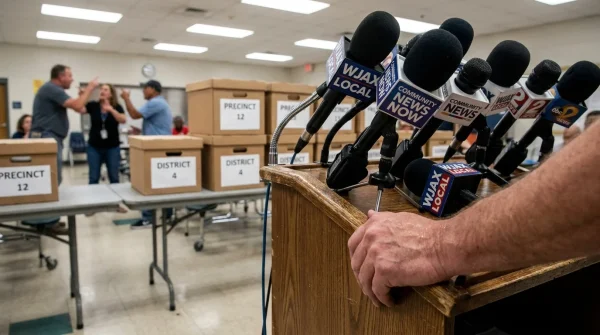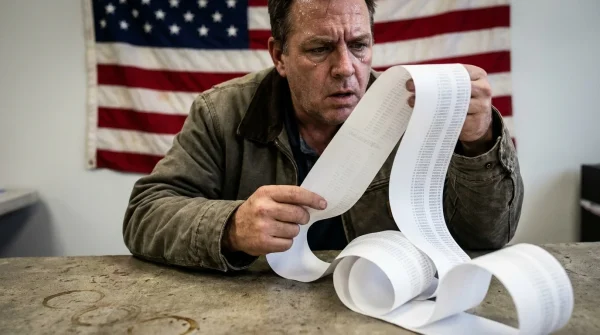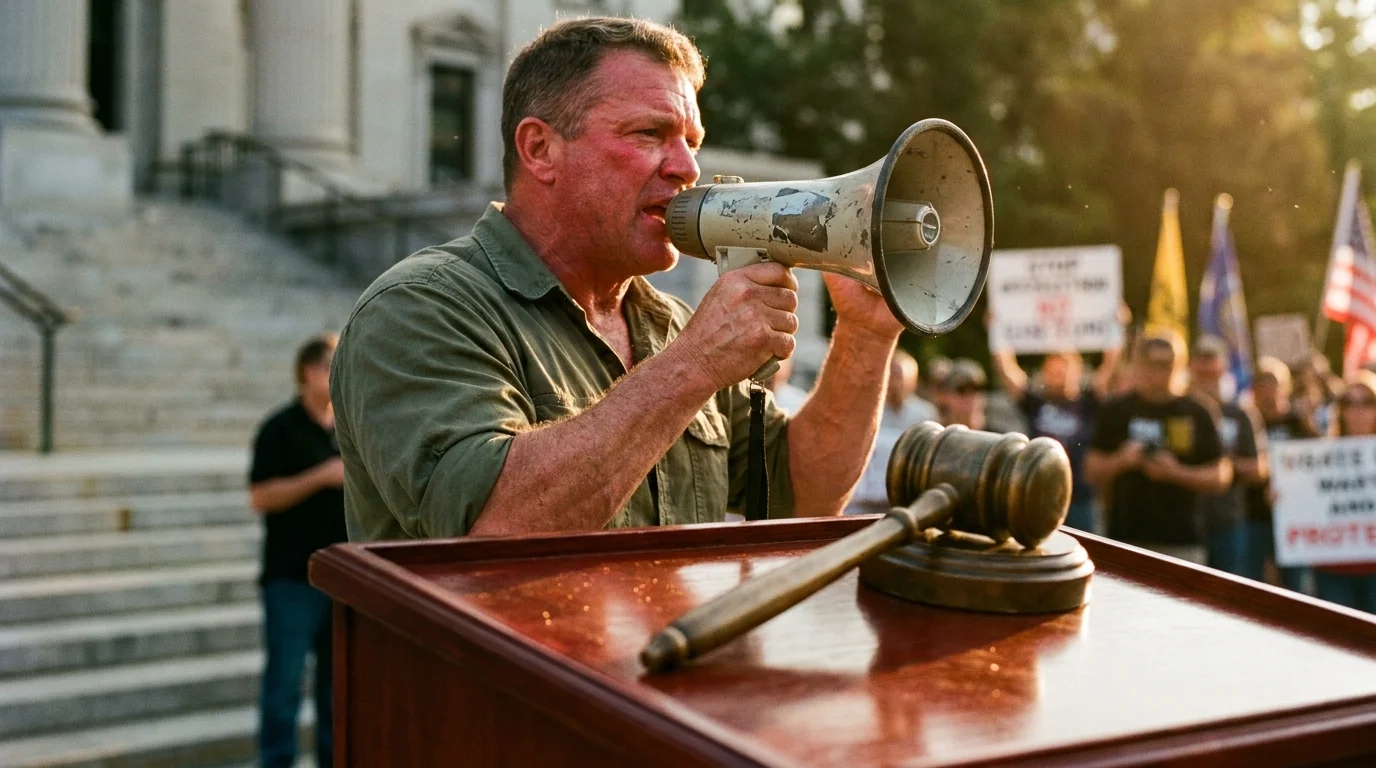
A bronze committee gavel rests heavily on the dark cherry wood dais of the Dirksen Senate Office Building, catching the sharp glint of overhead television lights. The air inside the hearing room carries the faint scent of old cardstock and stale drip coffee, an unassuming backdrop for what was supposed to be a five-minute roll-call vote. Instead, the quiet drone of congressional scheduling has evaporated into sharp exchanges, whispered staff huddles, and sudden procedural maneuvers that echo down the corridor.
For decades, you have seen military advancement treated as administrative machinery humming along behind the scenes. Hundreds of mid-career field officers advance every spring through voice votes that take less time than brewing a cup of tea. Yet today, unanimous consent has ground to a dead halt, caught on the single nomination sheet bearing the name of Major Jason Watson.
The sudden gridlock over Watson’s promotion to Lieutenant Colonel pulls back the curtain on how national defense authority is negotiated in Washington. What looks from the outside like a standard administrative hurdle is actually a fierce battle over who ultimately holds the steering wheel of the modern military apparatus: career Pentagon planners or elected civilian oversight.
The Friction Point: When Routine Process Meets Policy Leverage
To grasp why this hearing turned volatile so quickly, you have to look at the Senate floor not as a courtroom, but as a high-stakes railway switchyard. Most promotions move on a single freight track called unanimous consent. If every single senator remains silent, an entire slate of officers moves forward together without formal floor speeches or individual tallies. However, if a single lawmaker raises an index finger, that smooth line snaps shut instantly, forcing leadership to burn valuable days of floor time on individual debates.
That is the leverage currently freezing Major Jason Watson’s military career. The roadblock is not tied to a single tactical misstep on the battlefield; rather, Watson has become the human fulcrum in an ideological tug-of-war. Lawmakers are using the confirmation process to contest the boundaries of Pentagon command authority, operational autonomy, and executive policy directives.
Consider Elena Vance, a 48-year-old defense policy analyst who spent fifteen years drafting legislative authorizations inside the Russell Building. She describes the atmosphere during these procedural deadlocks as a calculated waiting game. According to Vance, the hold on Watson’s advancement was quietly drafted two weeks before the cameras ever rolled, intended specifically to force the Department of Defense to hand over sensitive briefing records on decentralized command decisions before the upcoming fiscal deadline.
- Donald Trump state approval ratings reveal sudden suburban voter drift across Sunbelt precincts
- Ed Markey debate clashes expose bitter Democratic splits over clean energy infrastructure
- Manchester Union Leader front pages derail primary campaigns across icy snowbank doorsteps
- Crowdpac digital donor prompts strip working balances with blinking green recurring buttons
- Oval Office signing pens switch binding administrative policy with heavy black ink strokes
The Battle Lines: Factions Dividing the Hearing Room
The split down the committee dais reflects two distinct philosophies of civilian oversight, each pulling the armed services committee in opposite directions.
The Institutionalists argue that weaponizing individual promotions damages troop readiness and breaks the sacred, nonpartisan contract between field commanders and Capitol Hill. From their perspective, halting an officer with an unblemished operational record injects political calculation into unit-level cohesion, signaling to mid-career officers that merit takes a back seat to legislative theater.
The Oversight Hawks counter that confirmation power is the only genuine lever the legislative branch retains over a multi-billion-dollar defense apparatus. For this faction, procedural holds are not temper tantrums; they are constitutional checks. By refusing to rubber-stamp promotions, they demand immediate transparency regarding controversial Pentagon command shifts, structural reorganizations, and overseas administrative postures.
Behind Closed Doors: The Compromise Amendment
While fiery soundbites dominate the news cycle, the real resolution is being hammered out in the quiet antechambers behind the hearing room. Staff directors are currently trading markups on a compromise amendment designed to break the deadlock without either side losing face.
Understanding this balance gives you a clear map of where defense policy is heading over the next quarter:
- Targeted Audit Language: Requiring the Pentagon Inspector General to submit quarterly command assessments in exchange for releasing Watson’s individual hold.
- Carve-Out Confirmations: Splitting field-grade promotions off from broader general-officer packages to avoid stalling tactical-level leadership.
- Floor-Time Compromises: Allocating two hours of structured debate rather than consuming multiple days with procedural cloture motions.
Tracking the Stakes: A Structural Comparison
To see how this standoff directly affects Pentagon operations and legislative momentum, review the moving parts currently on the table:
| Key Point | Detail | Added Value for the Reader |
|---|---|---|
| Nomination Standstill | Individual hold placed on Major Watson’s advancement. | Demonstrates how a single lawmaker can freeze critical promotions to force institutional changes. |
| Compromise Markup | Bipartisan reporting requirements tied to command protocol. | Highlights the exact concessions the Pentagon must deliver to resume standard voting rhythms. |
| Readiness Fallout | Gaps in mid-tier command billets across operational units. | Reveals why administrative delays in Washington produce direct friction for active deployments. |
The Bigger Picture: Reclaiming Insight Into the Machinery
When you watch the evening coverage, it is easy to view these Senate clashes as mere political theater. But watching the process with an informed eye reveals something much more consequential: the continuous, friction-filled calibration of constitutional checks and balances. The sudden pause on Major Jason Watson’s career proves that no seat of authority in American governance runs on autopilot.
By looking past the partisan posturing and focusing on the underlying mechanics—the rules of unanimous consent, committee holds, and statutory compromises—you gain a clear view of how military policy actually gets shaped. Power on Capitol Hill is rarely seized in broad strokes; it is contested, inch by inch, behind the quiet weight of a committee gavel.
“Civilian oversight is not a polite procedural formality; it is the constitutional friction that keeps military power accountable to the public.”
Frequently Asked Questions
Why is Major Jason Watson’s promotion being held up individually?
Individual holds are used by senators as legislative leverage to extract specific documents or policy concessions from the Department of Defense before consenting to personnel votes.Does a committee hold mean the promotion is permanently canceled?
No. A hold simply prevents the promotion from passing via rapid unanimous consent, forcing leadership to schedule full floor debate unless a compromise is reached.How are routine military promotions usually handled?
Most field-grade and general-officer promotions are bundled together on unanimous consent calendars and approved en masse without individual roll-call votes.What is the compromise amendment currently being discussed?
Lawmakers are drafting language that pairs Watson’s confirmation with strict reporting requirements on Pentagon command structures and operational transparency.Why does this dispute matter beyond this specific hearing?
It sets a precedent for how aggressively Congress can use individual military confirmations to influence internal defense strategy and administrative authority.