The carpet inside the United States Senate chamber softens every footstep into a muted rustle, but when late afternoon maneuvers begin, the silence turns brittle. You can hear the low clatter of clerks tallying roll call sheets on mahogany desks and the faint hum of air circulating through antique brass grilles overhead. While cable networks broadcast heated stump speeches from the Capitol steps, the real collision unfolds without raised voices, governed entirely by the sharp flick of an index card and the cold math of unanimous consent objections.
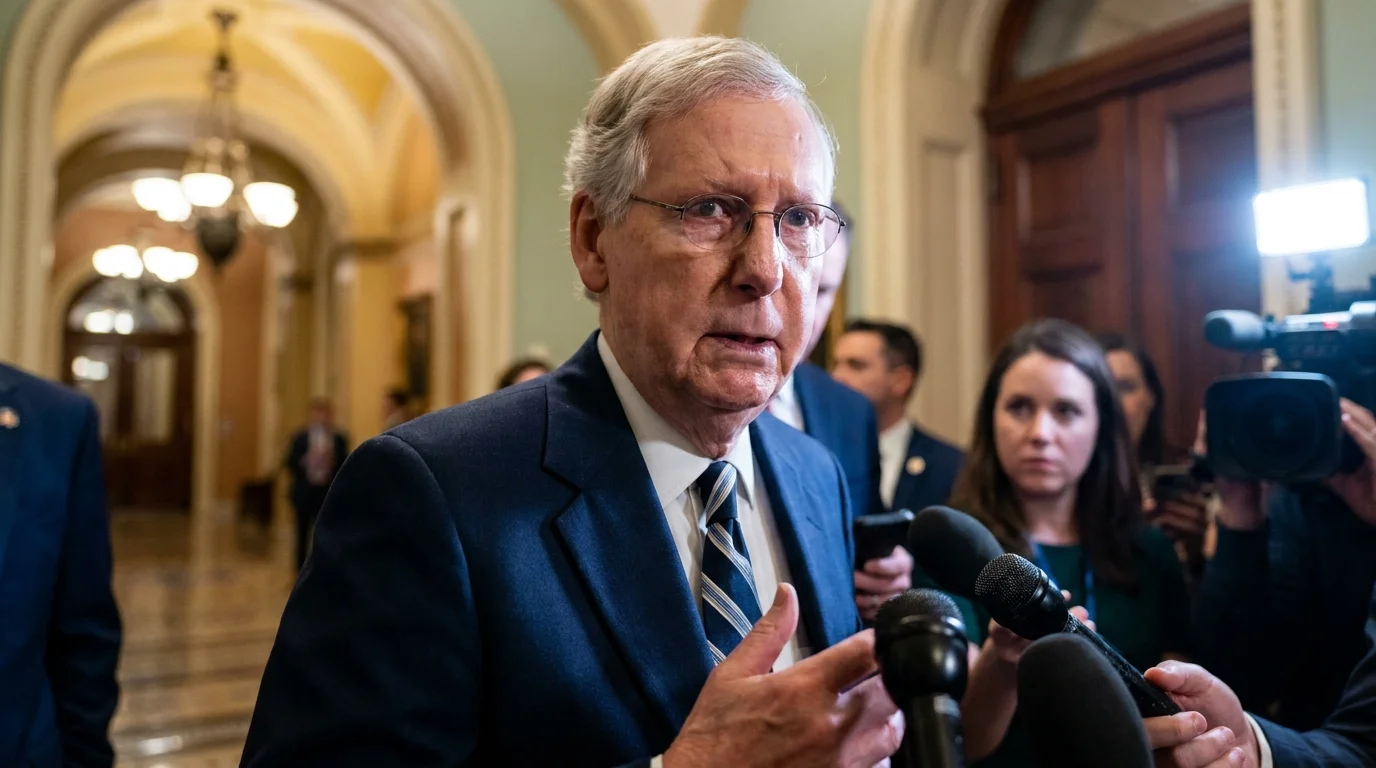
When Senator Mitch McConnell floor maneuvers intercepted the emergency Ukraine defense spending package, the shockwave was not born from ideological shouting matches. It was born from procedural mechanics. Standing by his front-row desk, McConnell signaled a calculated halt, demonstrating how a seasoned floor manager can freeze billions of dollars in foreign military financing without surrendering a single inch of political capital.
You might expect a national defense debate to pivot on passionate foreign policy speeches or late-night caucus arguments. Yet the professional reality of the upper chamber is far more clinical. Legislation rarely dies because an idea is unpopular; it stalls because someone with mastery over the standing rules decides to run down the clock until the calendar itself becomes an immovable wall.
Understanding this sudden floor standoff requires pulling back the velvet drapery of the Capitol. It asks you to look past partisan outrage and see the precise gears of leverage, calendar friction, and upcoming fiscal deadlines that quietly dictate how federal power actually moves.
The Chamber as an Engine of Kinetic Friction
Most citizens view congressional votes as simple binary choices: yes or no, approve or reject. But inside the Senate, the true currency is friction against the calendar. Think of floor time like an airport runway during a blinding snowstorm; every plane idling on the tarmac burns fuel, and delaying one international flight forces domestic carriers to divert, circle, or cancel altogether.
By blocking procedural cloture on the emergency supplemental, McConnell did not merely pause military procurement contracts across the Atlantic. He deliberately stacked the runway. When a leadership team denies the sixty votes required to end debate, they trigger a cascade of mandatory waiting periods, quorum calls, and statutory delays that push every other domestic obligation closer to a fiscal cliff.
This maneuver reframes the conversation entirely. It is not an abandonment of traditional national security doctrine, but an aggressive exercise in conditional sequencing. By choking off emergency overseas aid, leadership forces the opposing party to choose between surrendering concessions on contentious domestic statutes—such as border security authorities—or watching regular discretionary spending lapse into a partial government shutdown.
- Voter registration forms invalidate thousands of primary ballots over missing middle initials
- Agricultural transport waivers expire tonight halting regional produce shipping across state borders
- County levee bonds trigger massive escrow impound spikes on suburban mortgage accounts
- Real ID renewals quietly invalidate municipal voter registrations ahead of early voting
- Municipal transit concessions eliminate discount commuter fares triggering furious rider boycotts
The Parliamentarian’s Ledger
Consider Arthur Vance, a 54-year-old veteran legislative analyst who spent twenty years advising municipal bond houses before monitoring Senate procedural mechanics from an office just off Constitution Avenue. Vance does not watch floor debates with the sound turned up; he watches the clerk’s left hand and the sequence of filed amendments on the daily calendar. Vance observed that McConnell’s motion to table was not meant to kill the spending framework permanently, but to extract leverage before the next continuing resolution expires at midnight on the coming Friday. To an observer like Vance, the maneuver was a masterclass in treating statutory funding deadlines as tripwires rather than negotiations.
How the Standoff Impacts Different Sectors
The consequences of a Senate floor blockade are never uniform. Depending on where your household sits within the broader economy, the secondary waves of this impasse reveal themselves through distinctly different channels.
For Defense Contractors and Industrial Suppliers
When supplemental packages stall, line-item contract authorizations freeze instantly across regional supply chains. In manufacturing hubs throughout Ohio, Pennsylvania, and Alabama, mid-tier aerospace suppliers cannot cut advance purchase orders for specialized alloys or titanium fasteners. The delay acts like a sudden kink in a garden hose; water pressure spikes at the spigot, but nothing reaches the dry soil downstream until the procedural logjam clears.
For Municipal Bond Issuers and Local Infrastructure
Federal fiscal friction radiates downward into local county treasuries. When congressional leadership plays chicken with emergency defense spending, the broader omnibus appropriations bills are dragged into the quagmire. State transportation boards and school districts awaiting clarity on matching grants find themselves operating in an administrative fog, often forced to issue short-term tax anticipation notes at elevated interest rates while Washington sorts out its calendar.
For Everyday Taxpayers Tracking Household Budgets
It can feel tempting to treat these foreign aid battles as distant abstractions. Yet the procedural gridlock directly dictates whether Congress will pass clean extensions on everyday household concerns, from flood insurance backing to farm bill nutrition programs. When floor time is consumed by procedural wrestling matches, routine reauthorizations get shoved onto the back burner, leaving middle-class families exposed to sudden administrative lapses.
Mindful Observation: Navigating the Fiscal Calendar
Watching federal politics without understanding procedural leverage breeds cynicism. Tracking the actual milestones, however, gives you clarity and peace of mind.
You do not need to memorize every clause of the Senate rules to anticipate the next move. Instead, focus your attention on the mechanical indicators that signal when a manufactured stalemate is preparing to crack.
- Watch the Rule XXII Cloture Petitions: When leadership files a petition to end debate, the clock starts running on thirty hours of post-cloture floor time. This is where real compromises are hammered out behind closed doors.
- Track the Continuing Resolution Cliff: Standoffs over emergency funding rarely resolve until the primary budget deadline is less than forty-eight hours away. The calendar is the only arbiter both parties respect.
- Observe the Amendment Tree: If the Majority Leader fills the amendment tree, minority leadership responds by freezing unanimous consent. When you see empty amendment dockets, an agreement on votes is near.
- Monitor the Monday Evening Vote: Decisive procedural breaks almost always occur during the ceremonial 5:30 PM Monday roll call, when senators return from their home districts.
The Tactical Legislative Toolkit
Keep these procedural parameters in mind as you assess the standoff:
- 60 Votes: The non-negotiable threshold required to invoke cloture on an emergency spending bill.
- 30 Hours: The mandatory post-cloture debate clock that consumes valuable calendar days unless waived by all one hundred senators.
- Midnight Friday: The traditional statutory expiration mark for federal continuing resolutions, serving as the psychological trigger point for consensus.
The Clear View Through the Static
It is easy to get swept away by the high-decibel outrage that follows every high-profile floor vote. The noise is designed to provoke emotional reactions, but the actual machinery of governance operates on friction, leverage, and temporal endurance. When veteran leaders lock the gears of the Senate, they are not acting on impulse; they are playing an intricate game of positional chess where patience is the sharpest weapon on the floor.
When you understand that these standoffs are structured mechanisms rather than spontaneous breakdowns, the political theater loses its power to disorient you. You stop waiting for sudden speeches to change minds and start watching the calendar deadlines that force institutional hands. In a modern democracy, mastering the quiet mechanics of power is the surest way to keep your bearings intact.
The Senate floor is not designed to produce speed; it is engineered to measure exactly how much pressure each party can endure before the clock runs out.
| Key Point | Detail | Added Value for the Reader |
|---|---|---|
| Floor Maneuver Mechanic | Filibuster threat via cloture obstruction on emergency funding | Reveals why foreign aid gets tied to domestic border priorities |
| Calendar Friction | 30-hour debate rules burn floor time before funding deadlines | Explains why minor delays trigger massive government shutdown risks |
| Economic Downstream | Freezes advance procurement orders and local matching grants | Connects Washington gridlock directly to regional industrial stability |
Frequently Asked Questions
Why did Mitch McConnell block the emergency Ukraine package if he historically supports defense spending?
McConnell used procedural blockage not to abandon defense priorities, but to force Senate Democrats and the White House to include strict border enforcement measures within the same legislative vehicle before approaching annual fiscal deadlines.What procedural tool was used to halt the defense spending bill?
The minority party withheld the sixty votes necessary to invoke cloture on the motion to proceed, preventing the majority from advancing the bill to a simple-majority passage threshold.Does this floor vote mean Ukraine defense funding is permanently dead?
No. In the Senate, a failed cloture vote is frequently a stalling tactic to renegotiate text, meaning the funding will likely resurface inside a broader omnibus package once leadership reaches a compromise.How does this standoff affect upcoming federal government funding deadlines?
By consuming days of available floor time with procedural debate, the standoff compresses the window Congress has to pass regular appropriations, substantially increasing the odds of a short-term stopgap extension.What should citizens watch for to see if a deal is imminent?
Watch for a sudden agreement to yield back post-cloture debate time, which signals that party leaders have settled on an agreed slate of floor amendments behind closed doors.