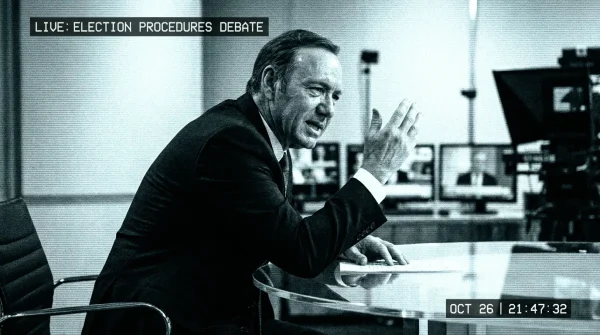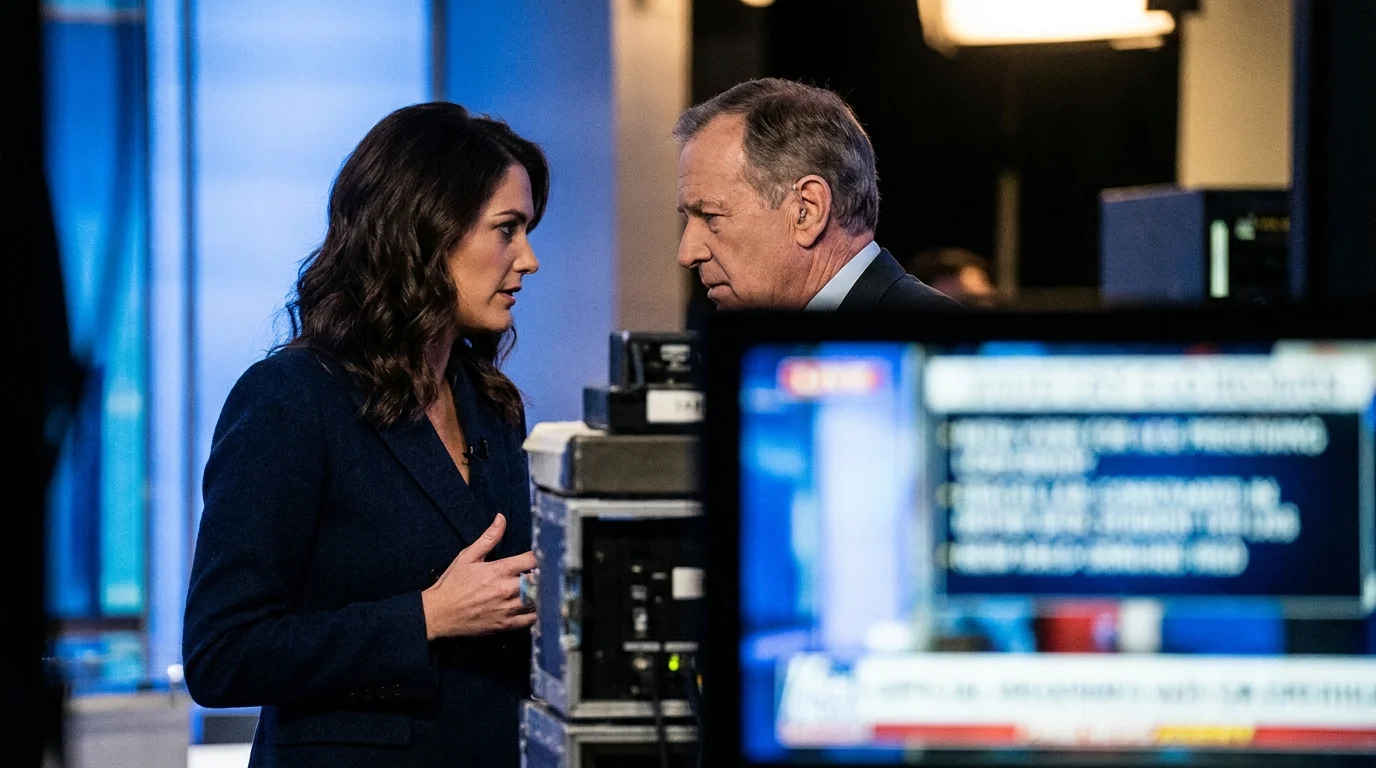
The studio floor hums with the dry, ozone crackle of fifty-thousand-watt overhead lamps, an artificial daylight that never softens. You hear the sharp click of ballpoint pens against glass desks, the muted rustle of printouts shuffling, and the sudden, breathless silence that drops right before the red tally light snaps alive. Across five split screens on the studio wall, the identical sixty seconds play out in real time. Jessica Tarlov leans forward on set, framing a rapid statistical counter-argument, while her co-hosts shake their heads, shift papers, and interrupt with sharp rhetorical jabs.
Yet twenty minutes later, when you tap your phone screen on your evening commute, that shared studio disappears entirely. If your digital habits skew conservative, your social media feed serves you a sixty-second vertical video titled with ruthless certainty: an insurgent voice dismantled, caught flat-footed, and silenced by an unflinching co-host. The cut arrives abruptly, shaving off Tarlov’s counter-rebuttal, freezing her mid-blink under a wash of triumphant thumbnail graphics.
Swipe across to a different account, or let the algorithm pivot into left-leaning media spaces, and the very same sixty seconds tells an inverted story. Here, the audio level of the opposing host is dipped, the framing focuses tightly on Tarlov’s steady recitation of bureaucratic ledger figures, and the video cuts out the moment the panel pushes back. You are left watching what looks like an undeniable masterclass in factual dominance. Two entirely separate narrative victories emerge from a single live breath, built for audiences who will never see the uncut tape.
What feels like a spontaneous television debate is actually raw material mined for digital assembly lines. Understanding this split is not about deciding who won the five-minute cable panel; it is about recognizing how the mechanics of contemporary broadcasting cut up reality to keep your pulse racing and your attention captive.
The Two-Way Mirror: How Algorithms Fracture One Second of Tape
To grasp why these clashes cause such whiplash, you have to abandon the old belief that cable news broadcasts are primarily meant to be watched live on a television set. The five o’clock panel show is no longer an end product; it is an open quarry. Producers, independent clip aggregators, and social editors gather around the daily broadcast the way stonecutters view a slab of marble, searching only for the fault lines that can be split into thirty-second emotional hits.
Think of the broadcast as an audio engineer treats an isolated track. When a multi-track recording enters a mixing bay, an engineer can dial the bass so low it vanishes, or crank the snare until it rattles your teeth. Modern partisan clip factories do the exact same thing with editorial focus. They apply selective cropping, micro-second trims, and deliberate audio leveling to construct opposing versions of reality. If you only witness the clipped snippet, your brain naturally supplies the missing context using whatever political convictions you already hold dear.
- Bucks County housing clashes shatter suburban party loyalty ahead of 2026 elections
- Donald Trump audio leak hoax triggers national outrage after foreign server traces
- Maurene Comey DOJ lawsuit leaks spark West Wing panic over sudden retaliation claims
- Sackett wetland property rulings freeze municipal public works contracts across county development boards
- Citigroup municipal bond bans trigger swift state legislative retaliation over controversial corporate policies
This editing machinery operates on a fundamental truth: nuance produces boredom, but grievance keeps screens glowing. When Jessica Tarlov clashes with Jeanine Pirro or Jesse Watters on a syndicated set, the conflict is not designed to find an intellectual middle ground for the viewer at home. It is engineered to give every viewer on every platform a bite-sized trophy of cultural validation.
Marcus Vance, a 34-year-old digital archivist and former overnight video editor for a Washington media watchdog, spent four years logging these real-time transformations. During the midterms, Vance watched two rival production rooms take an identical eighty-second exchange between Tarlov and her colleagues regarding municipal job numbers. One control room trimmed the front four seconds to make Tarlov look unprepared; the other trimmed the trailing ten seconds to make the conservative desk look stunned. “We weren’t editing information,” Vance shared with me over black coffee in Arlington. “We were shaving milliseconds off human reactions to manufacture micro-second humiliations. The audience never stood a chance.”
Anatomy of the Cut: The Three Digital Editing Layers
The divergence between what airs on national cable and what lands in your handheld feed is not an accident of brevity. It follows a structured technical template designed for maximum psychic friction. When an exchange between Tarlov and her co-hosts breaks across national platforms, it undergoes three distinct operational filters:
The Audio Pacing Filter
Human speech in a debate naturally features hesitation—short pauses where a speaker searches for a citation, or inhales before parrying an interruption. Algorithmic editors run speech through silence-removal automation, stripping out breathing room. In conservative highlight reels, Tarlov’s natural breath pauses are extended by fractions of a second to read as hesitation, while her opponent’s interruptions are clipped cleanly to sound immediate, crisp, and authoritative. Conversely, progressive-leaning channels compress Tarlov’s delivery into an uninterrupted, breathless barrage of data points, removing all counter-chatter to make her appear entirely unchallenged.
The B-Roll Reaction Frame
In a live studio broadcast, the control room frequently cuts to wide shots showing all five panelists listening or scribbling notes. In digital cuts, wide shots are poison because they show human ambivalence. Instead, mobile clips employ heavy digital zooms. If Tarlov presents an economic metric, the conservative edit crops tightly on a co-host rolling their eyes or chuckling, visually signaling to you that the argument is absurd before you even evaluate the claim. In the opposing edit, that eye-roll is excised, replaced with a frozen, solemn shot that implies her opponents are cornered and speechless.
The Truncated Resolution
The most consequential distortion happens at the tail end of the clip. True policy discussions are messy; they rarely end in a checkmate. One speaker cites a bill, the other counters with an enforcement loophole, and the segment producer wraps the block to go to a commercial break for arthritis medication. But digital feeds demand closure. The final three seconds of every viral clip invariably silence one party mid-sentence, leaving the chosen protagonist with the unquestioned final word. By eliminating the rebuttal, the platform sells you certainty where only ambiguity existed.
Reclaiming Your Focus: How to Audit a Cable Clip in Real Time
You do not have to fall for the emotional ambush every time a polarizing political exchange surfaces on your timeline. With a few deliberate checks, you can strip the manufactured drama away from the underlying facts:
- Check the timestamp counter: Watch the lower-third graphic or ticker on the screen. If the broadcast clock skips forward three seconds during a heated sentence, you are watching an engineered narrative, not a conversation.
- Listen for the audio seam: Pay close attention to the background studio hum. If the ambient room tone cuts abruptly or jumps in pitch right before a zinger, an editor has spliced two unrelated moments together to simulate a quick comeback.
- Track the eye lines: Look at where the speakers are gazing. When a panelist appears to be glaring directly down an opponent’s throat in a digital vertical cut, check the studio geometry. Often, they are looking across at an off-camera teleprompter or a floor producer signaling a break, not staring down their colleague.
- Find the unedited block: Before sharing or reacting to a thirty-second clash, seek out the full seven-to-ten-minute unedited segment on a neutral broadcast archive. You will almost always find that the supposed knockout blow was met with a reasoned, mundane operational reply that deflated the spectacle.
The Real Payoff of Seeing the Machinery
When you begin to identify these subtle production tricks, something unusual happens: the outrage drains away. The sudden spike of irritation that usually accompanies a punchy political clip softens into a calm, detached curiosity. You stop viewing television debaters as gladiators locked in an existential war for the republic, and you start seeing them as skilled professionals executing their daily tasks within an attention economy built to harvest your stress.
The media ecosystem counts on your willingness to accept a cropped frame as an absolute truth. It relies on the warmth of belonging to a tribe that always lands the sharpest counter-punch. But when you step back and see both feeds side-by-side—watching how easily sixty seconds of human speech can be chopped into opposite mirrors—you take back your cognitive freedom. You stop letting an editor in a production booth determine what you believe about your neighbors, and that clarity is worth far more than the temporary high of an algorithmic victory.
Real media literacy is not about deciding who won the argument; it is about catching the invisible cut that made you believe someone was destroyed.
| Editorial Dimension | Broadcast Reality (The Uncut Tape) | Algorithmic Cut (The Viral Feed) |
|---|---|---|
| Pacing & Tone | Messy, overlapping dialogue with natural pauses, conversational corrections, and collaborative panel banter. | Frenetic, jump-cut speech stripped of breaths to simulate rhetorical dominance or devastating defeat. |
| Visual Composition | Wide master shots establishing physical studio distance and casual nonverbal listening cues. | Extreme dynamic zooms on reaction faces, framing mundane posture shifts as outrage or fear. |
| Audience Value | Exposes complex regulatory tensions and the real-world trade-offs inherent in national policymaking. | Delivers instant tribal dopamine that deepens political isolation while masking practical legislative compromise. |
Frequently Asked Questions
Why do networks allow their commentators to argue so fiercely on camera?
Conflict is the primary engine of modern cable news engagement. Structured studio clashes generate high-stakes drama that retains daytime viewers and provides continuous raw video assets for social media teams to distribute across platforms.Does Jessica Tarlov choose which clips get posted online?
No. On-air contributors generally have zero control over how third-party aggregators, network digital teams, or political commentators crop, title, and distribute their live segments on social platforms.How can I find the full context of a viral debate exchange?
Look for the complete episode broadcast on official network archives, public streaming libraries, or non-partisan transcription services like C-SPAN or the Internet Archive rather than relying on short vertical video clips.Why does one network panel clash look completely different on YouTube versus TikTok?
Different platforms prioritize different emotional hooks. Longer video platforms favor extended monologues that simulate deep analysis, while short-form feeds rely on rapid jump-cuts and bold on-screen text to hook scrolling viewers within two seconds.Is this editing style legally considered deceptive news?
No. Opinion-panel programs and commentary segments fall under protected fair use and editorial discretion, meaning producers and independent creators have wide legal latitude to edit footage for dramatic narrative effect.