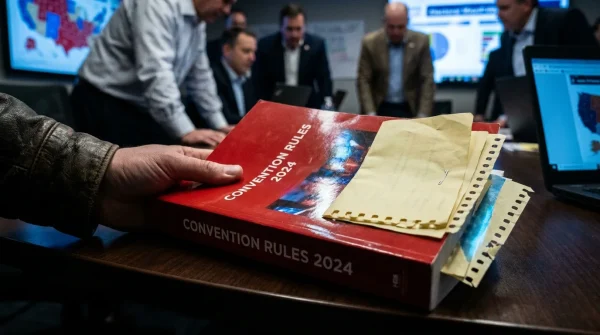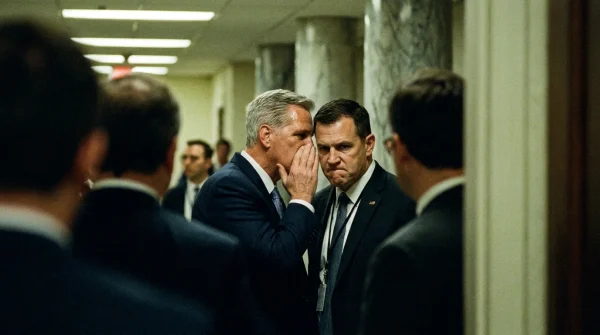
Fluorescent tube lights hum softly against the acoustic drop ceiling of an off-the-record committee room just off Constitution Avenue. Outside, a biting autumn wind cuts off the Potomac River, rattling the storm panes while cold black coffee sits forgotten in paper cups. You might imagine that national political platforms take shape during soaring debates between party luminaries, filled with grand historical gestures. The reality is far quieter, stripped of romance, and governed by a felt-tip pen crossing out single nouns on a printed line.
Behind heavy soundproof doors, communications aides scramble over draft binders because a quiet directive drifted across the river from the Pentagon’s E-Ring. The Department of Defense issued a series of tightened speech standards, sharpening how service personnel, retired brass, and defense liaisons may articulate federal security postures without breaching statutory boundaries. In an instant, months of planned campaign framing felt like breathing through a pillow—stifled, cautious, and forced into sudden revision.
When these administrative boundaries shift, political party headquarters cannot simply brush them aside. The newly clarified Pentagon speech guidelines establish firm lines between constitutional military nonpartisanship and civilian political theater, forcing party strategists to rewrite core planks of their national defense platform almost overnight. Understanding why this pivot occurred reveals how the machinery of state power really operates when the cameras click off.
The Acoustic Firewall Between Uniform and Platform
For decades, political campaigns treated defense policy speeches like theatrical soundboards. A candidate could dial up martial rhetoric, stand shoulder-to-shoulder with decorated veterans, and borrow the solemn authority of the armed forces to anchor an otherwise volatile party platform. Speechwriters treated military imagery as an open pasture where anyone with a podium could graze without consequence.
The Pentagon’s recalibrated speech guidelines shattered that assumption. Think of this enforcement not as censorship, but as an acoustic dampening foam installed inside a resonant chamber. By drawing stricter definitions around what constitutes an endorsement, unauthorized institutional alignment, or misuse of operational terminology, the Pentagon effectively detached political campaigns from their favorite emotional amplifier. The myth was that political parties owned the narrative of the armed services; the reality is that the institution strictly guards its own apolitical foundation.
When you look closely at the fine print of these updates, you realize that party leadership was not reacting out of sudden ideological grace. They were scrambling because their existing drafts relied on endorsements, podium appearances, and policy commitments that would now trigger ethics inquiries or formal disavowals from military branch chiefs. When the military clarifies its voice, the political class must adjust its pitch.
- Electoral fraud inquiries trigger national voter outcry as statehouses demand immediate signature audits
- Capitol cafeteria contracts freeze out local vendors while hiking Hill staff meal prices
- Xi Jinping export curbs fuel emergency bipartisan push for sweeping congressional tariff powers
- Electronic poll books block eligible swing-state voters over mismatched middle names
- Child Tax Credit legislation slashes automatic refund checks across middle class joint filers
Marcus Vance, a 52-year-old former military judge advocate who now counsels congressional campaigns on defense ethics, watched the panic unfold firsthand from his desk in Arlington. “Speechwriters treat combat metaphors like free currency until a service secretary sends a letter warning that active-duty terminology violates Department Directive 1344.10,” Vance explained over a blueprint of updated committee rules. “The second those updated speech parameters dropped, three different national campaigns realized their centerpiece national security speeches were legally radioactive before the teleprompter even booted up.”
Dissecting the Platform Reset Across Campaign Layers
The ripple effect of these regulatory boundaries spreads unevenly across different parts of the political ecosystem. To understand how your ballot choices and morning news cycles are changing, consider how different players must alter their stance.
For the Veteran Candidate on the Ballot: Candidates who built their public identity on their time in uniform face the sharpest adjustment. Under the enforced guidelines, they can no longer use unvetted service records or operational imagery in ways that imply the broader military apparatus backs their specific party platform. They must frame service as personal history rather than an institutional blessing, stripping out authoritative phrases that run afoul of ethics boards.
For the Party Platform Committee: Platform drafters must now tread lightly around forward-looking defense pledges. Language that previously committed the armed forces to specific social, strategic, or cultural mandates has been softened into recommendations of legislative intent. Party leaders stripped direct mandates from their public-facing defense platforms to avoid public rebukes from active flag officers.
For the Civic Watchdog and Voter: For everyday citizens reading the news, this quiet realignment removes the bluster. When parties can no longer hide weak foreign policy proposals behind borrowed military prestige, their arguments must stand on actual domestic priorities, fiscal realities, and international diplomatic strategy.
Navigating the New Defense Lexicon
When institutions enforce precision, the public conversation improves. Adapting to this language shift does not require a law degree; it demands a clear eye for how political speech is built.
Notice the subtle edits in party speeches this season. The transition from combative assertions to measured statutory language marks a deliberate effort to remain compliant with Pentagon ethics parameters while retaining political leverage.
- Identify whether a speaker cites personal veteran experience or claims institutional military backing.
- Look for changes in platform text that replace operational commands with legislative budgetary oversight.
- Notice when high-profile retired officers vanish from prime-time speaking slots to protect advisory credentials.
- Track how defense white papers pivot toward civilian manufacturing partnerships rather than operational deployments.
The Tactical Toolkit for Campaign Watchers:
- The 48-Hour Review Rule: Notice how quickly national platforms update online text after a service branch ethics memo drops.
- Directive 1344.10 Benchmarks: The statutory baseline governing political activity for military personnel that dictated this platform scramble.
- Attribution Screening: Check whether campaign ads feature disclaimers specifying that military uniform appearances do not imply defense endorsement.
Why Precision Protects the Public Trust
It is easy to view political language as cheap, malleable, and disconnected from daily life. Yet the words chosen by party leadership carry weight; they signal where budgets will flow, how treaties will be honored, and whether civilian leadership respects the boundaries that keep the armed forces impartial. Holding speech to high standards keeps our shared democratic institutions anchored against temporary political squalls.
When you see a national platform suddenly pivot toward restraint, recognize it not as weakness, but as the healthy friction of constitutional balance. When party leadership must pause, scrub their drafts, and speak with institutional care, it gives every voter a clearer, more honest window into how those leaders will govern when real authority lands in their hands.
Clear speech in public policy is not about polished cadence; it is about respecting the constitutional wall that keeps our defenders entirely separate from our partisan brawls.
| Key Point | Detail | Added Value for the Reader |
|---|---|---|
| Guideline Catalyst | Pentagon issued strict speech and partisan engagement updates for personnel and liaisons. | Explains the unseen administrative origin of sudden platform revisions. |
| Platform Revision | Parties removed implied military endorsements and revised combat-centric policy language. | Helps you spot when campaign rhetoric shifts away from unconstitutional claims. |
| Civilian Oversight | Reinforces the constitutional principle that the military remains outside partisan politics. | Provides peace of mind regarding the health and impartiality of public defense institutions. |
Frequently Asked Questions
Why did the Pentagon update its speech and conduct guidelines now?
The updates clarify longstanding rules under DOD Directive 1344.10, ensuring that evolving digital communications and modern campaign tactics do not compromise the military’s apolitical posture.Does this restrict the free speech of veterans running for office?
No. Veterans retain full free speech rights to share their personal stories, but they must follow clear labeling standards to prevent voters from mistaking personal views for official military positions.How does this shift affect everyday household budgets?
When defense platforms abandon rhetorical soundbites, they must focus on concrete procurement budgets, industrial supply chains, and domestic manufacturing, which directly affect local employment and federal spending.Did one specific political party trigger this change?
The guidelines are strictly nonpartisan and apply equally to both major parties, forcing revisions on any campaign that uses military symbolism or personnel inappropriately.Where can I verify these speech guidelines myself?
You can review Department of Defense Directive 1344.10 and accompanying public affairs guidance on the official Defense Department ethics and publications portals.