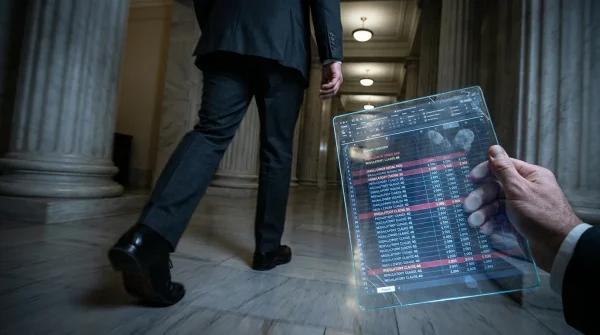
The high school gymnasium smells of floor wax, damp coats, and lukewarm urn coffee. You step forward to the folding table, hand over your driver’s license, and wait for the familiar chirp of civic duty. Instead, the poll worker tilts the tablet, squinting at the glass. They tap once, swipe down, and tap again. The screen does not show a green checkmark; it shows a flat, gray line or an amber alert box.
You have lived at the same street address for nine years, voted in every off-year local contest, and confirmed your registration status online three weeks ago. Yet the volunteer looks up with an apologetic, weary expression that makes your stomach tighten. A silent database mismatch has just quietly severed you from the voter roll right at the check-in desk.
What went wrong took place miles away in a state server rack running an automated string comparison. When your county migrated its records into the newest precinct management software, your state motor vehicle record carried your full middle name, while your county voter file logged only an initial—or dropped it entirely. To a human clerk with a paper ledger, this is an obvious match; to a brittle algorithm running an electronic poll book, it is a non-existent citizen.
The False Finality of the Tablet Screen
For decades, precinct check-in relied on heavy, spiral-bound paper rosters printed forty-eight hours before dawn. If a middle initial was missing, a precinct judge glanced at your signature, checked your house number, and handed you a pencil. The transition to electronic poll books was sold as a safeguard against long lines and double-voting. Instead, it introduced a new brand of digital friction: strict string matching that treats everyday typographical variations like identity theft.
Think of an electronic poll book not as an infallible legal judge, but as an unforgiving, rusty lock. The software demands exact alignment across every single data field before the tumblers fall into place. If your name has a hyphen, a generational suffix like ‘Jr.’, or a middle name that was truncated by an old database export, the query returns a false negative. The tablet flashes a warning, and the poll worker instinctively reaches under the desk for a provisional ballot envelope.
Accepting that provisional envelope without question is often where your vote effectively disappears. In closely watched swing counties, tens of thousands of provisional ballots end up rejected during post-election canvassing because administrative boards rule that the voter failed to cure a minor registration mismatch within forty-eight hours. The critical shift you must make is realizing that the tablet is merely a search engine, not statutory law.
Eileen Morrison, a 61-year-old chief precinct clerk in Northampton County, Pennsylvania, spent twenty-two years checking names off paper binders before her precinct switched to networked tablets. ‘The machines are fast when someone has a single, plain surname and zero bureaucratic footprint,’ Morrison confided during a recent precinct training session. ‘The moment someone has two middle names on their license and one on our state voter registration export, the machine throws its hands up. Half the poll workers freeze and try to send folks to the provisional table because they are terrified of breaking the tablet’s workflow.’
- Child Tax Credit legislation slashes automatic refund checks across middle class joint filers
- Overtime pay rules face midnight appellate stays leaving regional payroll managers stranded
- Federal banking watchdogs trigger sudden consumer mortgage stalls via uncalibrated risk algorithms
- Precinct software lines splinter cohesive neighborhood wards during school board map revisions
- Historic preservation panels override elected city boards enforcing strict exterior remodel penalties
Pinpoint Your Risk Profile
Electronic poll book rejections do not strike randomly. They cluster around specific clerical fault lines that mirror how different government agencies store personal identities.
The DMV-Synced Registrant: If you updated your voter registration while renewing your driver’s license at the motor vehicles bureau, your record likely inherited the state agency’s rigid naming conventions. If the agency captured your full middle name while your local county board of elections still stores an older paper signature card showing no middle name, the tablet will struggle to reconcile the two records.
The Generational Suffix Bearer: If you are a ‘Junior’, ‘Senior’, or carry a Roman numeral, commercial election software frequently misplaces the suffix into the middle name field or appends it to your surname without spaces. When the poll worker searches your last name, the query fails to hit.
The Hyphenated and Compound Name Voter: Database migrations frequently drop hyphens, run double last names together into an unrecognizable single string, or split them into a first and middle slot. A single stray character gap triggers an immediate ‘voter not found’ response on the screen.
How to Enforce Your Regular Ballot Rights
When the electronic poll book fails to locate you, the natural human urge is to apologize, step aside, or silently take the provisional ballot. Do not do this. You have statutory options designed precisely for technology failures.
- Request an Alternative Name Search: Instruct the poll worker to query your record using only your street address and birth year, bypassing the surname field entirely. Most electronic poll book systems allow address-based lookups that bypass name string discrepancies.
- Invoke the Name Discrepancy Rule: State voting manuals across swing jurisdictions specify that a missing, abbreviated, or added middle name does not disqualify an otherwise verified elector. Remind the worker to consult their precinct operational manual under the ‘Name Variation’ clause.
- Demand an Emergency Affirmation of Identity: If the worker cannot locate your record due to a middle-name mismatch, ask to sign an Affirmation of Elector or an Emergency Affidavit of Identity. In many states, this sworn legal statement authorizes the precinct judge to manually check you in on the tablet and issue a standard, tabulated ballot.
- Elevate to the Precinct Judge of Elections: Front-line poll workers are often temporary volunteers with only a few hours of training. If they insist on a provisional ballot, immediately ask for the Chief Precinct Inspector or Judge of Elections, who holds statutory authority to resolve system anomalies.
Keep a tight record of what happens. Note the precinct worker badge or station number, note the exact time, and take down the precise error message displayed on the screen before leaving the table.
The Bigger Picture: Reclaiming Your Civic Voice
Our voting systems are increasingly caught between 20th-century paper laws and fragile 21st-century software architectures. When you stand at the check-in table, you are dealing with the messy intersection of municipal IT contracts, state data warehouses, and human anxiety.
Learning the mechanics of voter qualification frees you from being at the mercy of an iPad’s search bar. A vote cast on a standard ballot and dropped into the optical scanner is counted on election night; a provisional ballot is subject to post-midnight legal challenges, administrative boards, and signature disputes. By knowing what to ask and which affidavit to demand, you protect not only your own franchise, but the integrity of the collective count.
The screen in front of a poll worker is a search tool, not a constitutional arbiter; when technology fails, state statutes still honor the voter’s sworn word.
| Check-in Obstacle | Software Failure Cause | Your Immediate Strategic Action |
|---|---|---|
| Name Not Found | Middle initial mismatch between DMV data and precinct registry | Request an address-only query and birth-year search filter. |
| Inactive Flag | Clerical omission during county database migration | Demand an Affirmation of Identity form to restore regular status. |
| Forced Provisional Ballot | Volunteer unfamiliarity with minor discrepancy statutes | Escalate to the Precinct Judge of Elections for a manual override. |
What is an electronic poll book mismatch?
It is a software-level discrepancy where minor variations—such as a missing middle initial or hyphen—prevent the tablet from linking your photo ID to your active voter file.
Does a missing middle name legally invalidate my registration?
No. In nearly all jurisdictions, state election statutes confirm that minor clerical variations in middle names or suffixes do not alter an eligible elector’s voting status.
Why should I avoid casting a provisional ballot if possible?
Provisional ballots are held aside and only processed after election day, making them vulnerable to hyper-technical rejections by canvassing boards. Standard ballots are scanned immediately.
What is an Emergency Affidavit or Affirmation of Elector?
It is a legally binding paper document you sign at the precinct confirming your identity and residence, allowing poll workers to clear a software error and issue a regular ballot.
What should I do if the poll worker refuses to escalate my issue?
Call your county elections office or the non-partisan national Election Protection hotline immediately while remaining inside the polling place.