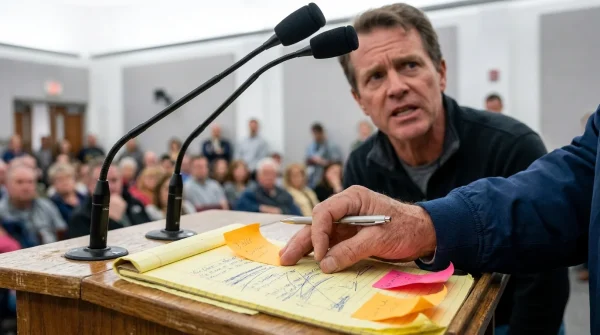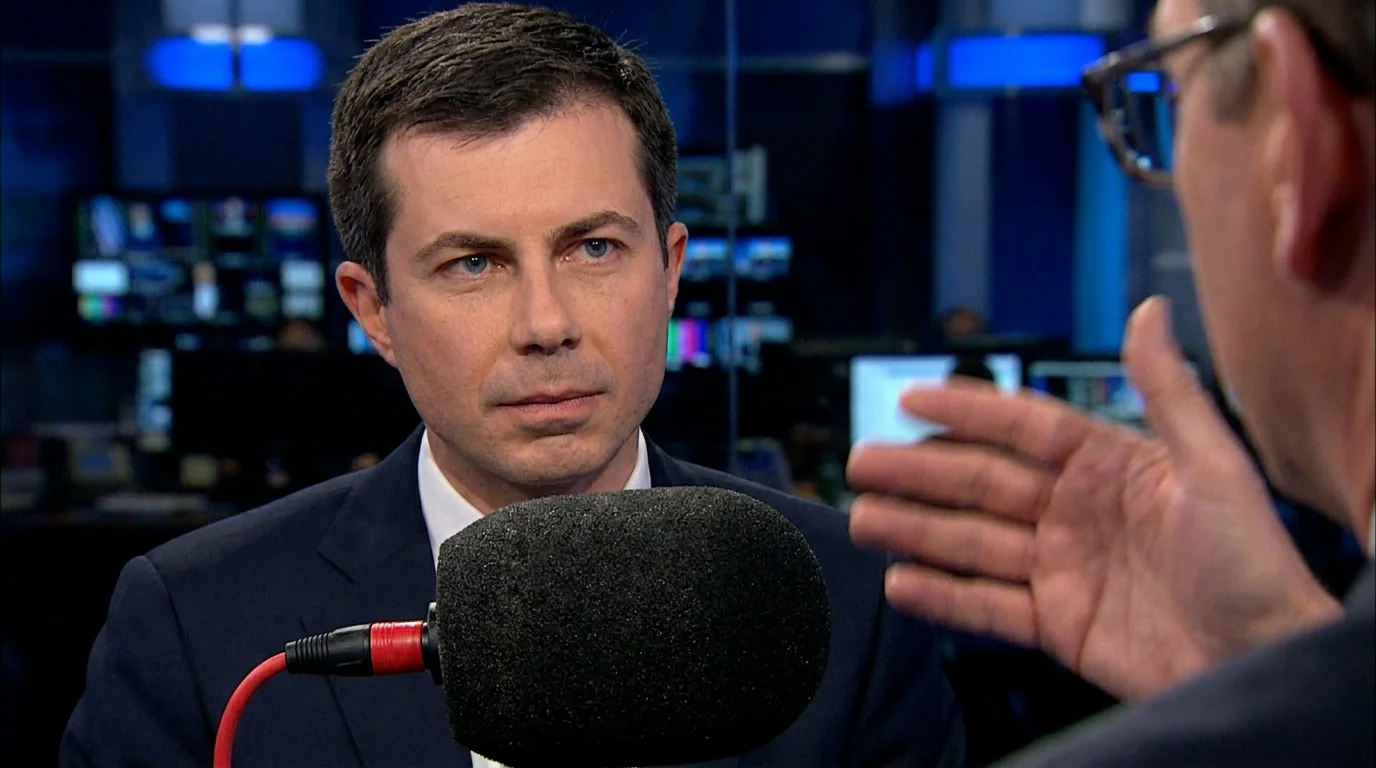
The heavy foam microphone windscreen sits three inches from your chin, cold, dense, and faintly smelling of industrial studio dust. Overhead, rows of quartz spotlights hum at an imperceptible sixty cycles per second, throwing flat, unforgiving light across the polished desk. Your interviewer leans forward, arms braced like a sprinter in the blocks, firing a loaded question engineered to make you stumble, stammer, or flare up in defense.
The instinct wired into human biology is to meet incoming velocity with matching speed. When someone cuts your sentence in half on national television, your blood pressure surges, pushing your voice upward into your throat and thinning your tone into a defensive rasp. You scramble to reclaim the airwaves before the network cuts to a commercial break, crowding words together in panic until your message dissolves into static.
Watch Pete Buttigieg when a hostile network anchor tries to orchestrate an ambush. He does not speed up. He does not raise his chin, furrow his brow, or interrupt the interruption. Instead, the jaw softens, his posture settles an inch deeper into his ribcage, and he introduces something television producers dread more than static: absolute, deadpan silence.
For two long, agonizing seconds, nothing moves. The host expects a collision, but finds their own aggressive momentum hanging unsupported in the room. By the time Buttigieg finally responds, his voice has dropped half an octave into a low, dry chest register, transforming an explosive cable news trap into a quiet lecture you cannot turn away from.
The Counterweight: Why Speed Is a Concession of Control
Hostile broadcast interviews operate on kinetic momentum, much like stepping on black ice. When an anchor throws a rapid-fire accusation, they are not waiting for your explanation; they are waiting for your adrenaline to hijack your vocal cords. A fast response is fundamentally a reactive response, signaling to the viewer that the interviewer holds the gavel and dictates the pace of reality.
True rhetorical control operates through friction reduction. When you swallow the urge to fire back instantly, you break the rhythmic loop the interviewer relies upon to cut you off. In audio engineering, a sudden drop in decibels or cadence forces the listener’s brain to lean in; the ear naturally tracks stillness when surrounded by relentless clatter.
- James Talarico viral sermon clips force state party leaders into aggressive public school funding defenses
- Helena Foulkes primary endorsements derail entrenched party favorites across competitive Rhode Island suburbs
- Trump dividend tax legislation sparks fierce Capitol Hill clashes over emergency foreign import tariffs
- Provisional ballot signature envelopes block contested votes when faint watery ink smears across paper
- Primary campaign ad buys demand sudden broadcast blackouts across flickering rural television screens
Think of it as acoustic judo. By withholding sound for a measured beat, you leave the interviewer’s hostility exposed on the screen with nothing to bounce against. The viewer does not register your pause as weakness; they register it as the calm deliberation of someone who cannot be provoked.
The Anatomy of the Studio Cold Read
Sarah Lin, 44, a Washington-based vocal coach who prepares executive witnesses for contentious congressional testimony, dissects this specific dynamic in her training room every week. Lin spent years analyzing cable hits from both parties before building her proprietary curriculum around Buttigieg’s television appearances on hostile networks.
“The mistake amateur communicators make is confusing volume with authority,” Lin explains, tapping a digital sound meter against her desk. “When someone attacks you on set, your vocal tract tightens, your pitch rises by thirty hertz, and you sound cornered even if your facts are immaculate. Pete does the exact reverse: he lowers his resonance into his sternum and waits long enough that the control room begins sweating over dead air. That pause forces the director to switch the camera angle to his face, giving him undisputed visual command of the broadcast.”
Three Structural Layers of the Deadpan Drop
Mastering this technique requires understanding that vocal delivery is mechanical, not emotional. To neutralize an aggressive conversational partner, you must deconstruct their assault into three distinct physical phases.
- The Dead-Air Vacuum: When an interruption concludes, lock your eyes on the bridge of the host’s nose and count two silent beats. Do not nod. Do not part your lips until that silence has completely extinguished their vocal tail.
- The Low-Resonance Landing: Initiate your first syllable using your chest voice rather than your head voice. This requires expelling a micro-breath through your nose before speaking, ensuring your vocal cords stay thick and relaxed.
- The Steady Metric Cadence: Keep your sentence rhythm metronomic. Avoid the natural human tendency to rush through policy points to avoid being interrupted; a slow, steady cadence signals that you are entirely unconcerned with their ticking segment clock.
Executing the Deadpan Pivot in High-Stakes Moments
You do not need a studio camera in your face to employ this tactical rhythm. Whether you are facing an aggressive performance review or an argumentative family member across a dinner table, the physiological sequence remains identical.
Begin by checking your physical contact points. Plant both feet flat against the floor and drop your shoulder blades down your spine. When the combative question lands, resist the impulse to exhale audibly or blink rapidly, as both movements broadcast internal panic before you even utter a word.
Instead, let the room sit in stillness. Let the silence stretch until it begins to feel awkward to the aggressor, because that awkwardness is the exact boundary where control transfers from them to you.
- Count two full seconds: One Mississippi, two Mississippi, keeping your eyes entirely steady.
- Release tension in the jaw hinge by keeping your back molars slightly separated.
- Begin your answer with a framing statement delivered two notes lower than your conversational pitch.
- Drop all rising inflections at the ends of your declarative sentences to eliminate any sound of seeking approval.
Reclaiming Room Temperature When Others Bring Fire
Most arguments are not won by superior logic; they are won by the person who refuses to mirror the other party’s emotional deregulation. When someone approaches you with fire, matching their heat only ensures that both of you burn down the room without resolving the underlying dispute.
The deliberate vocal drop is an act of quiet defiance. It tells the listener that your internal equilibrium is not contingent upon their courtesy or composure. By refusing to rush, you establish an unshakeable boundary that protects your intellectual clarity in chaotic environments.
In a culture dominated by shrieking monologues and frantic social feeds, the rarest currency is unhurried presence. When you master the deliberate freeze, you stop fighting for space on someone else’s hostile terms and quietly compel them to inhabit yours.
“He who controls the rhythm of the room inevitably controls the verdict of the audience.”
| Vocal Maneuver | Broadcast Function | Real-World Application |
|---|---|---|
| The Two-Second Reset | Forces television directors to cut camera feed to the respondent’s face. | Breaks an aggressive colleague’s train of thought in tense meetings. |
| Chest Register Modulation | Drops vocal frequency by 20–40 Hz to project biological stability. | Calms an escalating dispute by lowering overall ambient room tension. |
| Downward Sentence Cadence | Eliminates question-like inflections from factual statements. | Delivers difficult feedback without inviting immediate defensive pushback. |
Frequently Asked Questions
Doesn’t staying silent make you look unprepared on camera?
Only if your eyes wander or your expression looks startled. A steady, unblinking gaze transforms silence from hesitation into visible, commanding deliberation.How do I physically lower my voice when adrenaline kicks in?
Adrenaline constricts your throat muscles. Consciously separate your upper and lower back teeth and let your tongue rest flat on the floor of your mouth before producing sound.What if the interviewer simply talks over the pause?
Remain completely quiet and still until they finish their second salvo. Doubling down on the silence makes the interviewer appear erratic and desperate to the watching audience.Does this approach work in casual personal disagreements?
Yes, because it denies the other person the emotional friction they are subconsciously trying to ignite, forcing the conversation back to the actual issue.How do you practice the two-second pause without feeling self-conscious?
Practice in low-stakes environments like retail transactions or brief phone calls; pausing before answering simple questions builds comfort with deliberate silence.