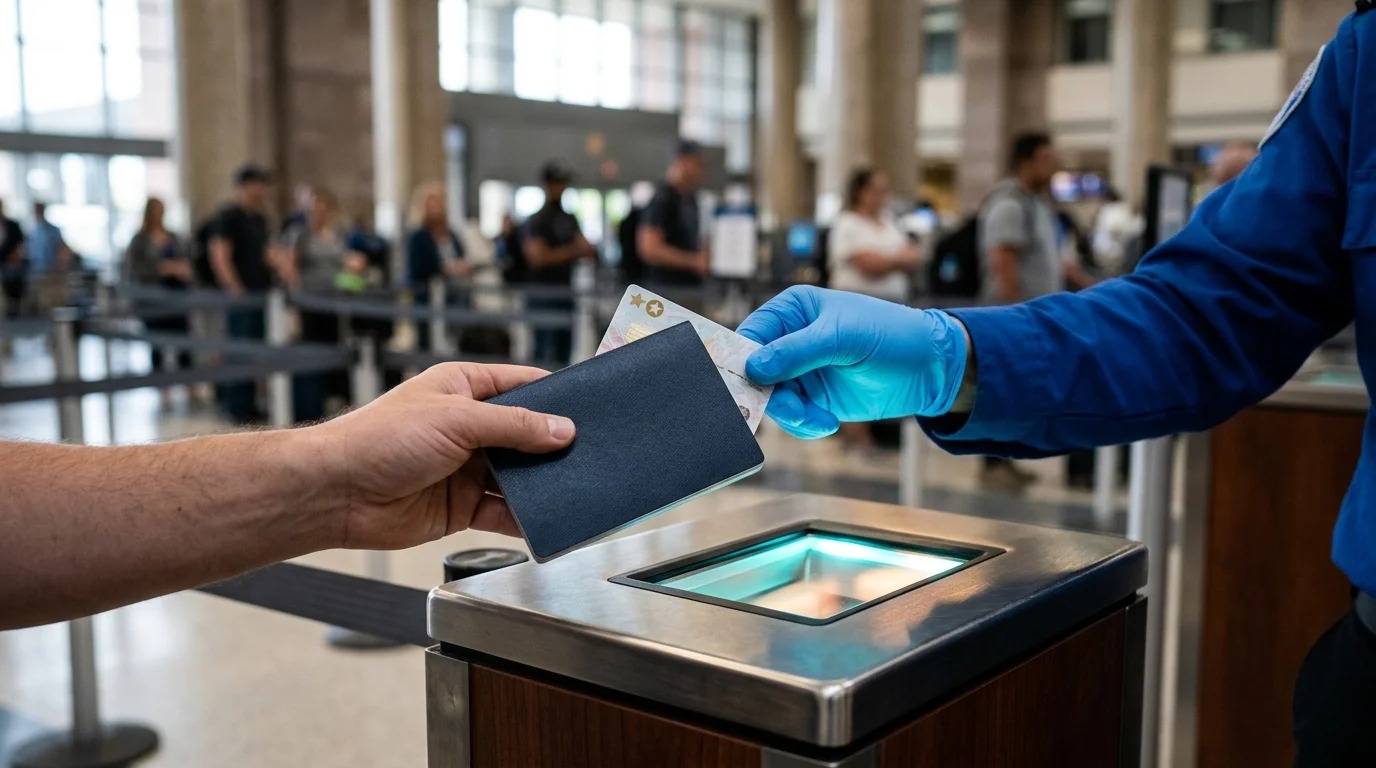
Travelers age 18 and older passing through domestic Transportation Security Administration (TSA) airport checkpoints must present a REAL ID-compliant state credential or another federally accepted form of identification, a requirement that took effect on May 7, 2025. While some recent summaries characterize the policy as a new mandate starting this May following a Department of Homeland Security (DHS) final rule, established coverage from Airport Online and Ground News confirms that federal enforcement at commercial aviation checkpoints actually began on May 7, 2025.
The implementation marks the culmination of a federal identification standard first enacted by Congress in 2005. Under the current screening rules, adult passengers flying domestically can no longer rely solely on a standard, non-compliant state driver’s license to clear airport security, according to The Travel.
From Enactment to the May 2025 Enforcement Date
The statutory framework for the current airport screening rules dates back to 2005, when the REAL ID Act was enacted to establish stricter security standards for state-issued driver’s licenses and identification cards. However, full implementation faced repeated delays over the subsequent two decades, particularly during the COVID-19 pandemic when state licensing agencies experienced severe administrative bottlenecks.
In December 2022, DHS extended the federal enforcement deadline by 24 months, moving the implementation target from May 2023 to May 2025 due to pandemic-related state processing backlogs, according to The Economic Times. Although some policy summaries describe the May 2025 transition as the result of a new DHS final rulemaking ending pandemic extensions, reporting from Airport Online and The Economic Times simply treats May 7, 2025, as the established start of checkpoint enforcement rather than a newly issued regulatory action.
- Green Card Per-Country Caps Delay Skilled Employment Visas by Over a Decade
- Medicare Cards Leave Hospital Observation Patients Liable for Skilled Nursing Bills
- IRS Form 1040 Compliance Data Separates Automated Notices From High-Income Audits
- Federal EV Charger Tax Credit Eligibility Depends on Census Tracts, Not ZIP Codes
- Why Social Security Cards Lack Biometric Security in Federal Employment Checks
How to Identify a Compliant Credential
For everyday citizens and business travelers, the primary impact of the rule is the need to verify the status of their state-issued identification before heading to the airport. A REAL ID-compliant state driver’s license or identification card is commonly identified by a star marking located on the upper portion of the card, according to Airport Online and El Cronista.
Travelers holding a standard state-issued driver’s license that lacks the compliant marking face significant limitations at the airport. While a non-compliant standard license may remain legally valid for operating a motor vehicle and other state-level purposes, it is not, by itself, sufficient to clear a domestic TSA security checkpoint, according to Airport Online. Passengers age 18 and older who arrive at a checkpoint with only a non-compliant standard license will not meet the federal identification threshold required to board commercial flights.
Acceptable Alternatives at TSA Checkpoints
A common misconception surrounding the federal mandate is that domestic air travelers must possess either a REAL ID-compliant state license or a U.S. passport book. While some brief summaries emphasize only those two credentials, reports from The Travel and The Economic Times note that a U.S. passport is only one of several acceptable alternatives.
Travelers age 18 and older who do not have a REAL ID-compliant state card can still pass through domestic TSA security checkpoints by presenting other approved federal or state documents. According to Airport Online, The Travel, and The Economic Times, TSA-accepted alternatives include:
- U.S. passports and U.S. passport cards
- State-issued Enhanced Driver’s Licenses
- DHS trusted-traveler cards
- U.S. military identification
- Other TSA-accepted identification documents
Frequently Asked Questions
When did TSA REAL ID enforcement actually begin?
Despite some descriptions framing the rule as a new change starting this May, TSA enforcement of the REAL ID requirement at domestic airport checkpoints began on May 7, 2025, following a 24-month extension announced in December 2022, according to Ground News and The Economic Times.
Who is required to show a REAL ID at the airport?
The federal checkpoint identification requirement applies to all commercial aviation passengers age 18 and older traveling on domestic flights, according to The Travel.
Which identification alternatives can travelers bring besides a REAL ID or U.S. passport?
In addition to a REAL ID-compliant state card or a U.S. passport, adult travelers may present a passport card, an Enhanced Driver’s License, a trusted-traveler card, military identification, or other TSA-accepted documents at security checkpoints, according to Airport Online and The Travel.
Sources
- Airport Online – How to Prepare for a Flight from a Hub Airport
- Ground News – REAL ID Act Enforcement Begins for Domestic Air Travel
- The Travel – The 7 New Rules For Getting Through Airport Security
- The Economic Times – US Real ID deadline, requirements: How much time do you have to make one?
- The Economic Times – Real ID deadline pushed back once more: Read to know more
- El Cronista – REAL ID Requirements and Accepted Documents